
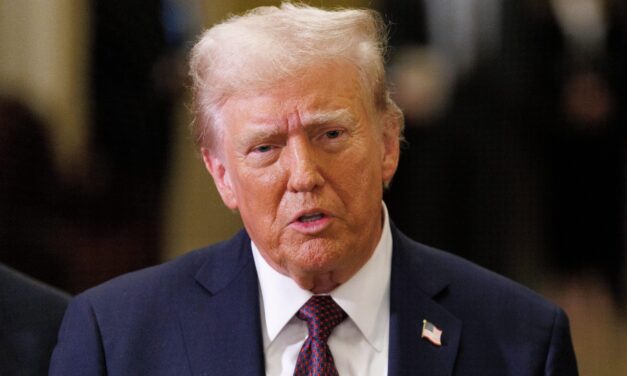
Republicans Gather In Dallas To Debate The Future Of The GOP After Trump
The Republican Party convened in Dallas as prominent figures and party faithful gathered to openly...
Read More
Qualcomm (NASDAQ: QCOM) Loses Apple Modem Revenue But Eyes $60 Billion Amazon Lifeline In Data Center Push
Qualcomm (NASDAQ: QCOM) is facing a significant revenue blow as Apple (NASDAQ: AAPL) moves to...
Read More
Spotify (NYSE: SPOT) Screens More Attractively Than Netflix (NASDAQ: NFLX) For Five-Year Compounding Returns
Spotify Technology (NYSE: SPOT) and Netflix (NASDAQ: NFLX) delivered contrasting Q2 2026 results,...
Read More
Scam and Review: Betfury Faces Scrutiny Over Frozen Winnings, VPN Push to Affiliates
Betfury is under fire after a string of customer complaints alleging the crypto casino locked...
Read More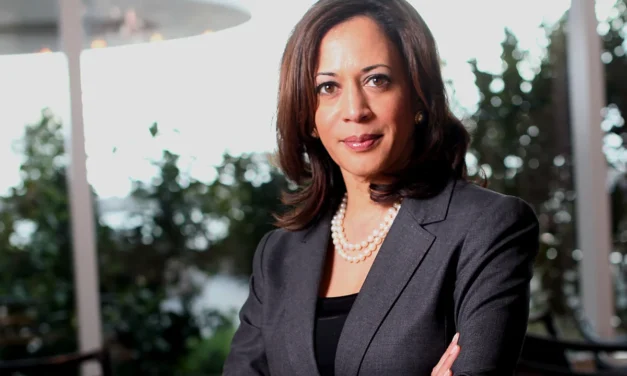
Trespasser Stopped At Kamala Harris’ Los Angeles Property Before Reaching Home
A woman was stopped by private security after illegally entering the Los Angeles property of...
Read More
Oracle (NYSE: ORCL) Reports 97.9% GPU Utilization As Nvidia (NASDAQ: NVDA) Chip Shortage Becomes Impossible To Ignore
Oracle Corporation (NYSE: ORCL) has put hard numbers on what Nvidia investors have long been asked...
Read More
Nancy Pelosi To Receive Inaugural Yale Patriot Public Service Award For Legislative Leadership
Yale’s School of Management will honor former Speaker of the House Nancy Pelosi with its...
Read More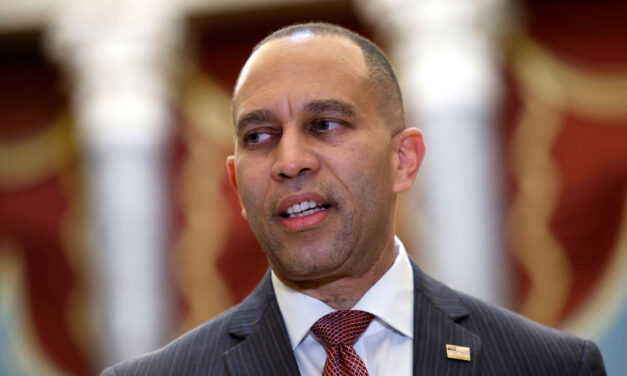
Hakeem Jeffries Endorses David Jolly And Gwen Graham In Florida Governor’s Race As Byron Donalds Camp Fires Back
House Minority Leader Hakeem Jeffries has thrown his support behind David Jolly and Gwen Graham in...
Read More
BigBear.ai (NYSE: BBAI) Edges Out D-Wave Quantum (NYSE: QBTS) As The Stronger Technology Buy For Long-Term Investors
BigBear.ai (NYSE: BBAI) has built a credible and growing revenue base anchored by government...
Read More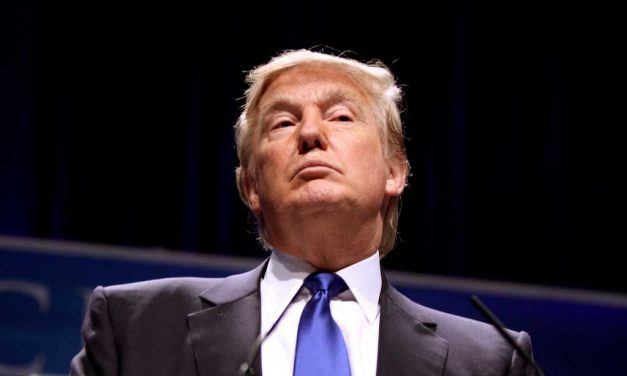
Republican Candidates Divided Over Whether To Embrace Trump’s Midterm Campaign Blitz
As President Donald Trump launches a midterm campaign blitz, Republican candidates across the...
Read More
Super Micro Computer (NASDAQ: SMCI) Sits On $60B Order Book As Fiscal 2027 Guidance Reaches $72B
Super Micro Computer Inc. (NASDAQ: SMCI), the server infrastructure supplier at the heart of AI...
Read More
U.S. Government Backs D-Wave (NYSE: QBTS), Rigetti (NASDAQ: RGTI), And Quantinuum With $300 Million In CHIPS Act Funding
The U.S. Commerce Department has finalized funding agreements with three quantum computing...
Read More
Bitmine (NYSE: BMNR) Immersion Surges 8% As Cantor Fitzgerald Doubles Price Target And Ethereum Climbs 7%
Shares of Bitmine Immersion Technologies (NYSE: BMNR) are climbing sharply in Friday morning...
Read More
RTX Corporation (NYSE: RTX) Bets Big On Defense Capacity With $50 Million Mississippi Expansion
RTX Corporation (NYSE: RTX) completed a $50 million expansion of its Raytheon unit’s Forest,...
Read More
UBS Downgrades NuScale Power (NYSE: SMR), Citing $95 Million EBITDA Gap And 40% Downside Risk
NuScale Power Corp. (NYSE: SMR) dropped 13.66% intraday after UBS downgraded the small modular...
Read More
Microsoft (NASDAQ: MSFT) Stock Sits Flat In 2026 Despite Strong Rally From April Lows
Microsoft (NASDAQ: MSFT) has delivered modest gains of around 2% year to date in 2026, falling...
Read More
Ryan Cohen Buys $20 Million In GameStop (NYSE: GME) Stock As Profitability Hits Record Highs
GameStop (NYSE: GME) shares surged in premarket trading Friday after CEO, president and chairman...
Read More
Congressman Tom Kean Jr.: Voting Record, Policies and 2026 Mid-Term Prospects
Congressman Tom Howard Kean Jr. represents New Jersey’s 7th Congressional District in the...
Read More
Bitcoin (BTC.CM=) Price Climbs 20% But Faces Clarity Act Uncertainty
The passing of the Clarity Act could provide a much-needed boost to the digital assets market....
Read More
Senate Faces Shrinking Window To Pass Permanent Daylight Savings Time Before November Clock Change
The U.S. Senate has yet to schedule a vote on the Sunshine Protection Act, which would impact...
Read More