
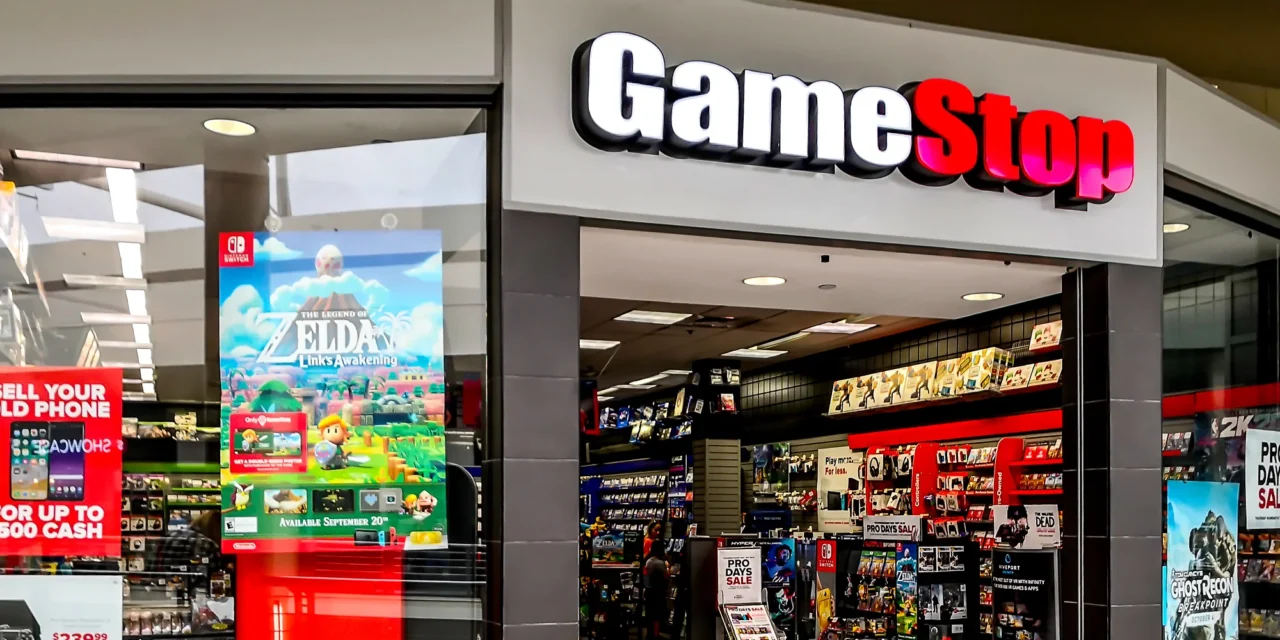
GameStop (NYSE: GME) shares surged in premarket trading Friday after CEO, president and chairman Ryan Cohen made a major open-market purchase of the retailer’s stock.
Cohen’s move delivered a fresh insider-confidence signal to investors just days after GameStop reported sharply higher profitability despite another significant decline in sales.
Cohen acquired 1 million Class A shares for roughly $20.38 million across multiple transactions, paying between $20.0199 and $20.4699 per share.
The weighted-average purchase price came in at $20.3759, lifting his direct ownership stake to 39.3 million shares following the disclosure.
GameStop stock rose 3.5% in premarket trading after the purchase was revealed, reflecting renewed investor enthusiasm around the retailer’s leadership commitment.
The purchase arrived just three days after GameStop reported second-quarter operating income of $160.2 million, the highest for any second quarter in the company’s history.
Net income rose to $298.7 million from $168.6 million a year earlier, while adjusted EBITDA more than doubled to $174 million during the same period.
The underlying sales picture remains more complicated, with revenue falling to $790.2 million from $972.2 million, partly due to store closures, the divestiture of GameStop’s France operations and a difficult comparison with last year’s Nintendo Switch 2 launch.
Collectibles provided the standout growth engine for the quarter, with sales surging 57% to $356.3 million and representing 45.1% of quarterly revenue.
GameStop, once primarily a video-game retailer, has been reshaping its business around collectibles, cost reductions and a broader capital-allocation strategy that now includes eBay stock and Bitcoin on its balance sheet.
GameStop held approximately $5.4 billion in cash, securities and digital assets plus a $4.9 billion eBay stake at quarter-end, while long-term debt was reduced to roughly $2.8 billion following recent convertible-note exchanges.
The company has also set a new fiscal-2026 adjusted EBITDA target of more than $650 million, a figure investors will be watching closely as the traditional retail segment continues to shrink.
Cohen’s multimillion-dollar purchase strengthens the alignment between management and shareholders, but investors will still need evidence that GameStop’s improving profitability can be sustained over time.
If collectibles growth and cost discipline continue to lift earnings despite weaker revenue, Cohen’s latest purchase could prove to be an increasingly significant signal of long-term confidence in the business.
