
NASA Administrator Jared Isaacman has warned that the United States and China are separated by only “months, not years” in the race to return astronauts to the moon.
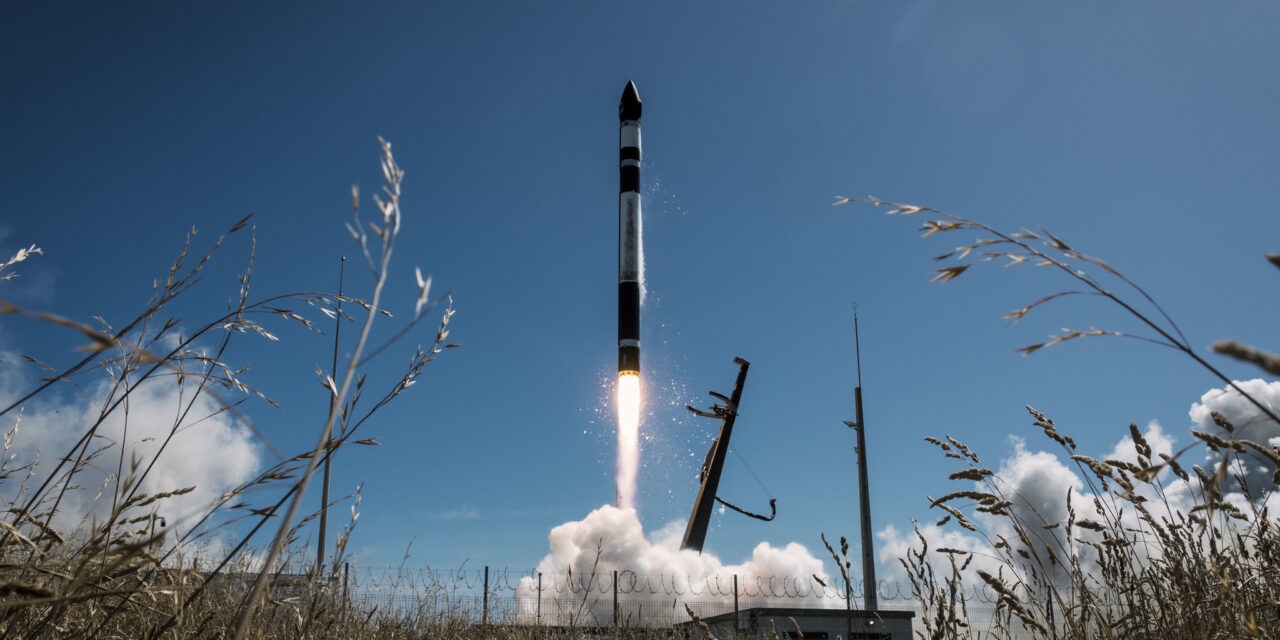
Rocket Lab (NASDAQ: RKLB) shares rose 0.4% overnight heading into Monday, as Isaacman’s remarks sharpened investor focus on commercial launch providers with near-term capacity.
RKLB shares had fallen 8% to $68.21 the prior week, marking their worst weekly performance since late August, before the overnight recovery.
China aims to land astronauts on the moon by 2029, while NASA is targeting a crewed return by the end of 2028, according to Isaacman’s Fox Business interview.
“That’s a difference of months, not years,” Isaacman said. “This is going to be extremely close right now.”
Isaacman confirmed that China and Russia are jointly developing plans for a lunar base and a nuclear power plant near the moon’s south pole, with NASA launching its first moon-base mission in December aboard a SpaceX Falcon Heavy.
He named Rocket Lab as one of the commercial space companies NASA can draw on for the effort, alongside SpaceX, Blue Origin, and Boeing.
NASA is also evaluating bulk purchases of rocket launches for its estimated $30 billion moon-base program, with Moon Base Program Manager Carlos Garcia-Galan saying the agency expects to announce an initial set of purchases soon.
The procurement push comes as SpaceX limits new dedicated Falcon 9 bookings beyond 2028, prioritizing Starship development and leaving satellite operators searching for alternative launch options.
ARK analysts Tasha Keeney and Daniel Maguire identified that gap as a direct opportunity for Rocket Lab’s Neutron rocket, noting that satellite operators urgently need launch access as they expand their constellations.
Keeney said Rocket Lab’s Neutron “comes close to the Falcon 9” in payload capacity, with ARK placing Neutron’s planned capacity at 13,000 kilograms to low Earth orbit, compared with roughly 17,000 kilograms for Falcon 9 in a partially reusable configuration.
ARK also pointed to Starlink’s planned deployments and upcoming StarMind AI satellites as further potential demands on available launch capacity, arguing that providers such as Rocket Lab stand to benefit if Neutron delivers on schedule.
Rocket Lab is targeting delivery of Neutron to the launch pad in the fourth quarter of 2026, and has begun building a customer pipeline for the rocket.
Kepler Communications has already booked a dedicated Neutron mission no earlier than 2028, giving the company more control over launch timing and orbital placement than a rideshare arrangement would allow.
Rocket Lab is also expanding its smaller Electron launch vehicle business, with a 20-launch agreement with Japan’s Synspective bringing that customer’s total contracted Electron missions to 47, with launches scheduled between 2028 and 2031.
On Stocktwits, retail sentiment for RKLB remained neutral over the past week, even as 24-hour message volumes climbed 14%.
One user wrote, “$RKLB Under $72 a share is a steal, and it’s $68! This will be $120 by next spring guaranteed,” reflecting the bullish tone among some retail investors despite the recent pullback.
RKLB stock remains down 2% year-to-date, leaving room for recovery if Neutron milestones and NASA procurement decisions continue to accelerate through the remainder of the year.
