
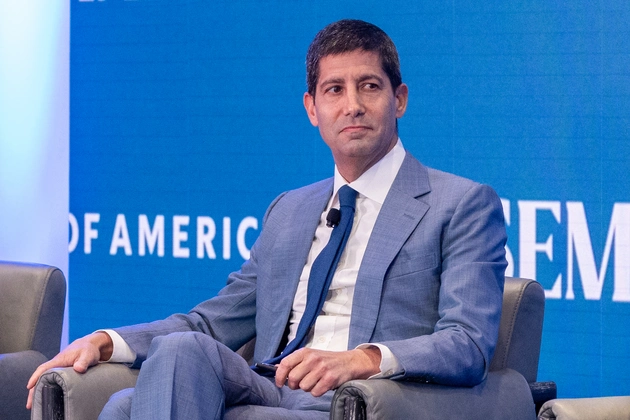
Kevin Warsh appeared before the Senate Banking Committee on Tuesday for his confirmation hearing as Federal Reserve chair nominee, insisting that “monetary policy independence is essential” while simultaneously declining to commit to the post-meeting press conference format that current chair Jerome Powell established as standard practice.
The core tension of the hearing was Warsh’s attempt to thread an impossibly narrow needle — assuring Democrats that he would not simply deliver rate cuts on Trump’s command, while avoiding any answer that would irritate a president who made his willingness to lower rates a stated litmus test for the nomination.
Senator Elizabeth Warren, who met Warsh last week and left with “deep concerns” he would function as Trump’s “sock puppet,” pressed him directly on his independence — and got a quip in return: Warsh joked that his one disagreement with Trump was the president’s claim he was “out of central casting,” drawing exactly one or two chuckles from the hearing room, with Warren responding “adorable, but we need a Fed chair who is independent.”
Warsh argued that “the operational independence of monetary policy is not particularly threatened when elected officials state their views on interest rates” — a formulation his critics say deliberately understates the situation given Trump’s repeated threats to fire Jerome Powell and his actual attempt to remove Fed Governor Lisa Cook.
The most concrete obstacle to confirmation came from within Warsh’s own party — Senator Thom Tillis told Warsh directly, “I’m not going to ask you anything,” and instead laid out why he has pledged to block the nomination from leaving committee until the Department of Justice drops its criminal investigation into the Fed over a multibillion-dollar headquarters renovation scandal involving Powell.
Warsh also signalled a philosophical break from Powell-era monetary policy, arguing the Fed made “policy errors” in 2021 and 2022 by holding rates at zero through the inflation surge, and suggesting the central bank should be “less forward-looking” in setting rates — a position that aligns with Trump’s stated desire for lower borrowing costs without requiring Warsh to explicitly promise to cut.
With Warren’s Democratic opposition almost certain and Tillis’s Republican hold in place, Warsh’s path to confirmation depends on the DOJ investigation being resolved and on whether his performance Tuesday reassured enough moderate Republican senators to deliver the votes needed.
