
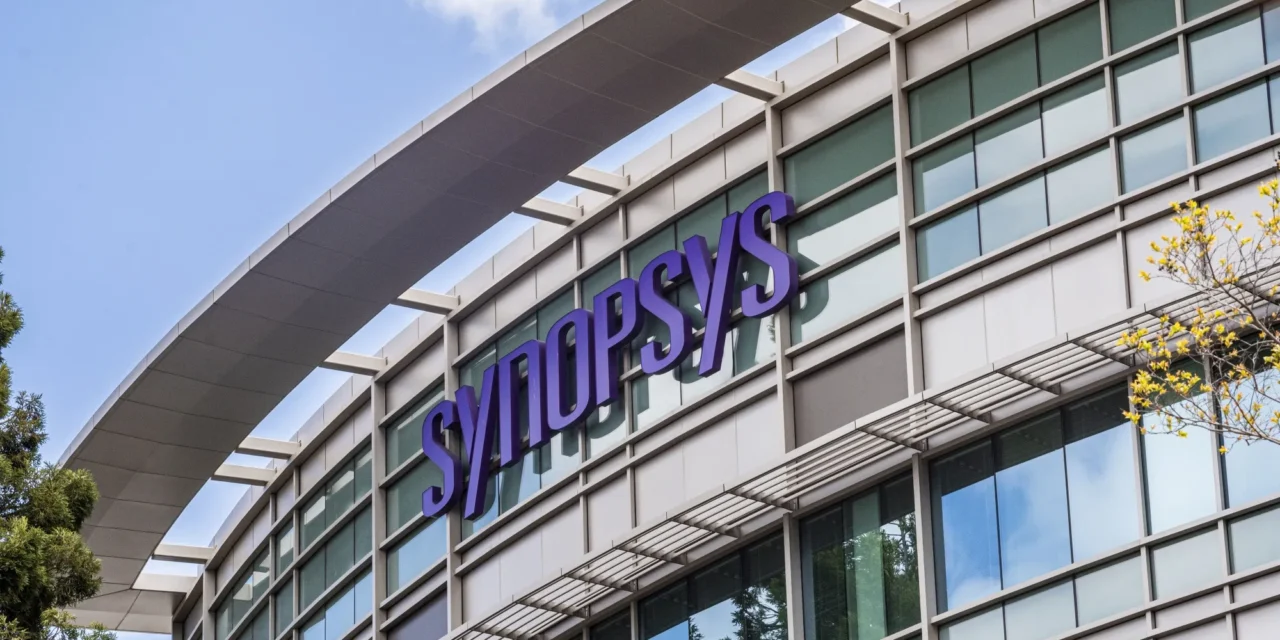
Synopsys Inc (NASDAQ: SNPS) is trading around $438 to $458, a level that sits approximately 30 percent above one prominent discounted cash flow valuation model’s base-case intrinsic value of roughly $354 per share — a gap that reflects both genuine disagreement about the company’s terminal growth rate and the premium investors are willing to pay for what is arguably the most competitively entrenched software business in the semiconductor supply chain.
The DCF debate around Synopsys is particularly complex because the company operates as a near-duopoly alongside Cadence Design Systems (NASDAQ: CDNS) in Electronic Design Automation — the software engineers use to design chips — which means its revenue stream is structurally tied to global semiconductor capital expenditure cycles in a way that makes terminal growth assumptions unusually sensitive to long-term chip demand projections.
The company’s 52-week range of $376 to $651 — nearly a two-to-one spread — illustrates the degree to which market sentiment has swung on Synopsys over the past year, with the stock having given back roughly a third of its peak value as the post-AI infrastructure bubble cycle creates uncertainty about the timing and sustainability of the EDA licence renewal pipeline.
Synopsys completed its $35 billion acquisition of software testing company Ansys in April 2024, a transformational deal that significantly broadened the company beyond pure EDA into simulation software for mechanical, electrical and embedded systems — meaning the DCF models that treat Synopsys as a stable EDA compounder are already potentially underpricing the combined entity’s cross-selling opportunity if the integration executes well.
The stock’s forward P/E of approximately 33 times is below its five-year average of approximately 37 times, which GuruFocus and other intrinsic value frameworks cite as a relative undervaluation signal — but the divergence between DCF-based fair value estimates and peer-relative approaches is unusually wide here, ranging from roughly $296 on a pure-cash-flow basis to more than $650 on some relative valuation approaches.
The key bear risk acknowledged even by DCF models is a broad slowdown in semiconductor capital expenditure — if hyperscaler AI chip investment plateaus or contracts, the licence renewal cycle that sustains Synopsys’s revenue visibility could compress faster than terminal growth assumptions imply, bringing the stock’s premium to its DCF floor into sharper focus.
For investors comfortable with the long-term EDA duopoly thesis and the Ansys integration upside, the current price is a function of whether the next eighteen months of AI chip design activity validates the premium — or forces a rerating toward the $354 floor that pure cashflow discipline would suggest.
