
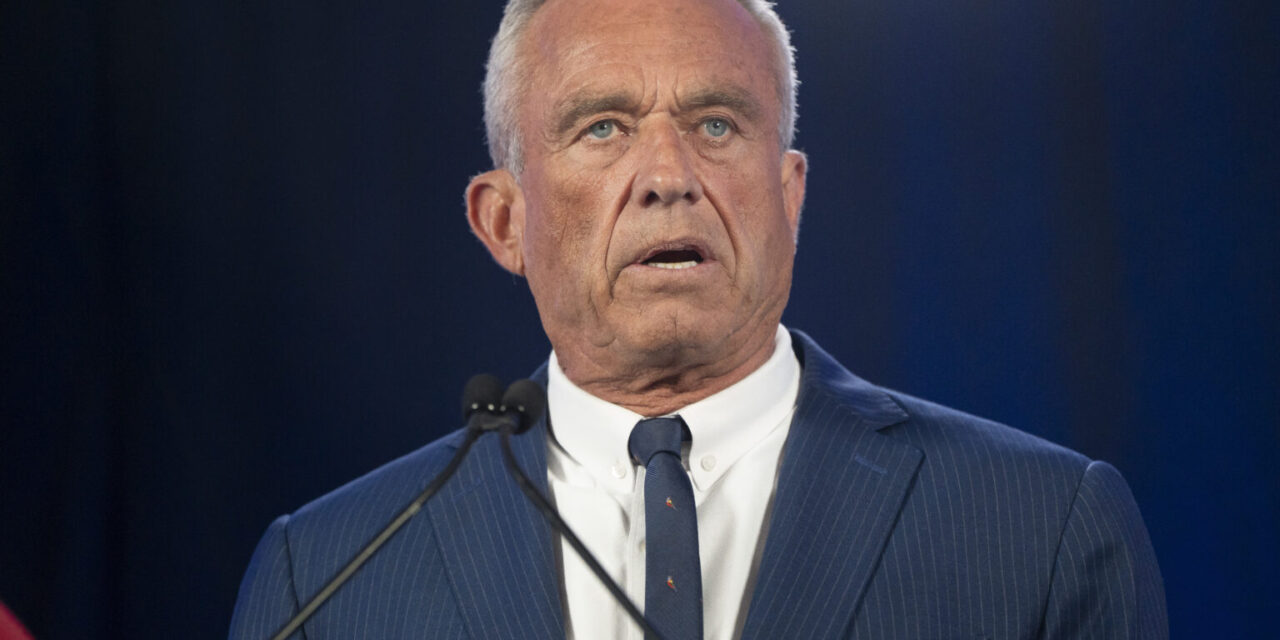
Robert F. Kennedy Jr. acknowledged under congressional testimony on Tuesday that President Trump did not consult him before nominating Erica Schwartz to lead the Centers for Disease Control and Prevention — a rare public admission that the Health and Human Services secretary has been sidelined on one of the most consequential personnel decisions in his portfolio.
Kennedy testified before the House Energy and Commerce Committee’s Health Subcommittee that it was HHS chief counsel Chris Klomp — not Kennedy himself — who had the direct conversation with Trump about the Schwartz nomination, a chain of communication that effectively places Kennedy’s number two above him in influencing the president on health agency leadership.
The admission is particularly striking because Kennedy had previously met with Schwartz multiple times before her nomination, including discussions about her views on vaccines — meaning he was aware of her, but not authorised to stop or redirect the appointment.
Schwartz, who served as deputy surgeon general during Trump’s first term, was tapped to lead the CDC last week, becoming the second director of the agency in short succession after former director Susan Monarez was fired less than a month into the role — a rate of turnover that has rattled career staff at the agency and alarmed public health officials.
The revelation reinforces a pattern that has been building throughout Kennedy’s tenure: that his role as HHS secretary is primarily rhetorical rather than operational, with Trump retaining direct control over major agency decisions that would ordinarily flow through a cabinet secretary.
Kennedy’s MAHA agenda — Make America Healthy Again — had positioned him as a reformist health czar with sweeping authority over agencies from the CDC to the FDA, but the testimony suggests the political architecture beneath that branding is far more fractured than the public presentation implies.
For critics, the episode raises a more fundamental question about governance: if the HHS secretary does not control who leads the CDC, the logical follow-on question becomes what exactly his authority encompasses.
