![]()
Opinion Commentary
What if Israel Was the Victim?
January 6, 2009
What if the roles of Israel, Gaza, and members of the international community in the ongoing conflict were reversed? How would Americans and their government respond? Try this thought experiment and draw your own conclusions.
Opinion Commentary
Bill Richardson - Kissinger-American
January 6, 2009
In New Mexico the issue of uncounted votes is more than skin deep. Lots of Mexican-American votes don’t tally, but Citibank-American votes never get lost. Kissinger American votes always count.
News Analysis: India / Pakistan: Mumbai Attacks
The CIA-ISI axis - India should have no illusions of US support
January 6, 2009
While India seeks to bring the perpetrators of the Mumbai carnage to book, there should be no illusions about the degree to which other nations will whole-heartedly support the Indian expectation from Islamabad.
Israel / Palestine
Top 5 Lies About Israel’s Assault on Gaza
January 3, 2009
There are numerous lies being propagated by the Western corporate media about the nature of the present violence being perpetrated against the people of the Gaza Strip by the state of Israel.
Opinion Commentary
January 3, 2009
"The Anti-Empire Report" by William Blum, on Afghanistan, the Israeli-Palestinian conflict, Barack Obama, Cuba, and the Cold War.
Opinion
Obama preserves our way of life
November 23, 2008
Awakened by the muffled, distant howls of slaughtered Indians, Uncle Sam rises from his bed and hits the light switch…blissfully, purposefully unaware of how valley fills enable him to gain access to that electricity day after day.
***
Here’s how The Sierra Club begins its
discussion of mountaintop removal mining: “In places like Appalachia,
mining companies blow the tops off mountains to reach a thin seam of
coal and then, to minimize waste disposal costs, dump millions of tons
of waste rock into the valleys below, causing permanent damage to the
ecosystem and landscape.” That is a valley fill.
Then comes word—on October 18, 2008—that
the Interior Department has “advanced a proposal that would ease
restrictions on dumping mountaintop mining waste near rivers and
streams, modifying protections that have been in place, though often
circumvented, for a quarter-century.” This from a New York Times
article, which continues: “The department’s Office of Surface Mining
issued a final environmental analysis Friday on the proposed rule
change, which has been under consideration for four years. It has been a
priority of the surface mining industry … The proposed rule would
rewrite a regulation enacted in 1983 that bars mining companies from
dumping huge waste piles, known as “valley fills,” within 100 feet of
any intermittent or perennial stream if the disposal affects water
quality or quantity.”
***
Like any good American, after
subconsciously blocking out the faint sounds of slave chains clinking
and bull whips cracking, Uncle Sam’s first chore of the day is to check
e-mail. No time for him to contemplate e-waste, now is there?
***
E-waste (discarded electronics and
electrical products) has some potential in supplying secondary raw
materials to keep the entire system afloat, when not properly treated
properly it becomes a major source of carcinogens and toxins.
“A whole bouquet of heavy metals,
semimetals and other chemical compounds lurk inside your seemingly
innocent laptop or TV,” adds Jessika Toothman at HowStuffWorks.com.
“E-waste dangers stem from ingredients such as lead, mercury, arsenic,
cadmium, copper, beryllium, barium, chromium, nickel, zinc, silver and
gold. Many of these elements are used in circuit boards and comprise
electrical parts such as computer chips, monitors, and wiring.”
According to the EPA, in 2005, “used or
unwanted electronics amounted to approximately 1.9 to 2.2 million tons.
Of that, about 1.5 to 1.9 million tons were primarily discarded in
landfills, and only 345,000 to 379,000 tons were recycled.”
***
Uncle Sam decides he wants eggs for
breakfast and what Uncle Sam wants, Uncle Sam gets. Not even the din of
doomed chickens can slow down this hungry man.
***
Karen Davis of United Poultry Concerns has
written a narrative of what a battery hen might say if it could speak
human language. The narrative begins: "I am battery hen. I live in a
cage so small I cannot stretch my wings. I am forced to stand night and
day on a sloping wire mesh floor that painfully cuts into my feet. The
cage walls tear my feathers, forming blood blisters that never heal. The
air is so full of ammonia that my lungs hurt and my eyes burn and I
think I am going blind. As soon as I was born, a man grabbed me and
sheared off part of my beak with a hot iron, and my little brothers were
thrown into trash bags as useless alive."
Battery hens produce the vast majority of eggs you’ll find in your market.
***
With food now in his stomach, Uncle Sam joins the vast majority of Americans who take at least one form of pharmaceutical drug each day. Choosing to ignore the agonized screams of tortured animals, Uncle Sam gulps down his pills.
***
Aysha Z Akhtar, M.D., M.P.H., is a senior
medical advisor and Jarrod Bailey, Ph.D., is a senior research
consultant for the Physicians Committee for Responsible Medicine. "The
more we study the relevance of animal tests, the more apparent their
shortcomings become," Akhtar and Bailey state in a Feb. 9, 2007 letter
published in the British Medical Journal. "Even subtle
physiological differences between humans and animals can manifest as
profound differences in disease physiology and treatment effectiveness
and safety. For example, numerous differences in spinal cord physiology
and reaction to injury exist between species and even strains within a
species. These differences likely contribute to the repeated failure of
spinal cord treatments that have tested safe and effective in animals to
translate into human benefit."
"Results from animal tests are not
transferable between species, and therefore cannot guarantee product
safety for humans," agrees Herbert Gundersheimer, M.D. "A major shift in
our research paradigm is long overdue," declare Akhtar and Bailey. "The
move away from animal experiments toward more accurate methods of
studying disease and intervention is scientifically superior and more
ethical for humanity, as well as for animals."
"Ask the experimenters why they experiment
on animals, and the answer is: ’Because the animals are like us,’"
writes Professor Charles R. Magel. "Ask the experimenters why it is
morally OK to experiment on animals, and the answer is: ’Because the
animals are not like us.’ Animal experimentation rests on a logical
contradiction."
***
Uncle Sam’s medicine is washed down thanks to store-bought water. As he packs his water bottle in his work bag, he could swear a cruise missile has soared past his house but instead nods his head in disbelief.
***
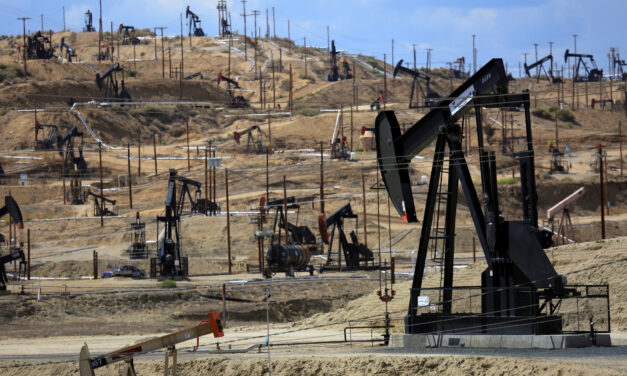
“Americans buy 30 billion single-use water bottles every year, the majority of which end up in landfills,” writes Dominic Muren at TreeHugger.com. “In fact, 845 bottles end up in the land fill every second. All these water bottles are made from petroleum, and require petroleum to be shipped around the world. All that, and there's no evidence that bottled water is any cleaner than tap-water.”
Catherine Clarke Fox of National
Geographic adds: “But all those plastic bottles use a lot of fossil
fuels and pollute the environment. In fact, Americans buy more bottled
water than any other nation in the world, adding 29 billion water
bottles a year to the problem. In order to make all these bottles,
manufacturers use 17 million barrels of crude oil. That’s enough oil to
keep a million cars going for twelve months. Imagine a water bottle
filled a quarter of the way up with oil. That’s about how much oil was
needed to produce the bottle.”
***
Tired of getting animal blood on his socks,
Uncle Sam reaches for his leather shoes…courtesy of the
$1.5-billion-and-100-million-animal-skins-per-year U.S. industry.
***
"Leather is not simply a slaughterhouse
byproduct," says animal issues columnist Carla Bennett. "It's a booming
industry and an important part of the slaughter trade, since skin
accounts for approximately 50 percent of the total byproduct value of
cattle." Leather is also made from slaughtered horses, sheep, lambs,
goats, and pigs. "When dairy cows' production declines, for example,
their skin is made into leather; the hides of their offspring, 'veal'
calves, are made into high-priced calfskin," adds Bennett. "Thus, the
economic success of the slaughterhouse (and the factory farm) is
directly linked to the sale of leather goods."
Another tactic for procuring animal skins
is hunting. Species such as zebras, bison, water buffaloes, boars, deer,
kangaroos, elephants, eels, sharks, dolphins, seals, walruses, frogs,
crocodiles, lizards, and snakes are murdered solely for their hides.
These animals are often endangered or illegally poached—and death is
rarely swift or painless. Alligators are clubbed with axes and hammers
and may suffer for hours. Reptiles are skinned alive to achieve
suppleness in the leather and may take days to die. Kid goats are boiled
alive.
A clever diversionary tactic of leather makers is to label their products "biodegradable" while pointing out that synthetic versions are usually petroleum-based. However, says Sally Clinton in Vegetarian Journal, the tanning process acts to "stabilize the collagen or protein fibers so that they are no longer biodegradable." In turn, the Kirk-Othmer Encyclopedia of Chemical Technology explains, "On the basis of quantity of energy consumed per unit of product produced, the leather-manufacturing industry would be categorized with the aluminum, paper, steel, cement, and petroleum-manufacturing industries as a gross consumer of energy." The primary reason for this is that over 95 percent of U.S. leather is chrome tanned. "All wastes containing chromium are considered hazardous by the EPA," writes Clinton. The Centers for Disease Control and Prevention found that the incidence of leukemia among residents in an area surrounding one tannery in Kentucky was five times the national average. According to a study released by the New York State Department of Health, more than half of all testicular cancer victims work in tanneries.
***
Uncle Sam heads for his beloved SUV, trying his best to not only find his cell phone but also to avoid stepping on the thousands of dying frogs that litter his driveway.
***
The South American tree frogs’ population
is declining and biologists are blaming global warming. These frogs, it
seems, have the very un-froglike habit of basking in the hot sun (most
frogs normally avoid prolonged exposure to light due to the risk of
overheating and dehydration). According to a research team at the
University of Manchester, “global warming is leading to more cloud cover
in the frogs' natural habitat. This, in turn, is denying them the
opportunity to 'sunbathe' and kill off fatal Chytrid fungal infections,
leading to many species dying out.”
Andrew Gray, Curator of Herpetology at the Manchester Museum, says: "With a third of the world's amphibians currently under threat it's vitally important we do our utmost to investigate the reasons why they are dying out at such an alarming rate.”
***
Uncle Sam starts up the engine and plugs in his cell phone headset, ready for a drive’s worth of important, essential, and utterly crucial business calls…but how can he hear over the sorrowful primate calls echoing off the SUV’s interior?
***
Here’s how the United Nations describes it:
“Columbite-tantalite—coltan for short—is a dull metallic ore found in
major quantities in the eastern areas of Congo. When refined, coltan
becomes metallic tantalum, a heat-resistant powder that can hold a high
electrical charge.” Tantalum from coltan is used in consumer electronics
products such as cell phones.
Why would the UN be involved in describing
a component of your cell phone? Well, coltan is mined in the Democratic
Republic of the Congo, an African nation besieged by a brutal civil war.
The mining and sale of coltan is used by both sides in the conflict to
fund their military mayhem. In addition, the UN explains: “In order to
mine for coltan, rebels have overrun Congo's national parks, clearing
out large chunks of the area's lush forests. In addition, the poverty
and starvation caused by the war have driven some miners and rebels to
hunt the parks' endangered elephants and gorillas for food.” Within the
Democratic Republic of the Congo, the number of eastern lowland gorillas
has declined by 90% over the past 5 years, and only 3,000 now remain.
***
Uncle Sam (on the phone): “Yeah, I’m on my way. (pause) I’m fine. Just got a headache. So much damn background noise lately. (pause) Ah, stop your worrying. It’s all gonna be fine. What could possibly go wrong now that Obama is in charge?”
(To be continued?)
Mickey Z. is a self-educated writer,
personal trainer, martial artist, and vegan who lectures on US foreign
policy at MIT in his spare time. He has appeared in martial arts films
and was known as the Underground Poet for hanging his poetry in the NYC
subway. He is the author of
numerous books,
including, most recently, "CPR for Dummies" and "No Innocent
Bystanders". He lives with his wife Michele in New York City. You can contact him
here. Visit him on
the web at Mickeyz.net.