
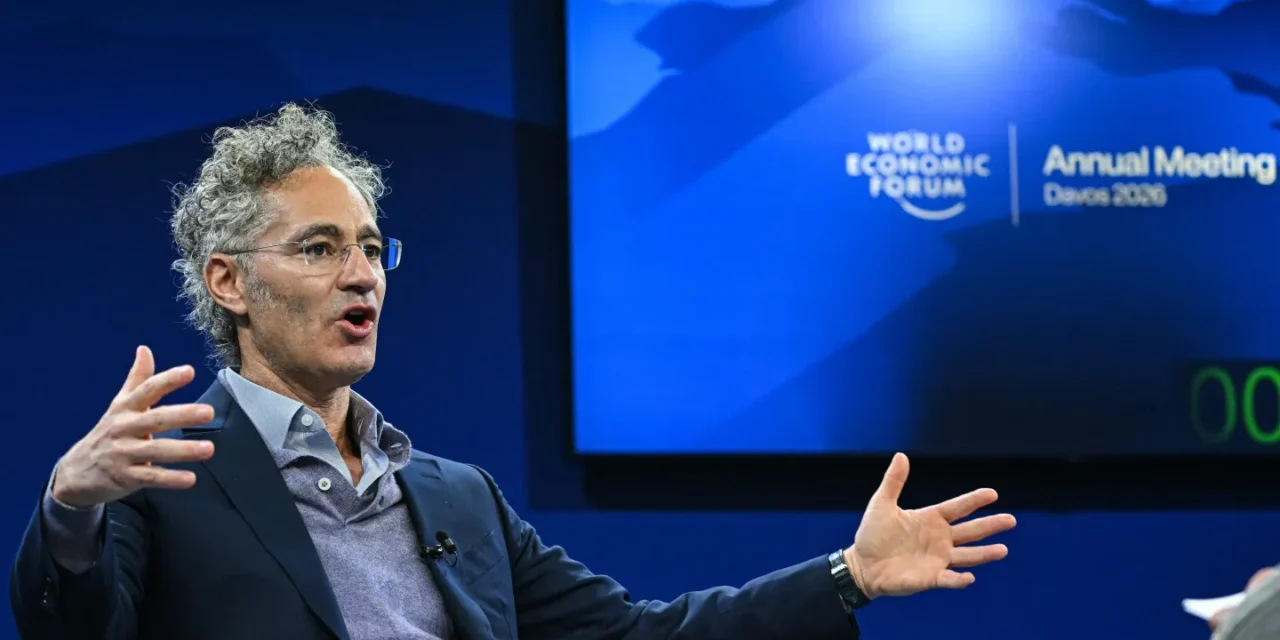
Palantir (NASDAQ: PLTR) CEO Alex Karp has spent six months privately cautioning top artificial intelligence executives that their companies risk being nationalized if the industry fails to act responsibly.
Speaking at Palantir’s AIPCon 10 with TBPN, Karp described the typical reaction from AI leaders as dismissive, with executives asking why anyone would nationalize companies that are “so likable” and “creating so much value.”
Karp delivered a stark assessment of the political landscape, warning that “the momentum is on the side of people who want to nationalize them” if the industry does not “get our act together.”
The warning echoes a message Karp delivered directly to Silicon Valley in March, when he said that displacing white-collar workers while alienating the military would ultimately lead to the nationalization of their technology.
Senator Bernie Sanders has added urgency to those concerns, publishing a guest essay in The New York Times outlining his American AI Sovereign Wealth Fund Act, which would impose a one-time 50 percent tax on the stock of major AI companies including OpenAI, Anthropic, and xAI.
Under Sanders’ proposal, the tax revenue would flow directly into a federal fund, with the senator arguing that AI is “built on the collective knowledge of humanity” and that its wealth must be shared publicly.
The proposal drew attention across ideological lines, with noted short-seller Jim Chanos asking on X, “What do you call it when both Donald Trump AND Bernie Sanders advocate government ownership of corporate equity?”
Sanders also criticized President Donald Trump’s AI executive order, calling it voluntary and saying it “does almost nothing to protect Americans,” urging Congress to pass stronger legislation instead.
Karp cautioned that AI firms risk being regulated by policymakers who may not fully understand the technology, a dynamic he warned could escalate into more aggressive forms of government intervention over time.
He urged AI executives to stop relying on lobbyists and instead openly confront AI’s societal risks and strategic value, particularly as the United States competes against foreign adversaries building their own AI systems.
The stakes are already visible in global infrastructure decisions, with the Center for a New American Security reporting that Nvidia supplies GPUs for 52 percent of all tracked sovereign AI infrastructure projects worldwide.
That figure underscores how deeply national governments are already moving to assert control over AI infrastructure, lending credibility to the nationalization concerns Karp has been raising privately for months.
