
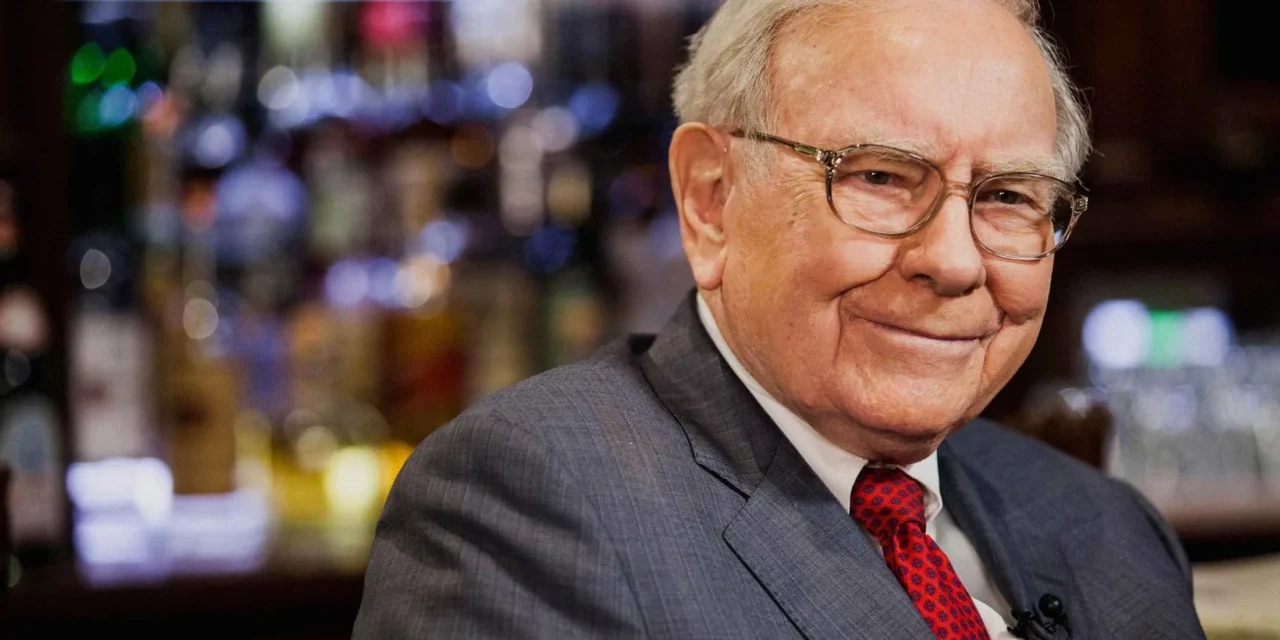
Berkshire Hathaway (NYSE: BRK-B) chairman Warren Buffett stepped down as CEO at the close of 2025, but his legacy as one of history’s most celebrated investors remains firmly intact.
Known as “The Oracle of Omaha,” Buffett built his reputation on stock picks that demonstrated remarkable foresight, generating returns that most professional investors can only dream of achieving.
A closer look at his most profitable investments reveals a consistent pattern of identifying undervalued companies with strong fundamentals and holding them for the long term.
Buffett’s Berkshire Hathaway acquired approximately 1 billion shares of Apple (NASDAQ: AAPL) between 2016 and 2018 at an average price of around $35 per share, a position that would generate extraordinary returns.
After selling most of its Apple shares in the second quarter of 2024, following an earlier partial exit in 2023, Berkshire recorded a pretax gain of roughly $90 billion in 2024, with a further $6 billion captured in 2025.
Despite those enormous gains, Apple reached an all-time high stock price in late 2025, meaning Berkshire left more than $50 billion in additional profits on the table by exiting too early.
Coca-Cola has been one of Buffett’s most enduring and rewarding positions, with Berkshire beginning its investment in 1988 and continuing purchases into the early 1990s, spending approximately $1.3 billion to accumulate around 400 million shares.
As of mid-2025, that Coca-Cola stake generates $816 million in annual dividends alone, while the total valuation of the holding sits at a remarkable $31.47 billion.
Berkshire’s early bet on Chinese electric vehicle maker BYD was another masterstroke, with the company investing approximately $230 million for a 10% stake back in 2008, nearly two decades before EV stocks became a mainstream investment theme.
Berkshire began trimming its BYD position in 2022 when the stock hit peak valuations that summer, ultimately exiting the position fully as 2025 closed, having made a return of more than 20 times its original investment.
Among Buffett’s other legendary picks, American Express stands out, with an initial $300 million investment in 1991 growing more than 81 times over when factoring in reinvested dividends, and delivering more than 40 times growth through share appreciation alone.
GEICO, now a wholly owned subsidiary of Berkshire Hathaway following Buffett’s decision to acquire a significant stake before taking full ownership, has returned its initial investment multiple times over while remaining a strong competitor in the insurance market.
What ties all of these investments together is Buffett’s willingness to commit substantial capital to businesses he understood deeply, and then hold those positions through market cycles rather than chasing short-term gains.
Even in cases where Berkshire exited positions earlier than optimal, as with Apple and BYD, the returns generated were still extraordinary by any reasonable investment benchmark.
Buffett’s track record serves as a compelling reminder that disciplined, long-horizon investing in quality companies continues to be one of the most reliable paths to building significant wealth.
