
The strategic liability is not Iraqi Kurdistan itself. It is the growing gap between what the Region could be and what its current leadership has managed to deliver.
Iraqi Kurdistan has spent decades building a relationship with the West. Its cooperation with the United States and European governments, its role in the fight against ISIS and its relative stability in an otherwise volatile region have made it an important strategic partner.
But that position should not be taken for granted. Increasingly, the political decisions being made in Erbil are putting at risk the credibility that has made the Kurdistan Region valuable to its Western allies.
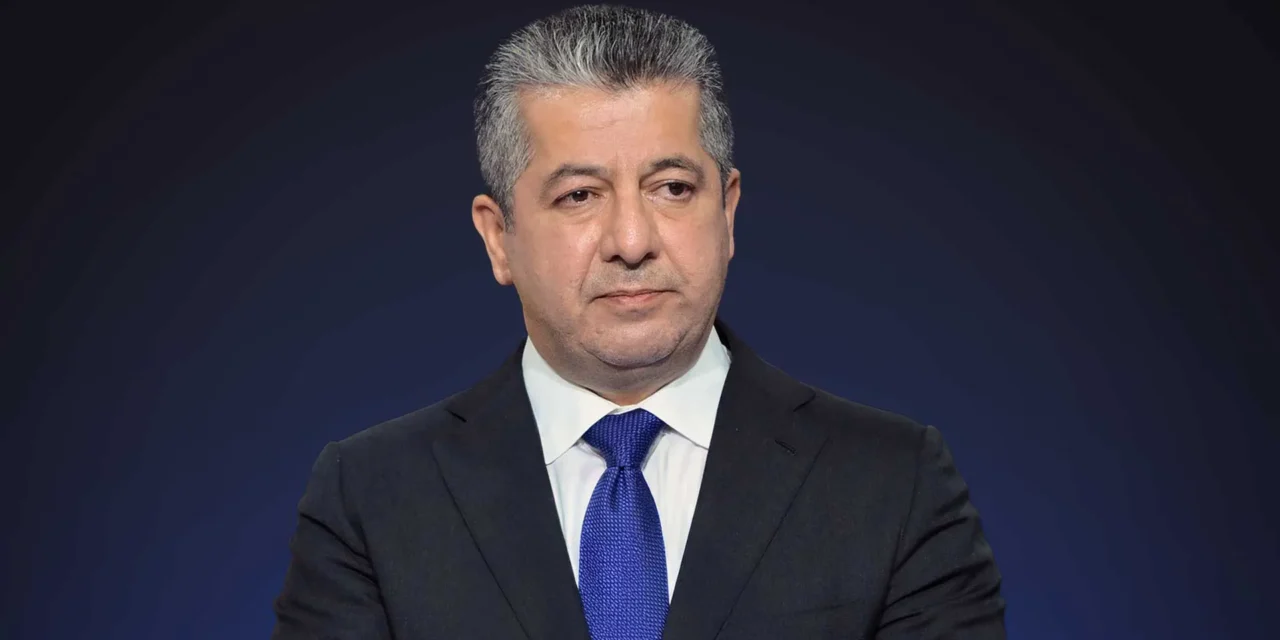
At the centre of this problem is Masrour Barzani, who has served as Prime Minister since 2019. After seven years in office, the question being asked is why the region remains trapped in political deadlock, economic uncertainty and institutional weakness.
Western governments should be increasingly concerned that a leader whom they regard as a strategic partner is struggling to deliver even the basic requirements of effective government.
A political crisis that cannot be blamed on circumstances
The October 2024 parliamentary elections should have provided an opportunity for political renewal. Instead, almost two years later, the Kurdistan Region has still struggled to establish a new government. The KDP emerged as the largest party with 39 seats, while the PUK secured 23. Neither obtained a majority, making negotiations essential to forming a government with sufficient political support.
Those negotiations repeatedly failed. On 4 November 2026, parliament reconvened for the first time in almost two years. Several political parties boycotted the session amid disagreements over government formation and the distribution of senior positions. The KDP proceeded with 52 of the 100 lawmakers in attendance and elected its candidate, Vala Fareed, as parliamentary speaker.
Although the wider political establishment shares responsibility for the impasse, Masrour Barzani is the Prime Minister and leader of the largest parliamentary party. He has had both the authority and the opportunity to negotiate a settlement. After seven years in office, he cannot reasonably distance himself from a crisis that has unfolded under his administration.
On 9 November, Masoud Barzani called for renewed negotiations and a broad-based government. On 21 November, Masrour Barzani rejected the prospect of dividing the Region and maintained that negotiations remained possible.
But declarations of unity mean little without political compromise. The Kurdistan Region cannot function indefinitely without an effective government, nor can electoral success justify arrangements that leave substantial political representation outside the governing process. Barzani’s inability to resolve this situation has become one of the defining failures of his premiership.
Kurds are paying the price
Political paralysis is particularly damaging because it comes against an already fragile economic background. For ordinary Kurdish citizens, government dysfunction is reflected in delayed salaries, rising living costs, uncertain public payments and limited employment opportunities. Public-sector employees have repeatedly found themselves caught between Erbil and Baghdad, with disputes over federal budget transfers and oil revenues affecting their ability to receive regular salaries.
Masrour Barzani, serving as Prime Minister since 2019, should have provided him with sufficient time to reduce the Region’s vulnerability to recurring disputes over federal transfers and oil exports, which have proven central in the political impasse. Instead, the KRG remains heavily dependent on revenue streams that are politically vulnerable and difficult to predict.
Economic diversification has frequently featured in government announcements, but the results remain disappointing. The private sector continues to struggle with uncertainty, while employment opportunities remain heavily concentrated around government spending and politically connected business networks.
This is not the economic foundation of a region aspiring to become a serious investment destination. Barzani’s government cannot continue promoting investment and modernisation while avoiding scrutiny of these underlying problems.
Western partners should look beyond political relationships
The Kurdistan Region’s relationship with the West has historically rested on shared security interests and political trust. During the international campaign against ISIS, Kurdish forces proved to be important partners for the United States and its allies. Erbil also provided a relatively stable environment for Western diplomatic and security engagement in Iraq.
That history remains valuable, but it should not give the current leadership an indefinite political free pass. Western governments have an interest in a stable, economically viable and politically credible Kurdistan Region. They do not necessarily have an interest in preserving the political arrangements of those currently in power.
There is an important distinction between supporting Iraqi Kurdistan and supporting its ruling establishment. The United States and European governments regularly emphasise democratic accountability, institutional transparency and the rule of law in their engagement with Iraq. Those principles should apply equally to their Kurdish partners.
If the regional administration cannot establish a functioning government, maintain economic stability or strengthen public institutions, Western policymakers have every reason to question the effectiveness of its leadership.
This is especially important given Iraq’s wider strategic environment. Iranian influence, continuing security concerns and the importance of regional energy routes make a stable Kurdistan Region valuable to Western interests. Political fragmentation in Erbil weakens its ability to play that role.
A system that needs more than political promises
The problems facing Iraqi Kurdistan reflect longstanding weaknesses in the relationship between political power and regional institutions. The overlap between party influence, government authority and economic interests has raised persistent questions about transparency and accountability.
The Region needs a professional civil service, transparent public finances, independent oversight alongside a business environment in which success is not dependent on political connections.These reforms are also important to Western investors. International businesses look beyond investment conferences and official visits. They want predictable regulations, legal certainty and confidence that government commitments will be honoured.
The West must distinguish between Kurdistan and its leadership
One mistake Western governments should avoid is treating criticism of Masrour Barzani as criticism of the Kurdistan Region itself. The Region’s political history, strategic importance and relationship with Western countries are much greater than the fortunes of any individual leader. Its population deserves institutions that serve their interests, regardless of which political party holds power.
Western governments should maintain their commitment to Iraqi Kurdistan while becoming more demanding of Masrour Barzani’s leadership. That means raising concerns about his government’s paralysis, economic management and institutional accountability rather than allowing him to shield the administration from scrutiny. Such an approach would strengthen, rather than weaken, the long-term, established relationship between Iraqi Kurdistan and the West.
Iraqi Kurdistan remains too strategically important to allow its international standing to be undermined by domestic political dysfunction. Its relationship with the United States and Europe is valuable, but that relationship must rest on more than historical goodwill and familiar political connections.
Masrour Barzani may continue to enjoy international access and considerable political influence. Neither should be confused with effective leadership. The West has every reason to remain committed to Iraqi Kurdistan. It also however, has every reason to question whether its current Prime Minister is serving the Region’s long-term interests.
