
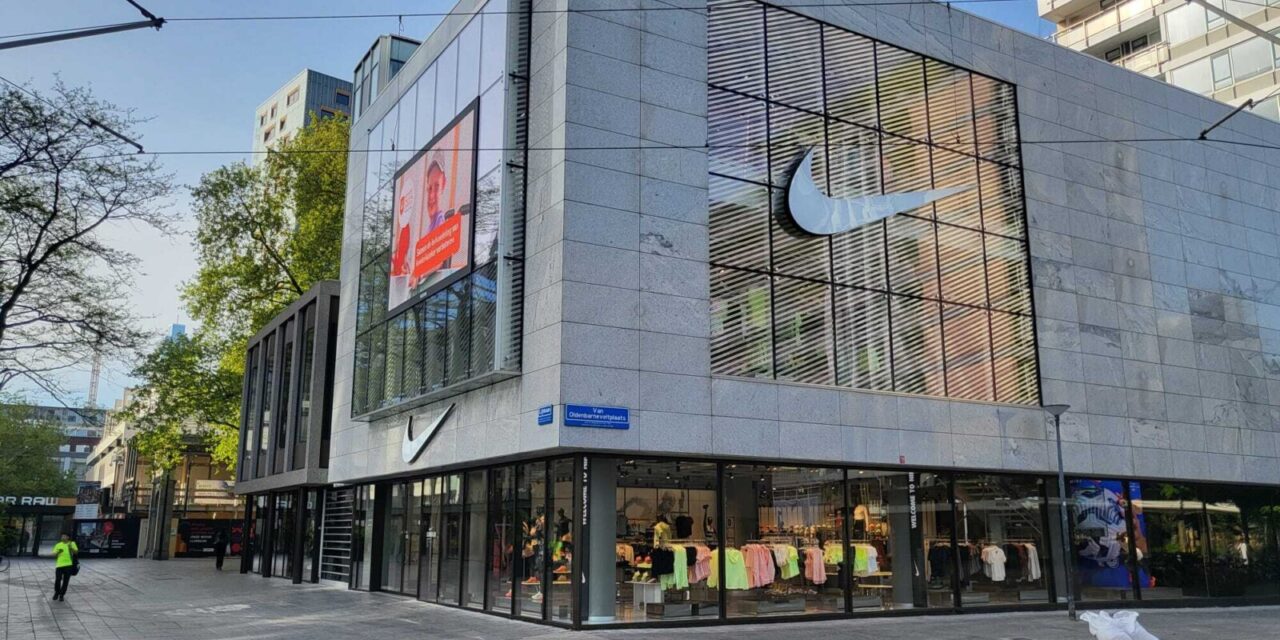
Nike (NYSE: NKE) warned investors Tuesday that revenues could continue falling through fiscal 2028, with a return to market-level growth not expected until fiscal 2029 at the earliest.
That admission, buried inside an otherwise ambitious long-term framework, appeared to rattle markets, sending shares down 6.30% to close at $35.85 on elevated trading volume.
Volume surged to 61.1 million shares on the day, running roughly 85% above Nike’s three-month average of 33.1 million shares, signaling unusually strong investor reaction to the Investor Day presentation.
The centerpiece of Tuesday’s event was a strategy Nike branded “Full Stride Ahead,” laying out a 2031 roadmap built around $5 billion in incremental revenue growth and a meaningful expansion of earnings per share.
Under that framework, Nike is targeting adjusted EPS of $3.00 to $3.50 by the close of fiscal 2031, a figure the company said would represent approximately 50% earnings growth relative to fiscal 2026 results.
Nike also reaffirmed its existing guidance for fiscal 2027, which got underway in June, offering some near-term certainty even as the longer-dated recovery timeline drew skepticism.
For investors willing to ride out the downturn, Nike dangled a significant financial incentive, pledging to return approximately $12 billion in cumulative capital through dividend payments over the next four fiscal years.
The company’s current dividend yield stands at 4.52%, offering a meaningful income cushion at a time when the stock is trading well below its 52-week high of $69.14 and near the lower end of its annual range.
Nike was not alone in facing selling pressure Tuesday, as broader sector peers also retreated, with Adidas closing down 1.58% at $95.25 and lululemon athletica finishing 1.25% lower at $104.14.
The wider market provided little relief, with the S&P 500 sliding 1.02% to 7,341 and the Nasdaq Composite losing 0.74% to settle at 24,329 by the session’s close.
Nike’s market capitalization currently sits at approximately $53.93 billion, a steep reduction from levels implied by the stock’s 52-week high, underscoring just how much ground the brand must recover to satisfy long-term shareholders.
Whether the “Full Stride Ahead” plan is credible enough to justify patience through two more difficult years of declining sales remains the central question investors are now weighing.
