
Canada’s drive to reduce its dependence on American energy markets and establish itself as a global LNG supplier is attracting serious institutional capital.
A consortium led by Blackstone (NYSE: BX) has agreed to acquire 49.9% of the LNG Canada stake held by a Mitsubishi Corporation unit, with the total transaction valued at $3.1 billion.
Four major Canadian pension and investment funds are co-investing alongside Blackstone (NYSE: BX): the Canada Pension Plan Investment Board, Ontario Municipal Employees Retirement System, the Investment Management Corp. of Ontario, and the Public Sector Pension Investment Board.
Despite the stake sale, Mitsubishi Corporation will retain its position as controlling partner and preserve its full share of LNG offtake from the project.
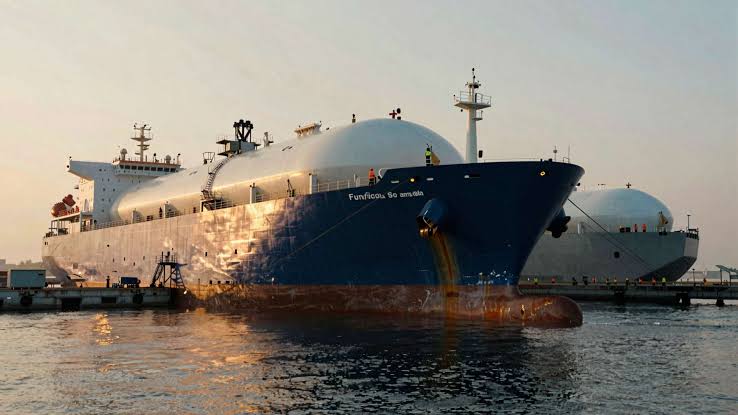
LNG Canada, situated in Kitimat, British Columbia, is the country’s first LNG export facility and currently holds a production capacity of 14 million tonnes per annum.
The Phase 2 expansion, which received its final investment decision just weeks before this deal was announced, will add two processing trains and double total output capacity to 28 million tonnes per annum.
Commercial production from the expanded facility is not expected to begin until the early 2030s, making this a long-horizon infrastructure bet for the investors involved.
Shell, the world’s largest LNG trader, holds a 40% interest in LNG Canada and stands to receive nearly 6 million additional tonnes per annum of supply from the Phase 2 expansion.
The project carries significant political weight, having topped Prime Minister Mark Carney’s list of five major national priority projects designed to diversify Canadian energy exports away from the United States.
Blackstone’s Infrastructure and Asset Based Credit platform, which oversees roughly $140 billion and employs more than 100 investment professionals, has been deepening its footprint in Canadian assets through partnerships with domestic institutional investors.
The transaction underscores how sovereign-adjacent capital pools are increasingly gravitating toward large-scale energy infrastructure at a moment when energy security has become a central theme in Canadian economic policy.
With global LNG demand remaining robust and Canada eager to monetize its natural gas reserves through Pacific export routes, the Kitimat facility sits at the intersection of national strategy and institutional investment appetite.
