
Booking Holdings (NASDAQ: BKNG) and GameStop (NYSE: GME) represent two sharply different bets for retail investors seeking consumer-focused exposure in today’s market.
Booking operates a sprawling digital travel ecosystem, connecting millions of travelers with hotels, flights, and car rentals through flagship brands including Booking.com and Priceline.
The company’s so-called Connected Trip strategy aims to weave every element of travel planning into one seamless, integrated user experience for customers worldwide.
Booking’s financial profile is formidable, with free cash flow of approximately $9.1 billion and full-year revenue of roughly $26.9 billion in fiscal 2025, representing 13.4% year-over-year growth.
Net income came in at approximately $5.4 billion, producing a net margin of 20.1%, though that figure slipped from the 24.8% margin recorded in the prior fiscal year.
The company carries a debt-to-equity ratio of roughly negative 3.5x, reflecting total liabilities that exceed shareholder equity, a result largely driven by an aggressive share buyback program.
A notable setback came when Booking was forced to abandon its ETraveli acquisition following a negative European antitrust ruling that blocked the deal from moving forward.
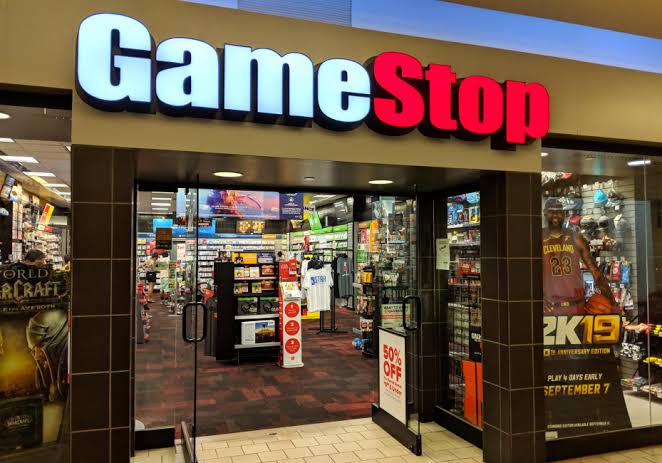
GameStop, by contrast, is deep into a retail transformation, operating roughly 1,600 physical locations while leaning heavily into collectibles to offset a steadily declining core gaming business.
Collectibles sales reached $356.3 million in fiscal Q2, a significant jump from $227.6 million in the year-ago period, as management pursues growth outside traditional gaming hardware and software.
The company depends on major partners including Nintendo, Sony Group Corp., and Pokémon to supply the hardware and software that still anchor its in-store retail sales today.
GameStop’s balance sheet has drawn attention for its relative strength, with management increasingly focused on capital allocation strategies and exploring what it describes as strategic alternatives for the business.
Both companies currently trade at comparable earnings multiples, with Booking carrying a price-to-earnings ratio of 17.24 and GameStop trading at 16.46, despite vastly different scales and business models.
Booking’s market capitalization stands at approximately $117 billion against a stock price of $155.83, while GameStop’s market cap sits near $13 billion with shares trading at $24.82.
Booking also pays a dividend yielding approximately 1.05%, offering income-oriented investors a return component that GameStop, which pays no dividend, cannot currently match.
For investors weighing stability and scale against turnaround potential, the contrast between Booking’s high-margin digital platform and GameStop’s evolving retail model presents a genuinely complex value question heading into the rest of 2026.
