
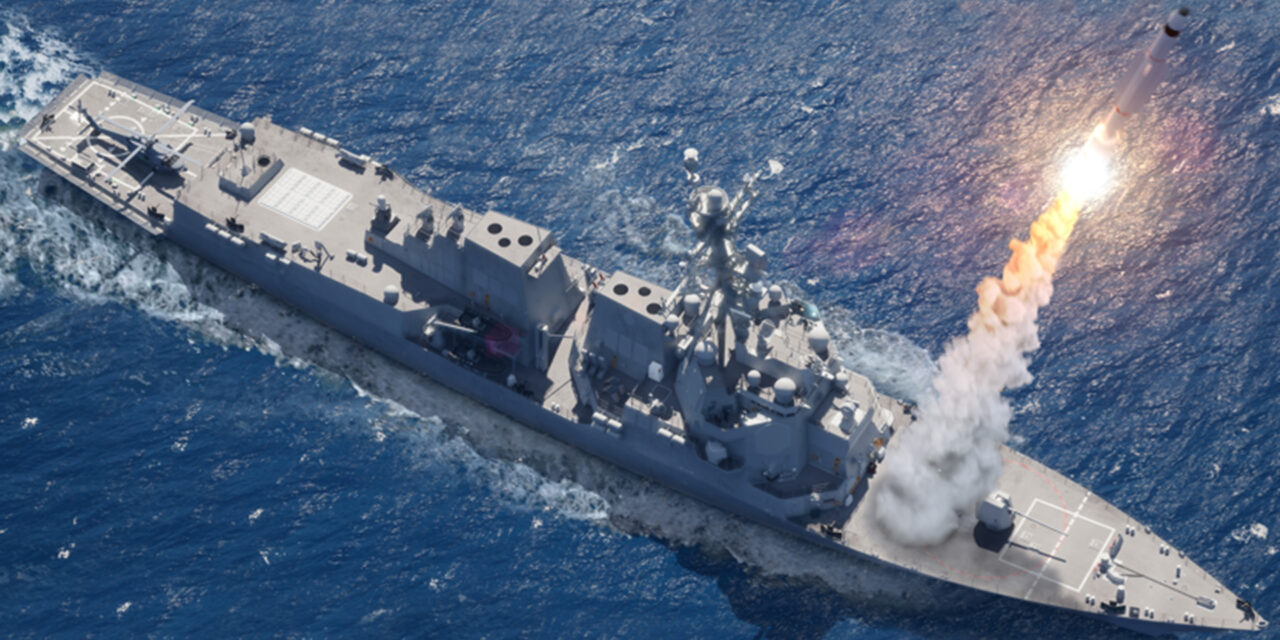
Defense contractors secured a fresh wave of military contracts and long-term production commitments this week, as the U.S.-Iran war approached the end of its eighth month.
Lockheed Martin (NYSE: LMT) unveiled a sweeping 10-year F-35 production framework, while RTX (NYSE: RTX), L3Harris Technologies (NYSE: LHX), and HII (NYSE: HII) each landed new awards spanning missile defense, electronic warfare, and naval operations.
Tensions remained elevated as President Donald Trump reportedly weighed an immediate end to the war, while Tehran warned of broader retaliation across the Middle East if U.S. and Israeli strikes resumed.
Lockheed Martin and the Department of War reached a preliminary agreement to produce and support at least 850 F-35 fighter jets over the next decade, targeting annual production of 156 aircraft.
Lockheed committed to investing at least $7 billion of its own funds to support the initiative, though the agreement is not yet a finalized aircraft order, with pricing and delivery schedules still subject to further negotiations.
Separately, Lockheed reported an 11% increase in third-quarter revenue, surpassing Wall Street’s estimate of $20.46 billion, with earnings per share rising to $7.97 from $6.95 a year earlier, beating expectations of $7.52.
The company raised its full-year 2026 revenue guidance to between $80 billion and $82 billion, and lifted its earnings outlook to $30.35 to $30.75 per share from a prior range of $29.95 to $30.65.
L3Harris Technologies received an $876.4 million contract from the U.S. Navy for the Next Generation Jammer Low Band program, a system designed to help military aircraft disrupt enemy radar and communications.
The company also opened a new solid rocket motor manufacturing facility in Arkansas this week, with the stated aim of doubling its existing production capacity.
RTX’s Raytheon unit and Lockheed Martin jointly secured a $215 million U.S. Army contract to manufacture next-generation Javelin anti-tank missile launchers, which are 30% smaller and 25% lighter than the previous version while offering twice the target detection and recognition capability.
RTX also received a $394 million contract extension from the Missile Defense Agency to maintain and support AN/TPY-2 missile-defense radar systems through October 2028, raising the existing contract ceiling to approximately $3 billion.
HII secured a $99 million U.S. Navy contract modification to conduct sea trials for the Lyndon B. Johnson destroyer, with work expected to continue through October 2028 as the vessel is upgraded to carry the Navy’s Conventional Prompt Strike hypersonic missile system.
In terms of stock performance this week, Lockheed Martin led all gainers with a 10.6% advance, followed by L3Harris at 3.7% and HII at 1.7%, while RTX was the only decliner in the group, slipping approximately 0.5%.
On a year-to-date basis, Lockheed Martin remained the standout performer with a roughly 22% gain, while RTX edged up 2.2%, L3Harris slumped 17%, and HII declined 22%.
