
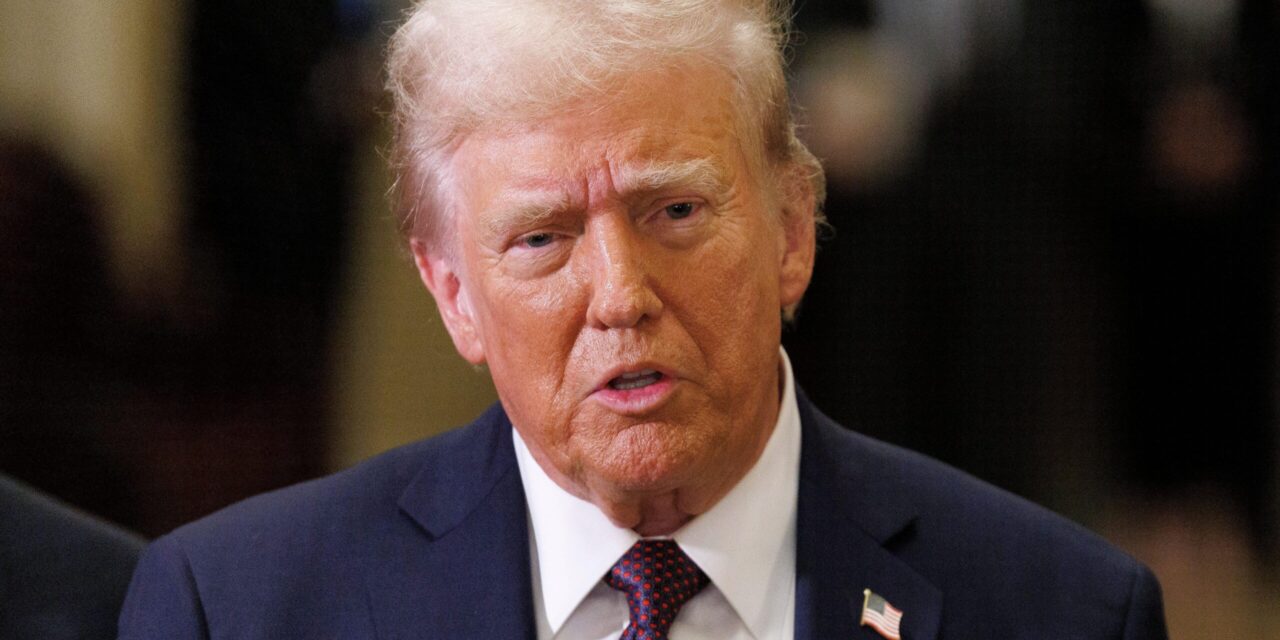
President Donald Trump has indicated his administration will move quickly on a potential diesel export ban, telling reporters the decision would come “fast, one way or another.”
Trump made the remarks at the United Nations General Assembly in New York, saying he personally favored the measure but acknowledged differing views within his administration.
“I’ve said let’s not send out the diesel. We make a lot of diesel,” Trump told reporters, adding that the issue remained “a balance” with no consensus reached yet.
Treasury Secretary Scott Bessent, appearing alongside Trump, said the administration was evaluating whether a ban was “feasible in terms of the overall refining capacity and whether a full or partial ban would work.”
Diesel prices in the United States have surged to a record high of $6.53 per gallon, nearly $3 above year-ago levels, according to data from AAA.
In California, drivers are now paying $8.44 per gallon for diesel, compounding economic pressure on trucking, agriculture, and supply chains nationwide.
Global refining capacity has been squeezed by conflicts in Eastern Europe and the Middle East, with Ukraine’s attacks on Russian refineries prompting Moscow to impose its own diesel export ban.
Refineries in the Middle East have also faced strikes from Iran and its Houthi allies, further tightening an already stressed global fuel market.
Several Republican lawmakers have rallied behind an export ban, including Sen. Chuck Grassley of Iowa, who proposed the measure to drive down domestic prices, with farm-state colleagues quickly following.
Rep. Ashley Hinson of Iowa, who faces a competitive re-election race, called for a diesel ban and slammed the ongoing war in Iran, while Senate Majority Leader John Thune said he was “open” to exploring the restriction.
Not all Republicans are on board, however, with Sen. John Cornyn of Texas dismissing the idea as a “gimmick” that would not address underlying supply issues.
Mike Sommers, CEO of the American Petroleum Institute, warned that a ban would “only compound the problem,” arguing that “the answer is more supply and more flexibility, not new restrictions that risk making a difficult situation worse.”
Analysts caution that while a ban could boost domestic diesel supplies and lower prices in the short term, it risks driving up global diesel prices and feeding higher costs back into the American economy over time.
The United States has historically avoided outright energy export bans due to concerns about disrupting international markets, making any decision by the Trump administration a significant policy shift.
