
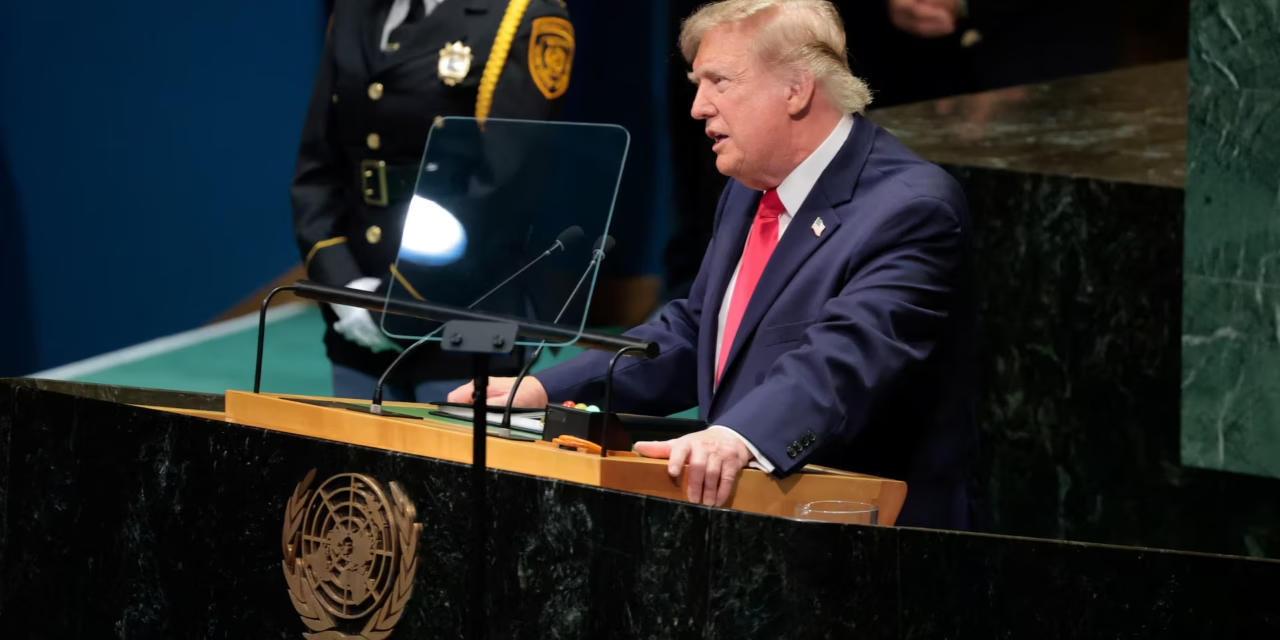
President Donald Trump used his address to the United Nations General Assembly to highlight what he described as economic achievements under his administration and defend U.S. actions toward Iran.
The speech, delivered at the annual gathering of world leaders in New York, placed American economic performance and foreign policy toward Tehran at the center of his remarks.
Trump has consistently pointed to domestic economic indicators as a signature accomplishment of his presidency, and the UNGA address gave him a global stage to reinforce that message.
The United Nations General Assembly convenes each September, drawing heads of state and senior officials from across the world to address pressing geopolitical and economic issues.
Iran has remained one of the most contentious foreign policy challenges for Washington, with tensions over nuclear negotiations and regional influence continuing to shape U.S. strategy in the Middle East.
Trump’s decision to foreground Iran policy in his address signals that the administration views its approach to Tehran as a defining element of its broader foreign policy posture.
Economic conditions in the United States have been a point of ongoing debate, with the administration crediting its trade and tax policies for sustaining growth and employment.
World leaders attending the General Assembly represent a range of perspectives on both U.S. economic policy and Washington’s handling of the Iran situation.
The annual UNGA address has historically served as a platform for American presidents to frame U.S. priorities for an international audience and assert leadership on global affairs.
Trump’s remarks are expected to draw responses from foreign governments, particularly those with a direct stake in American trade relationships and the future of diplomacy with Iran.
