
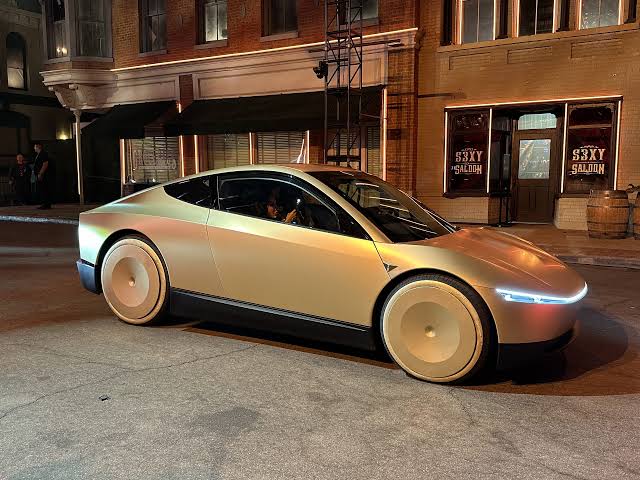
Tesla, Inc. (NASDAQ: TSLA) spent nearly two years building anticipation for its Cybercab, but the September 3 launch event in Austin, Texas left investors deeply unimpressed.
The event was invitation-only, not livestreamed, and CEO Elon Musk was absent from the proceedings entirely.
Tesla’s primary public communication was a 51-second video posted on X, showing the two-seat, steering-wheel-free vehicle navigating city streets while passengers hailed it via app.
Shares rose roughly 5% during the session, with the stock finishing near $376, but that optimism proved short-lived and fragile.
By September 4, enthusiasm had collapsed, with the stock falling as much as 6% as investors confronted how little the event disclosed about deployment timelines, production ramp, or regulatory clearance.
Only 45 Cybercabs were registered in Texas, and Tesla did not seek an NHTSA exemption prior to deployment, instead self-certifying the vehicle as compliant with applicable federal safety standards.
NHTSA subsequently opened an audit into that self-certification and ordered Tesla to provide additional information about the basis for its compliance claims.
CNBC summarized the Wall Street reaction bluntly, describing the update as one that “underwhelmed” investors who had been counting on Tesla emerging as a serious rival in the robotaxi sector.
That sector is currently led by Alphabet’s (NASDAQ: GOOG) Waymo, which operates more than 4,000 autonomous vehicles across its U.S. fleet and completes more than 500,000 fully autonomous rides per week.
Analyst opinion on the launch was sharply divided, with Gary Black of Future Fund calling the Cybercab debut largely a bust, while Deepwater Asset Management’s Gene Munster predicted Tesla would add approximately 300 Cybercabs in Austin over the following month.
Munster’s interpretation frames the small rollout as deliberately conservative, a controlled method of verifying the vehicle before committing to a broader operational scale.
Tesla’s manufacturing capabilities, if the Cybercab survives regulatory scrutiny, could theoretically allow a faster fleet expansion than competitors once a full production ramp begins.
The company’s brand recognition and existing customer base also give it a distribution advantage that Waymo does not possess in the same form.
However, the structural challenges facing Tesla in this space remain significant and are unlikely to be resolved through manufacturing scale alone.
Waymo’s more than 4,000-vehicle fleet and 500,000 weekly rides represent years of cumulative operating expertise that cannot simply be replicated through production volume.
Analysts have attributed up to half of Tesla’s total valuation to the eventual success of its robotaxi business, making Cybercab’s credibility central to the stock’s overall premium.
It is also worth noting that no company in this space, including Waymo, has yet resolved the profitability problem, with competitors like Amazon’s Zoox and Uber’s partnerships with Lucid and Nuro still focused on scaling rather than returns.
Hedge fund ownership of Tesla decreased from 123 funds in the first quarter to 116 in the second, a retreat that predates the Austin launch but reflects an institutional caution this debut is unlikely to reverse.
The NHTSA review of Tesla’s self-certification now represents a critical regulatory variable that could directly influence how quickly the Austin Cybercab deployment is permitted to expand.
With no clear timeline, limited vehicles on the road, unresolved federal scrutiny, and a stock that gave back all its gains within 24 hours, the Cybercab launch has raised more questions than it answered for investors seeking near-term catalysts.
