
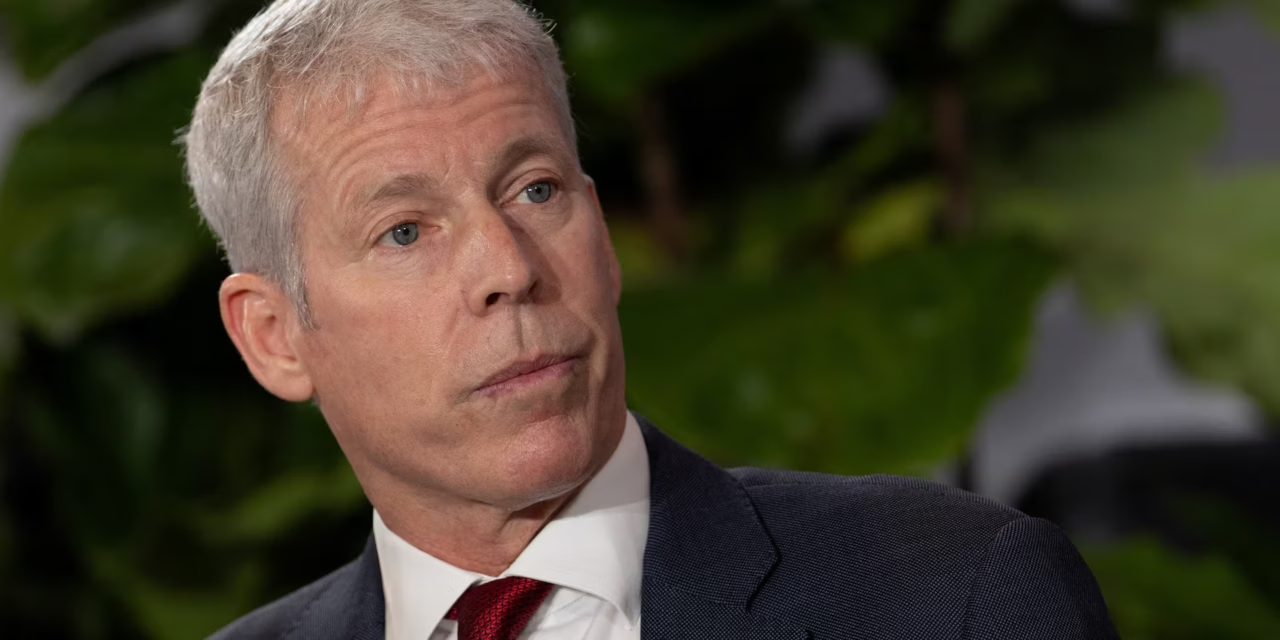
Energy Secretary Chris Wright deflected questions Sunday about the rising cost of gasoline for American consumers, saying he did not “want to have an opinion” on the direction of prices.
Gas prices across the United States have climbed above $4 per gallon on average, putting fresh pressure on the administration to address energy costs for ordinary Americans.
CNN’s Dana Bash confronted Wright on “State of the Union,” pointing to a prediction he made on the same program five months earlier that high gas prices had peaked.
Bash challenged Wright by citing multiple factors now pushing prices higher, including the ongoing conflict with Iran, the Russia-Ukraine war, and dwindling U.S. reserves.
“Isn’t it possible gas prices could go up even more?” Bash asked, pressing Wright on whether his earlier assessment had proven premature given the current geopolitical landscape.
Wright pushed back by pointing to futures markets as a more reliable indicator of where prices are headed, rather than offering a direct personal forecast on the trajectory of costs.
“If you look at the futures market right now, what can you buy gasoline for two months in advance from where we are today? It’s down more than 30 cents a gallon from where it is today,” Wright said.
Bash continued to press the Energy Secretary for a clearer answer, prompting Wright to offer a more direct, if cautious, assessment of where he believed prices were headed.
Wright ultimately conceded that “if I had to guess, they’re more likely to go down than go up,” though he stopped short of making any firm commitment on future price levels.
The exchange highlights the political sensitivity surrounding energy costs, as the administration faces scrutiny over its management of reserves and its approach to conflicts affecting global oil supply.
Rising gas prices remain a key concern for American households, and the combination of Middle East tensions, the prolonged war in Ukraine, and domestic supply constraints continues to cloud the energy outlook heading further into 2026.
Wright’s reluctance to offer a definitive opinion underscores the uncertainty facing energy policymakers as they navigate an increasingly volatile global market with multiple simultaneous pressure points.
