
Japan has handed AST SpaceMobile (NASDAQ: ASTS) something no G20 nation has ever offered a foreign satellite company, and most retail investors are still looking the wrong direction.
While Wall Street obsesses over SpaceX following its post-IPO surge of 36.65% in a single month and a $2 trillion market cap, the underlying unit economics tell a more complicated story.
SpaceX posted $7.81 billion in Q2 2026 revenue, beating consensus by 14.59%, yet still reported an operating loss of $143 million and a net loss of $541 million for the quarter.
The Connectivity segment grew 66% year over year, but Starlink’s average revenue per user compressed from $85 to $66 even as its subscriber base doubled, a classic sign of late-cycle unit economics dressed up as growth.
Capital expenditure hit $18.37 billion in a single quarter, with $15.83 billion directed at AI compute, and a $60 billion pending acquisition of Cursor is scheduled to close in Q3 2026.
Against that backdrop, ASTS carries a market cap of roughly $18.68 billion and is quietly building what amounts to a direct-to-device cellular operating system delivered from space.
Japan’s Ministry of Internal Affairs and Communications preliminarily selected the Rakuten and AST joint venture for the J-LEO initiative, worth up to approximately $1 billion in non-dilutive, non-debt government capital.
Japan separately filed an ITU application for a 136-satellite “J-BLUEBIRD-NGSO” architecture, with government subsidies covering as much as 50% of eligible costs and private matching pushing the total program value toward $2 billion.
AST President Scott Wisniewski framed the strategic logic plainly: “I don’t know why a G20 country wouldn’t want this kind of capability given the price.”
The template emerging from Japan is significant: governments finance and own AST-powered constellations while ASTS collects the underlying platform economics at scale.
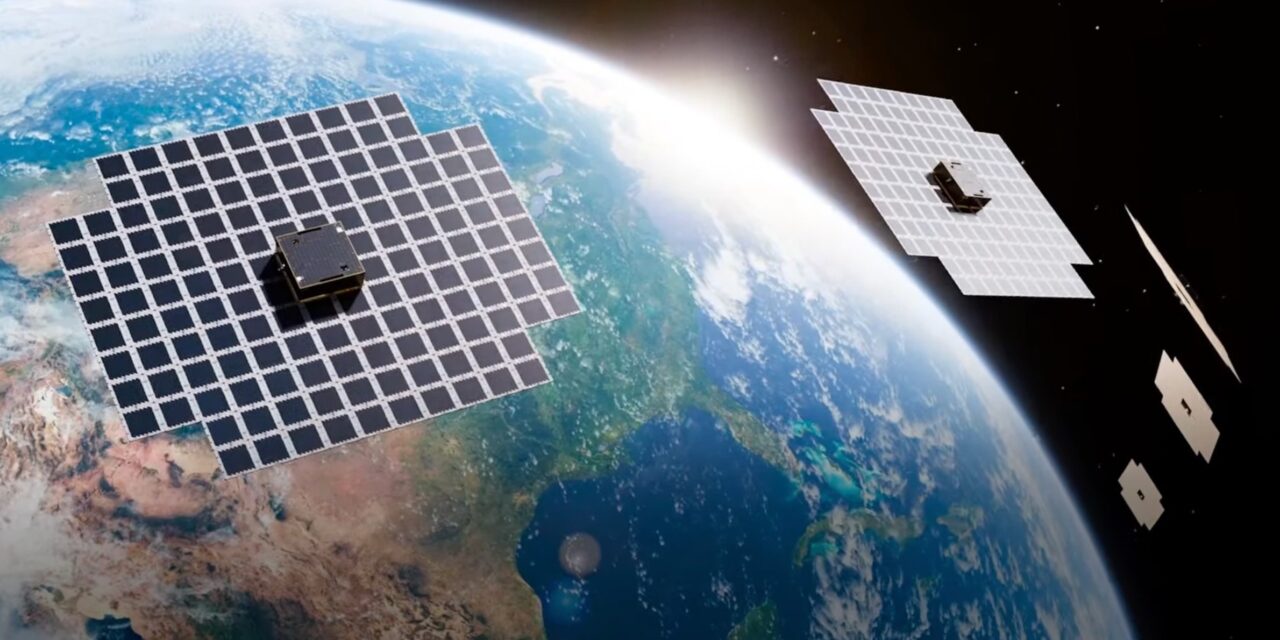
On the operational side, ASTS now has 13 BlueBird spacecraft in orbit with roughly 20,000 square feet of aperture hardware deployed, and the company is producing approximately six fully assembled satellites per month.
BlueBirds 14 through 16 are ready to ship, BlueBirds 17 through 46 are in active production, and the target is approximately 45 satellites in orbit by early 2027, at which point commercial service can begin.
Block 2 satellites are engineered for peak data rates approaching 200 Mbps, giving the constellation meaningful performance headroom as the network scales.
Pro forma liquidity exceeds $3.70 billion following a July 2026 $1.150 billion convertible note offering, with backlog sitting at roughly $1.30 billion and $125 million in U.S. Government awards anchoring a defense revenue pipeline.
The company’s commercial partner network spans over 60 mobile network operators covering more than 3 billion subscribers, including Vodafone, Verizon, AT&T, Rakuten, and Deutsche Telekom.
Analysts currently carry an average price target of $79.61 on ASTS against a last close of $62.31, implying meaningful upside before Japan converts its preliminary award into a signed contract.
