
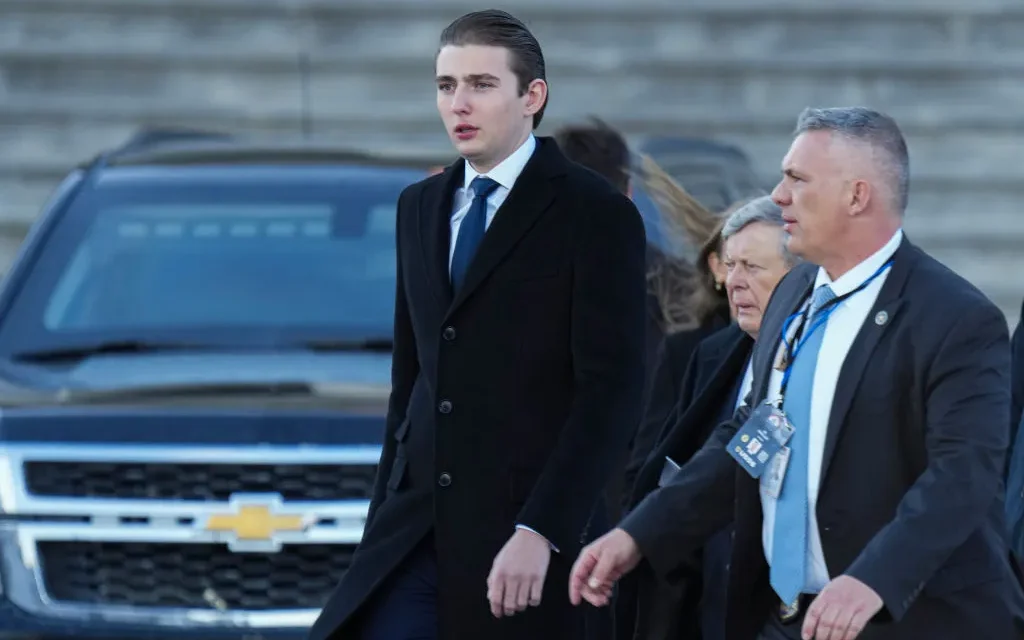
The question of how to protect Barron Trump against a credible threat from Iran has emerged as a significant challenge for federal security officials.
Unlike other members of the Trump family, Barron Trump’s security situation involves a unique set of logistical and operational considerations that make straightforward solutions difficult to implement.
Iran has been identified as a persistent threat actor targeting members of the Trump family, a concern that has intensified since the assassination of Iranian General Qasem Soleimani in 2020.
Security professionals have noted that adjusting protective details for private individuals connected to public figures is rarely as simple as reassigning agents or increasing patrol frequency.
The complexity arises partly because Barron Trump, as a young adult, moves through environments that are inherently difficult to secure, including college campuses and urban areas.
Federal agencies responsible for executive protection must balance the subject’s personal freedom and privacy against the operational demands of maintaining a robust security perimeter.
Iran’s alleged plots against Trump family members have been taken seriously at the highest levels of government, with multiple investigations and indictments tied to suspected Iranian operatives in recent years.
The threat landscape has evolved considerably, with officials pointing to both direct physical threats and more indirect methods of surveillance and intimidation as areas of concern.
Adapting security protocols to meet these evolving threats requires coordination across multiple agencies, adding layers of bureaucratic and logistical complexity to any proposed changes.
Experts familiar with executive protection have emphasized that no adjustment to a high-profile individual’s security detail can be implemented quickly without introducing potential gaps in coverage.
The situation underscores the broader challenge facing American security agencies as they attempt to protect an expanding circle of individuals deemed to be at risk from state-sponsored threat actors.
Officials have stressed that the safety of all individuals under federal protection remains a top priority, even as the operational details of how that protection is structured remain closely guarded.
