
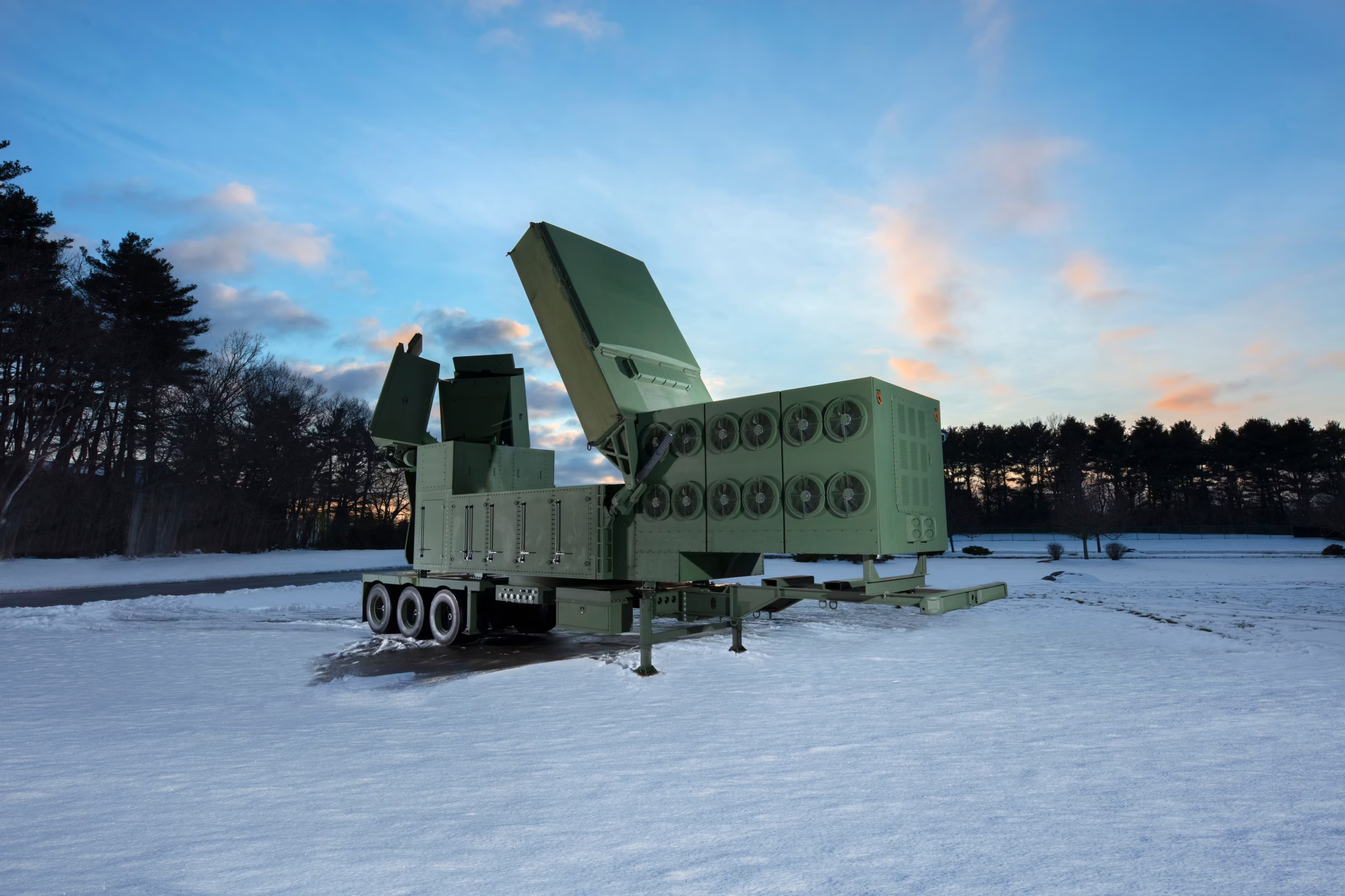
RTX (NYSE: RTX) carries a $289 billion backlog that is split roughly 60% commercial aerospace and 40% defense, a division that has proven to be a significant strategic advantage for the company.
The conventional wisdom once held that commercial aerospace was cyclical and unreliable, while defense contracts offered steady, low-growth revenue backed by government spending.
That traditional view has been upended by RTX’s model, which demonstrates how commercial and defense businesses can reinforce each other across varying market conditions.
Strong commercial aerospace demand has given RTX the financial flexibility to be more selective when bidding on defense contracts, allowing the company to walk away from deals it considers unfavorable.
This discipline, arguably enabled by a robust commercial backlog, has allowed RTX to focus on proven defense solutions such as Patriot missiles rather than chasing higher-risk, novel programs.
The $289 billion backlog grew 22% year-over-year and 6% sequentially, reaching a record level that underpins the company’s cash flow stability and long-term operational planning.
RTX reported adjusted sales of $24.7 billion in its most recent quarter, up 16% organically, with double-digit growth recorded in both the commercial aftermarket and defense segments.
Adjusted earnings per share came in at $1.89, a 21% increase year-over-year, driven by 18% growth in segment operating profit, while free cash flow reached $2.9 billion.
Raytheon alone booked nearly $20 billion in awards during the second quarter, producing a book-to-bill ratio of 2.42, reflecting exceptionally strong international defense demand.
Management raised its full-year outlook for sales, earnings, and free cash flow, citing first-half execution and the record backlog as the foundation for that increased confidence.
The company’s structure, combining Raytheon’s missile systems expertise with Pratt & Whitney’s commercial engines and Collins Aerospace’s avionics, provides diversification that pure-play defense contractors like Lockheed Martin cannot replicate.
Collins Aerospace recorded a significant ramp in commercial original equipment production, while Pratt & Whitney and Raytheon both delivered double-digit organic growth during the period.
RTX’s strategic priorities remain centered on executing the Pratt & Whitney GTF fleet management plan and expanding manufacturing capacity for high-demand defense munitions.
The company continues to invest in global production infrastructure and digital manufacturing solutions, positioning itself to meet sustained long-term demand across both business segments.
The original merger logic that combined United Technologies’ commercial aerospace operations with the defense-focused Raytheon Company continues to prove its worth through this complementary backlog structure.
