
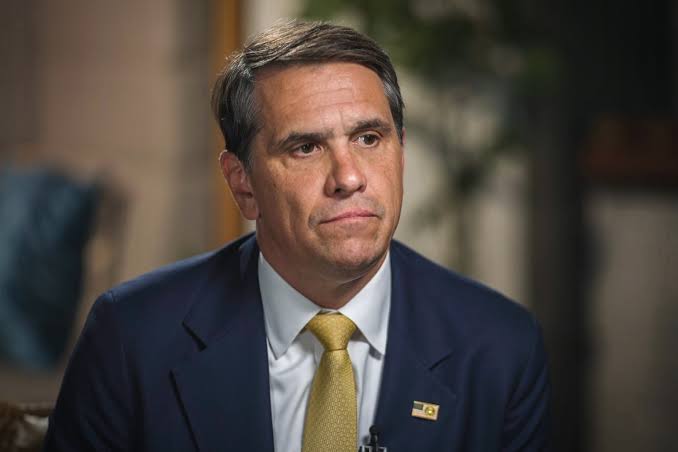
The Senate Judiciary Committee has postponed a scheduled vote on Todd Blanche’s nomination as Attorney General after key Republican senators raised concerns about his candidacy.
The delay marks a significant setback for the nomination, as resistance from within the Republican Party itself complicates what would otherwise be a straightforward confirmation process.
Blanche, who previously served as a defense attorney, was put forward for the top law enforcement position in the United States, the role that oversees the Department of Justice.
The decision to delay the committee vote signals that Republican leadership does not yet have the votes needed to advance the nomination out of the panel and onto the full Senate floor.
Key Republican senators on the Judiciary Committee voiced reservations about Blanche, though the precise nature of those concerns has added uncertainty to the timeline for any future vote.
The postponement puts the nomination in a holding pattern, leaving the Department of Justice without a confirmed attorney general while deliberations continue on Capitol Hill.
Senate Judiciary Committee votes are a critical gatekeeping step in the confirmation process, and a delay at this stage can significantly slow or even derail a nomination entirely.
Republican hesitation over a nominee put forward by a Republican administration underscores the internal tensions that can emerge even when a single party controls both the White House and the Senate.
The nomination will now require further negotiation and outreach to wavering Republican members before the committee chairmanship schedules another vote.
The situation is being closely watched by legal and political observers, as the attorney general role carries enormous influence over federal law enforcement priorities and prosecutorial decisions nationwide.
Any path forward for Blanche’s confirmation will depend on whether the administration can address the specific concerns raised by the Republican senators who have so far withheld their support.
The delay adds to a broader confirmation backlog that has characterized the current legislative session, with multiple high-profile nominees facing drawn-out processes before reaching a final Senate vote.
