
Rocket Lab (NASDAQ: RKLB) shares slipped an additional 3% overnight Monday, extending a decline that saw the stock fall more than 6% during the regular trading session.
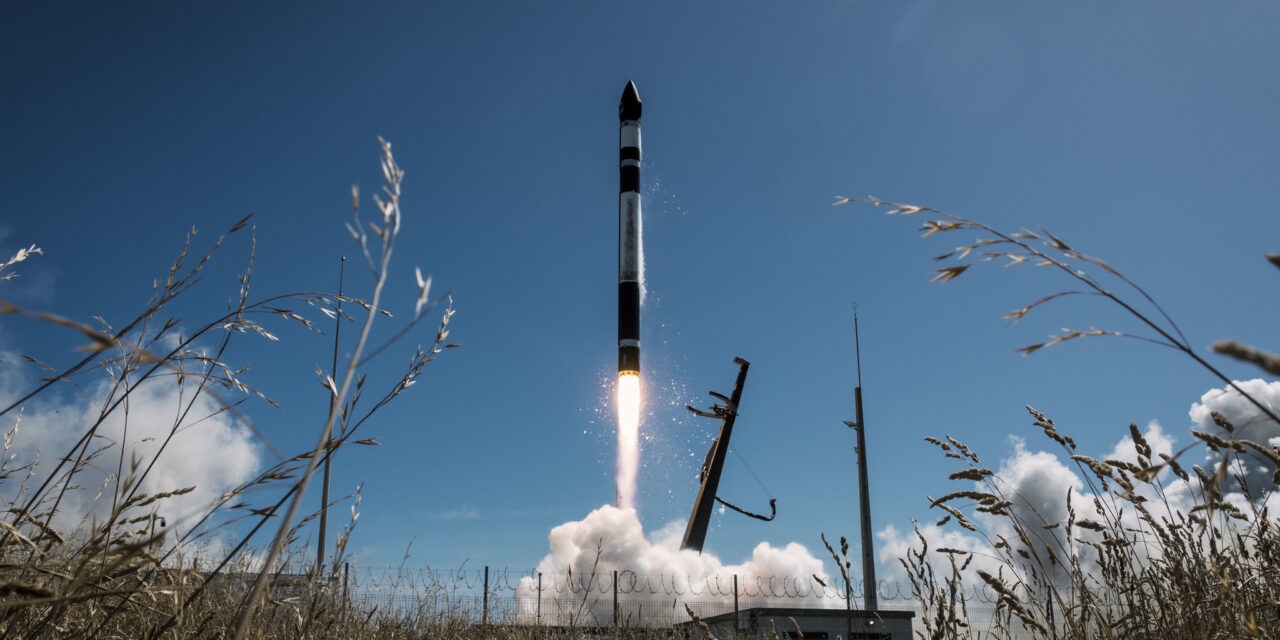
The two-day losing streak came despite Rocket Lab completing what the U.S. Space Force confirmed as a record-breaking tactically responsive launch mission, delivering its Electron rocket to orbit in just 16 hours and 42 minutes.
The mission, called Victus Haze, launched from Rocket Lab Launch Complex 1 in New Zealand on June 19, beating the previous Tactically Responsive Space record set by Victus Nox by more than 10 hours.
The selloff in RKLB was compounded by broader weakness across the space sector, with SpaceX tumbling 16% on Monday and wiping out much of its gains from the days following its IPO.
Rocket Lab said its guidance, navigation and control team calculated final trajectories, updated flight software and coordinated global ground stations in just four hours ahead of the launch window.
After reaching orbit, Rocket Lab’s Pioneer spacecraft was fully activated and readied for its first orbital maneuver in 37 hours and 36 minutes, beating the mission’s strict 72-hour commissioning deadline by more than 34 hours.
Rocket Lab CEO Peter Beck said, “By launching on demand with spacecraft at-the-ready we’ve shown we can secure and defend the nation’s space interests rapidly, and that’s a powerful capability for the United States and its allies.”
The Pioneer spacecraft is now conducting Rendezvous and Proximity Operations in low Earth orbit, simulating a rapid threat-response scenario alongside a non-compliant satellite, allowing the U.S. to pursue, photograph and monitor objects in space in real time.
Rocket Lab noted that Pioneer relies entirely on in-house subsystems, including propulsion, solar arrays, reaction wheels, radios, star trackers, structures, propellant tanks and flight software.
USSF Lt. Col. Lincoln Miller, Space Safari system program manager, said the mission marks the culmination of the TacRS “crawl, walk, run” phase of on-orbit demonstrations, calling the timeline a significant operational achievement.
Miller said that “rendezvous and proximity operations on such short timelines are certainly not trivial, especially in a crisis or conflict scenario,” emphasizing the strategic importance of the capability.
He added that commissioning a complex spacecraft in under 72 hours and immediately beginning a proximity operations scenario demonstrates the U.S. can “field capability to deny adversaries first-mover advantage into novel orbits.”
On Stocktwits, retail sentiment for RKLB turned “bearish” as message volumes surged 470% over a 24-hour period following the news of the launch record and the stock decline.
One retail user described the Victus Haze mission as a “prelude to the future of warfare where we no longer need large NATO bases for equipment delivery,” reflecting the broader strategic interest in the program.
Another user posted, “$RKLB The US government is obviously going to take a stake in RKLB at some point. Calling it now,” suggesting some investors still view the stock as a long-term national security play.
Despite the recent pressure, RKLB stock has still surged 234% over the past year, underlining the long-term investor conviction that has built around the company’s expanding defense and launch capabilities.
