
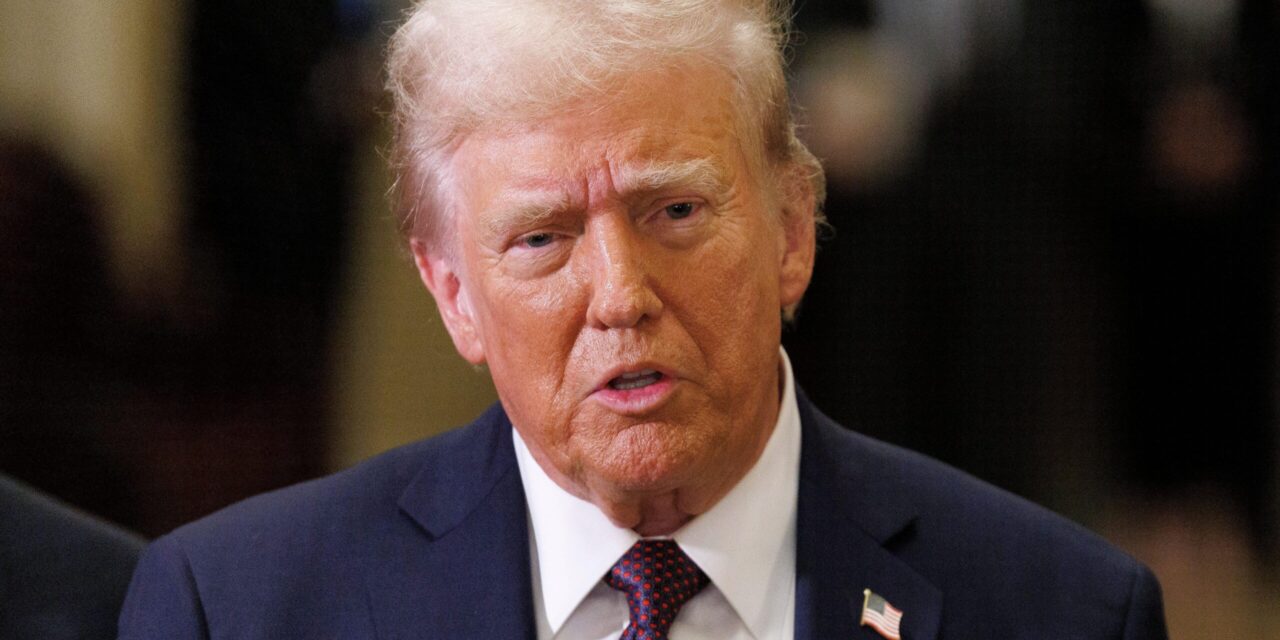
Quantum computing stocks – including NYSE: IONQ, NYSE: QBTS and NYSE: RGTI – surged after President Trump signed two executive orders on June 22, 2026, directly targeting national quantum capabilities and cryptographic defense infrastructure.
The first order establishes the Quantum Computer for Application Development and Discovery Science initiative, coordinating the Department of Energy, Commerce, and the Intelligence Community to deliver a science-enabling quantum computer to a Department of Energy facility by 2028.
The same directive mandates the fielding of prioritized next-generation quantum sensors by September 30, 2028, setting hard government deadlines that will shape federal procurement standards for years ahead.
The second order directs federal agencies to designate a migration lead and transition high-value assets to post-quantum cryptography by 2030 for key establishment and by 2031 for digital signatures.
A Department of Commerce pilot project reinforces the cryptographic mandate, with completion required by December 31, 2027, creating an aggressive federal transition roadmap that contractors are already positioning to fulfill.
This policy push follows the Department of Commerce’s May 2026 announcement of a $2 billion allocation under the CHIPS and Science Act, which includes direct government equity stakes in public quantum hardware firms rather than standard non-dilutive grants.
The policy momentum is backed by tangible commercial results, with Q1 2026 earnings across the sector showing fundamental acceleration rather than speculative pipeline projections.
IonQ (NYSE: IONQ) reported 755% year-over-year revenue growth, positioning itself as the clear revenue leader among publicly traded pure-play quantum hardware companies heading into the 2028 hardware procurement window.
D-Wave Quantum (NYSE: QBTS) recorded quarterly bookings of $33.4 million, a 1,994% surge driven by Fortune 100 and academic contracts, with its quantum annealing systems already commercially deployed for live enterprise optimization problems.
D-Wave carries a parallel advantage from the 2030-2031 post-quantum cryptography migration deadlines, as agencies and enterprise clients scrambling for quantum-safe infrastructure give the company an inside track for high-margin consulting and hybrid workflow contracts.
Rigetti Computing (NASDAQ: RGTI) signed a Letter of Intent with the Department of Commerce for a proposed award of up to $100 million over three years under the CHIPS Act build-out, relieving meaningful balance-sheet pressure for the firm.
Rigetti carries the highest execution risk among the three, as its gate-based superconducting approach must hit competitive scaling milestones before IonQ or well-capitalized technology incumbents can capture the earmarked federal budget.
The broader rally also reflects NVIDIA’s (NASDAQ: NVDA) ongoing rollout of its CUDA-Q platform, which has integrated quantum error correction tools directly into classical GPU data center workflows, removing the highest friction point in enterprise quantum adoption.
Classical-quantum convergence is not a competitive threat to IonQ, D-Wave, or Rigetti; it is the infrastructure bridge that makes quantum outputs digestible for enterprise artificial intelligence pipelines without requiring clients to rebuild their technology stacks from scratch.
The June 22 executive orders transformed a broad $2 billion funding narrative into a structured federal timeline with hard agency targets, significantly elevating near-term visibility of government-backed revenue across the sector, though execution against technical scaling roadmaps remains the ultimate arbiter of current valuations.
