
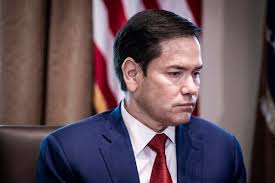
Secretary of State Marco Rubio stepped behind the White House briefing room podium in early May, becoming the first member of President Donald Trump’s cabinet to fill in for Press Secretary Karoline Leavitt as she began her maternity leave following the birth of her second child, a daughter named Viviana.
The arrangement placed the nation’s top diplomat in the role of chief White House spokesman during a critical period of the ongoing conflict with Iran, with Rubio facing reporters’ questions about ceasefire talks, the US-Iran war’s progression, and the broader diplomatic outlook during a session that drew significant political attention.
Leavitt began her maternity leave at the end of April after announcing in December that she was expecting a baby girl due in May, with no single permanent replacement designated for the duration of her absence, and instead a rotating cast of senior administration officials scheduled to take the podium in her place.
Rubio’s appearance coincided with what analysts described as a period of relative quiet for the Secretary of State after an unusually high-profile February and March, during which he had been averaging two media appearances per week and had generated a wave of 2028 presidential speculation tied to his assured television performances on the Iran conflict and other national security matters.
Dan Scavino, one of Trump’s senior communications aides, posted a video to social media showing Rubio DJing at a family wedding on the same evening as his White House briefing, a clip that went modestly viral and added to the informal quality of the week’s political atmosphere even as serious diplomatic business continued.
Rubio subsequently flew to Rome and Vatican City to meet with Pope Leo XIV, with discussions focused on the Middle East situation and mutual Western Hemisphere interests, continuing what has been one of the busiest diplomatic travel schedules of any US Secretary of State in recent memory.
The briefing room appearance added yet another data point to what Republican operatives and analysts are tracking as a quiet but intensifying competition between Rubio and Vice President JD Vance for positioning as Trump’s most plausible successor, with Rubio’s high-visibility performance during Leavitt’s absence providing further evidence of his comfort in a role that requires commanding national attention on short notice.
A CPAC presidential straw poll earlier in 2026 found Vance ahead with 53% compared to Rubio’s 35%, a margin that most analysts still characterise as Vance’s race to lose given his formal positioning as Vice President and the structural advantages that role provides heading into any 2028 primary campaign.
