
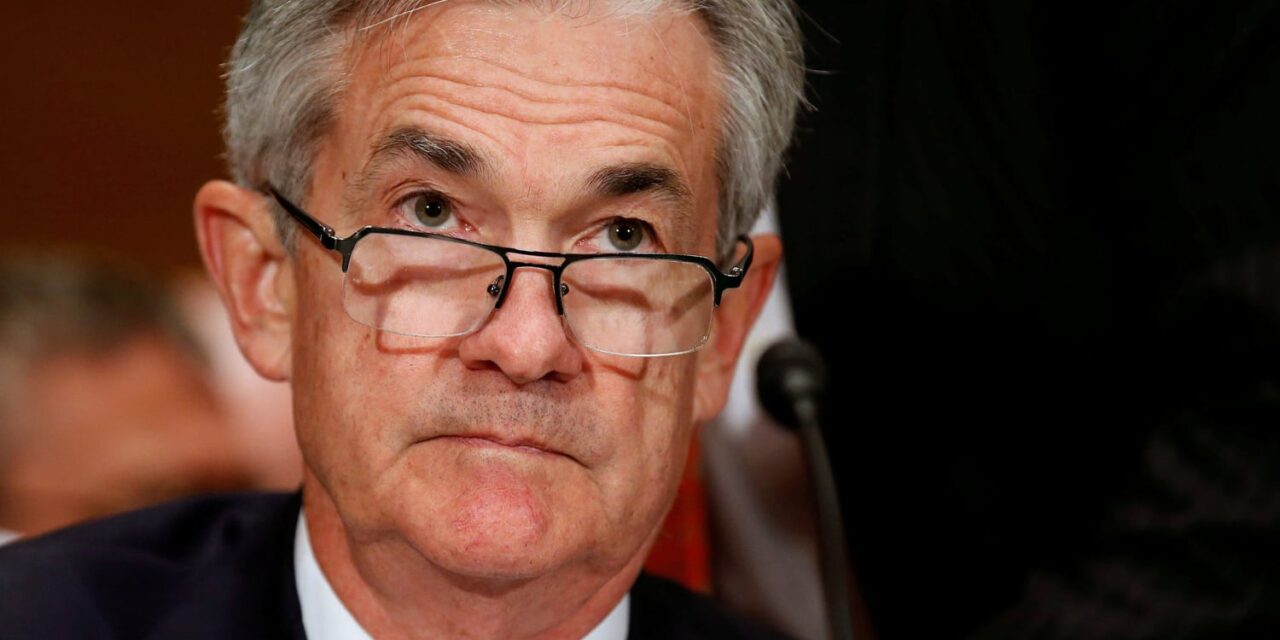
Jerome Powell enters the final month of his tenure as Federal Reserve Chair with his institution under more political pressure than at any point in its modern history, a confirmation battle for his replacement in visible disarray, and a monetary policy decision on April 28-29 that no central banker would envy.
Powell’s term as chair expires on May 15. He told reporters after the Fed’s March meeting that he will remain on a pro-tem basis if his replacement is not confirmed and in place by that date. His term as a member of the Federal Reserve’s Board of Governors runs separately until January 2028, meaning he cannot simply be removed from the building regardless of what happens with his chairmanship.
The FOMC meeting on April 28-29 will be the last Powell presides over. The Fed has held its benchmark rate steady at approximately 3.6 percent at its first two meetings of 2026, after cutting three times at the end of 2025. The question for the April meeting is stark: hold steady, cut, or raise, against a backdrop of oil-driven inflation, a weakening labour market and a geopolitical situation that remains unresolved.
Minutes from the Fed’s March 17-18 meeting, released on April 8, showed the number of policymakers willing to consider a rate hike this year had grown between January and March. In Fed language, the number shifted from “several” to “some” — a meaningful change in direction. Officials cited Iran war-related oil prices as the driver, with concerns that sustained energy costs above $95 per barrel would push core PCE inflation higher in the months ahead.
Speaking at Harvard on April 1, Powell set out the Fed’s current framework. He said the central bank would “look through” short-term oil supply shocks rather than react to them, monitoring inflation expectations “very, very carefully” before making any adjustments. He signalled satisfaction with the current rate level, which he described as appropriate given the balance of risks. His remarks were widely interpreted as a strong signal of a hold at the April meeting.
Powell also delivered a sharper message on the national debt, departing from his typically measured tone. “The country has to get back to ensuring that the economy is growing fast enough to keep pace with spending,” he said. “It will not end well if we don’t do something fairly soon.” He described the trajectory of federal spending relative to revenue as “not sustainable” and called the $39 trillion debt figure itself less alarming than the ongoing structural gap between what the government collects and what it spends.
The political context surrounding Powell’s final weeks is without precedent. A Department of Justice criminal probe into his congressional testimony regarding the Fed’s $2.5 billion headquarters renovation was quashed by federal judge James Boasberg in March, who wrote that “there is abundant evidence that the subpoenas’ dominant purpose is to harass and pressure Powell either to yield to the president or to resign.” The DOJ has said it will appeal that ruling, meaning the investigation formally remains active.
That investigation is the direct reason Kevin Warsh’s Senate confirmation hearing is in trouble. Republican Senator Thom Tillis of North Carolina has vowed to withhold his vote from any Fed nominee until the probe is dropped. Because Republicans hold only a 13-11 majority on the Senate Banking Committee, Tillis’ opposition means Warsh’s nomination cannot advance through the committee assuming all Democrats vote no. His confirmation hearing, originally scheduled for April 16, was delayed, and is now scheduled for April 21, though a full committee vote remains unclear.
Warsh submitted financial disclosures this week revealing assets well over $100 million, including two investments exceeding $50 million each in the Juggernaut Fund LP, which he managed during 15 years working for investor Stanley Druckenmiller’s family office. The disclosure is a required step before a confirmation hearing can proceed. If confirmed, he would be the wealthiest Fed chair on record.
Treasury Secretary Scott Bessent, speaking at the Institute of International Finance this week, said the administration “wants Kevin Warsh in as soon as possible” but acknowledged the rate-hold position the current Fed is taking is understandable. “I believe that the Fed’s framework had been wrong, I believe it will be proven wrong — but if they want to wait for some clarity, I understand that,” Bessent said. He added that he thought the market should wait for Warsh to lead the next rate cycle.
The broader irony of Powell’s final weeks is that the policy he is pursuing, holding rates steady against a supply-driven inflation shock while monitoring the labour market, is almost exactly what Warsh is expected to do as well. Powell’s legacy will partly rest on whether the economy navigates the Iran war without a rate hike that tips a weakening job market into contraction, and on whether the institutional independence he spent his tenure defending survives the political assault that has defined his last year in office.
