
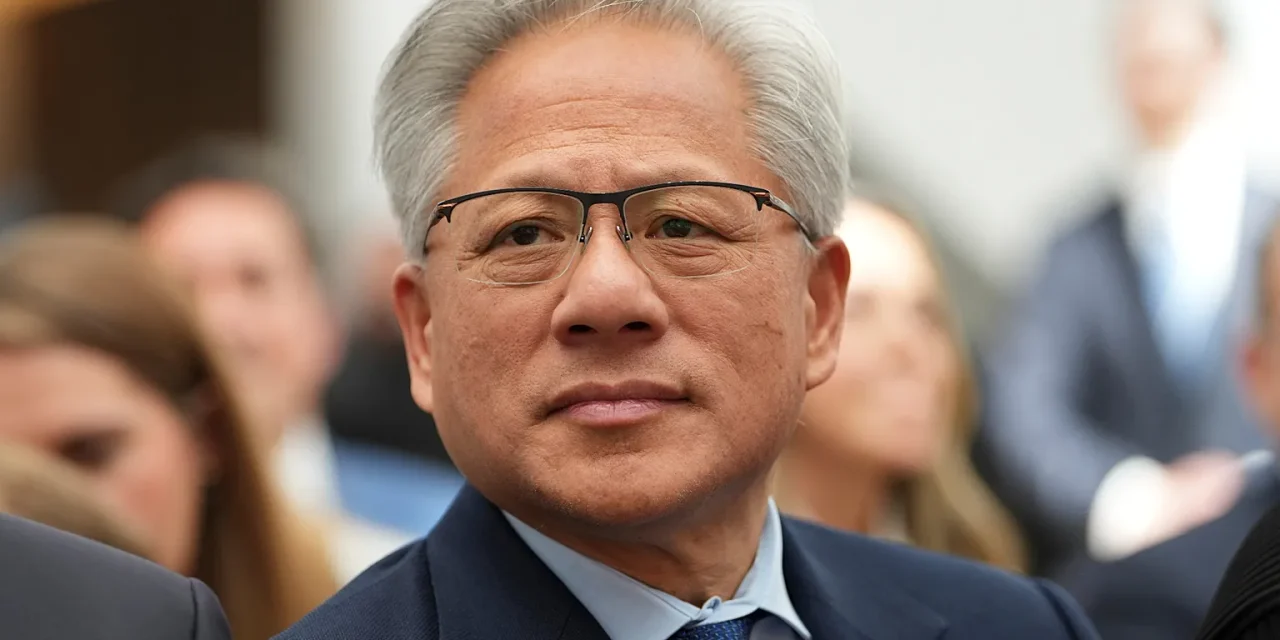
More than 158,000 people had signed an open letter by Sunday urging Nvidia’s (NASDAQ: NVDA) board to “bring Jensen back while an independent investigation establishes the facts.”
Signatories on that petition include Elon Musk and Uber co-founder Travis Kalanick, reflecting the scale of investor anxiety after Huang resigned Thursday.
Altimeter Capital’s Brad Gerstner and Atreides Management’s Gavin Baker separately pressed the board on Friday to keep “all options” open regarding Huang’s future role.
The Financial Times reported Sunday that Huang has discussed a possible return with people close to him, though neither Huang nor Nvidia has confirmed any such discussions.
CFO Colette Kress is currently running the chipmaker as interim CEO, and the board has disclosed neither the findings of its investigation nor whether a reinstatement is under consideration.
Nvidia’s stock closed Friday at $162.85, sitting 31.9% below its October 6 record, meaning a retiree who held $250,000 at that peak would have just $170,174 today, a loss of $79,826.
History suggests a founder’s return can deliver extraordinary long-term gains, but the outcomes across five comparable cases are far from uniform.
The most dramatic example remains Steve Jobs, who was named Apple’s interim CEO on September 16, 1997, when the company was losing more than $1 billion per fiscal year; a $10,000 investment at that moment is worth $18.6 million today, compounding at 29.4% annually over 29 years, while the same money placed in an S&P 500 fund grew to just $81,554.
Larry Page’s return to Google, announced January 20, 2011, produced a $10,000 stake now worth $188,570, against $58,898 for the index, and Howard Schultz’s comeback at Starbucks, announced January 7, 2008, turned the same amount into $115,822.
Charles Schwab’s return to Charles Schwab Corp., announced July 20, 2004, converted $10,000 into $112,024, meaning four of the five historical cases comfortably outpaced the broader market.
The outlier is Bob Iger, whose return to Disney was announced November 20, 2022; a $10,000 investment then is worth only $12,960 today, while the S&P 500 grew that same stake to $19,048, with Iger’s Disney compounding at just 6.7% annually against the index’s 17.5%.
Initial market reactions proved unreliable as predictors of what followed, with Starbucks surging 8.1% and Disney jumping 6.3% on their respective announcement days, while Google actually fell 2.4% before going on to nearly 19 times investors’ money.
One structural difference separates the Huang situation from all five precedents: each of those returning leaders stepped back in after a gap of at least two years under different management, whereas Huang departed just days ago.
The board’s silence on its investigation’s conclusions adds another layer of uncertainty heading into Nvidia’s earnings report on Tuesday, which could move the stock independently of any leadership news.
For investors holding significant Nvidia positions, the more consequential questions involve portfolio concentration, account type, and whether the investment thesis depends on a single board decision rather than the company’s underlying business trajectory.
The Jobs result, the most cited and the most extreme of the five, came from a company in genuine crisis; whether Nvidia’s current circumstances rhyme closely enough with 1997 Apple to justify that comparison remains an open question the market will be pricing in real time.
