
A $3 billion equity commitment from NVIDIA into Meta, as reported by the Wall Street Journal, underscores just how much financial weight both companies are placing on the emerging AI agent market.
The investment accompanies a broader expansion of the two companies’ technical partnership, centered on Meta’s Muse family of AI models and agents, which have already drawn surging consumer downloads since their launch.
Meta’s Muse platform runs on NVIDIA infrastructure and has posted frontier-level benchmark performance, giving both firms a commercial incentive to push optimization further.
The partnership will target improvements across training and inference workflows, with the stated aim of reducing total cost of ownership while maximizing computational performance at scale.
Hardware commitments are central to the agreement, with Meta planning to expand its deployment of NVIDIA Vera Rubin processors and Vera CPUs, designed specifically to deliver high performance per watt for next-generation AI workloads.
Network infrastructure will also be upgraded, as Meta moves to deploy NVIDIA Spectrum-X Ethernet networking alongside BlueField-4 to improve throughput and overall network efficiency across its AI operations.
Security and monitoring capabilities are also on the table, with both companies considering adoption of NVIDIA’s OpenShell Reference Architecture for safe agent deployment and NVIDIA Sentry to oversee agent behavior in production environments.
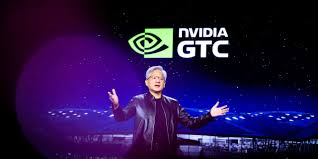
Jensen Huang, founder and CEO of NVIDIA, framed the deal around a fundamental shift in how humans interact with computers, saying “AI agents represent a new computing paradigm — software that understands our goals, reasons, uses tools and gets work done on our behalf.”
Huang added that the expanded collaboration aims to build computing infrastructure “end to end for capable, efficient and secure AI agents, so Muse can empower billions of people to achieve more and pursue greater ambitions.”
Meta’s founder and CEO Mark Zuckerberg positioned Muse as the vehicle for delivering what he called personal superintelligence at mass scale, stating, “We’re excited to keep working with NVIDIA to deliver the best personal agents and frontier models for billions of people.”
The announcement reflects the accelerating race among major technology firms to dominate the infrastructure layer powering autonomous AI agents, a segment drawing enormous capital flows globally.
NVIDIA shares rose 2.39% on the day of the announcement, while Meta’s stock edged down 1.88%, suggesting markets are pricing the deal’s near-term costs differently for each party.
