
A widening gulf between advanced nuclear developers and the broader equity market has left pre-revenue reactor companies nursing losses that dwarf anything seen in mainstream indices this year.
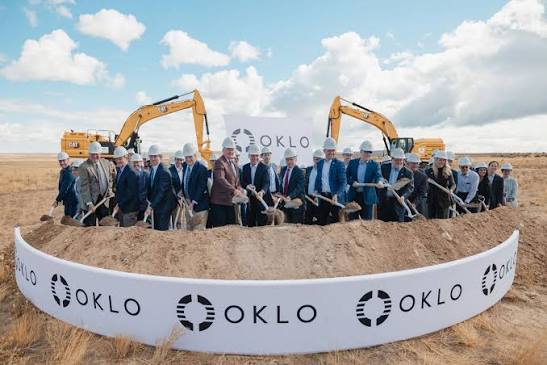
Oklo (NYSE: OKLO), the small fast-reactor developer backed by a master power agreement with data center operator Switch, has fallen 63% year to date, trading at $26.28 as of late October.
That puts it fractionally below TD Cowen’s freshly issued $26 price target, which accompanied a Hold rating the firm initiated this week, offering little optimism for investors already deep in the red.
TD Cowen described Oklo as a “unique way” to invest in nuclear power’s future, citing its potentially disruptive closed-loop fuel recycling technology paired with fast reactors as the core differentiator.
The initiation changed almost nothing in sentiment, however, because the Hold rating provides no upside catalyst and simply acknowledges that the stock now trades near fair value after its brutal slide.
NuScale Power (NYSE: SMR), which holds the only U.S. Nuclear Regulatory Commission design certification in the small modular reactor space, has tracked Oklo almost tick for tick, falling 62% year to date to $5.34.
Centrus Energy (NYSEAMERICAN: LEU), which unlike the reactor designers actually generates revenue today from enriched uranium fuel sales, has fared somewhat better with a 59% decline to $99.63.
The Global X Uranium ETF (NYSEARCA: URA), diversified across miners, fuel suppliers, and engineering firms, is off just 19% year to date to $34.52, illustrating how concentrated the damage has been among pure-play developers.
Against all of that, the SPDR S&P 500 ETF Trust (NYSEARCA: SPY) has gained 12% year to date to $765.85, moving in the exact opposite direction from the nuclear cohort.
Analysts have repeatedly challenged the development timelines and cash burn rates at companies that have yet to deliver a single commercial reactor, and those doubts hit hardest at pre-revenue names like Oklo and NuScale.
Oklo’s first Aurora powerhouse remains under development at Idaho National Laboratory, and the customer pipeline backing the company’s long-term projections consists largely of non-binding letters of intent rather than firm contracts.
Construction financing, when it arrives, is widely expected to be dilutive, adding another layer of risk for shareholders who have already absorbed steep losses.
The bear case is therefore straightforward: no commercial power sales, a long licensing runway, and capital needs that will likely require issuing new shares before meaningful revenue materializes.
Bulls counter that the 63% decline has already priced in substantial pessimism, and that structural demand from AI data centers, combined with federal support through the ADVANCE Act, gives the sector a genuine long-term foundation.
Oklo also owns Atomic Alchemy, a radioisotope producer that represents a revenue opportunity entirely separate from electricity sales, with output potentially beginning as early as this year.
Centrus is separately exploring a joint venture with Oklo around deconversion services for high-assay low-enriched uranium, the specialized fuel that advanced reactor designs require, which could eventually link the two companies’ fortunes.
For now, licensing progress at Idaho National Laboratory remains the single most important variable, and until the Aurora powerhouse moves measurably closer to operation, most analysts suggest keeping any position in OKLO stock modest given ongoing cash burn and dilution risk.
