
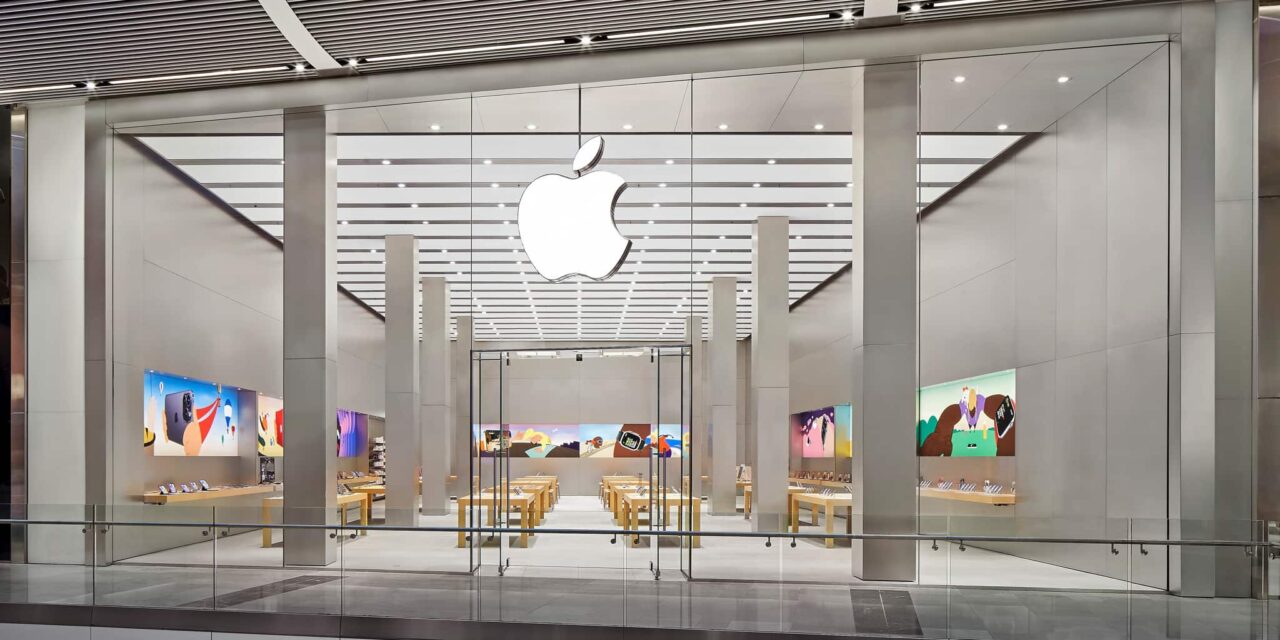
Apple (NASDAQ: AAPL) has launched an aggressive hardware campaign aimed at reclaiming its position as the most valuable company on the stock market, briefly achieving that milestone on Friday.
The push is led by new CEO John Ternus, marking an ambitious departure from predecessor Tim Cook’s services-first strategy that defined the company for years.
The timing has proven fortuitous, arriving precisely as enthusiasm for the AI trade begins to fade and concerns over capital spending commitments weigh on investors.
Apple’s substantial cash reserves and earnings power, largely insulated from the enormous compute commitments demanded by AI development, now look like an attractive safe harbor.
The new iPhone Duo, the centerpiece of the hardware offensive, is concrete and shipping, standing in sharp contrast to the speculative nature of much AI investment.
Several of Apple’s major tech peers drew investor attention this week for the wrong reasons, with Meta (NASDAQ: META) and Tesla (NASDAQ: TSLA) both rekindling concerns over the scale of AI financing.
Though both companies undershot short-term expectations for AI spending, any impression of financial discipline evaporated once investors absorbed the magnitude of their longer-term plans.
Off-balance-sheet spending plans of $825 billion for Meta and a $100 billion chip plant estimate for Tesla signaled that far larger capital expenditure bills are approaching rapidly.
Additional pressure came from SK Hynix pausing a spin-off IPO, falling token costs as users shift toward open-weight models, and risk-off signals across global credit markets, all of which pushed the 10-year Treasury yield back under 5%.
Apple’s renewed competition with AI darling Nvidia for the title of most valuable company underscores how effectively the iPhone maker has positioned itself against a backdrop of AI-driven market turbulence.
The strategy is not new for Apple, which flooded tech and business media last month with a feel-good iPhone launch at the height of AI doomer panic, presenting a calm, white-space aesthetic that stood in deliberate contrast to the anxiety surrounding it.
The message from that keynote was straightforward: Apple wants to sell its most capable iPhone yet, with AI integrated as a complementary feature rather than the headline act.
While rival firms and AI labs stoked fears of mass job displacement and technological catastrophe, Apple chose an entirely different register, one focused on polished, tangible consumer hardware.
The iPhone Duo’s Friday release pushes the company into new hardware territory, broadening its product lineup and deepening the gravitational pull of its tightly integrated ecosystem.
In financial terms, Apple is functioning as a hedge against the volatile, high-stakes bets defining the current AI boom, and culturally, it is once again demonstrating a sharp instinct for reading the room.
