
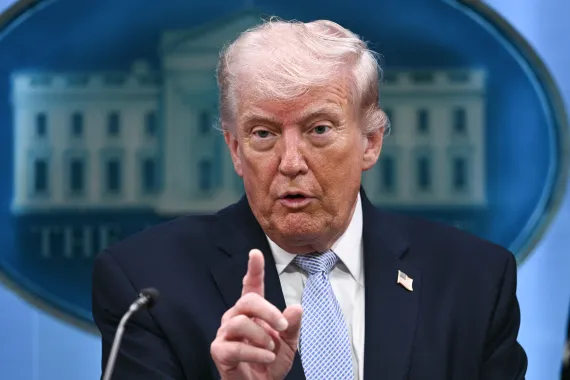
The White House has directed $150 million toward increasing domestic gas and diesel production, with President Trump formally invoking the Cold War-era Defense Production Act to authorize the spending.
Trump detailed the specific funding amount during a campaign rally in Sioux City, Iowa, having first outlined the plan in a presidential memorandum issued earlier the same day.
The Defense Production Act grants the president sweeping authority to direct and expand production of critical resources inside the United States for national defense purposes.
The Energy Department stated in a press release that the cash injection was “expected to increase U.S. refining output by millions of gallons per day.”
The move is the latest in a series of measures the Trump administration has launched to address elevated gas prices, which have risen sharply amid the ongoing U.S. war with Iran.
High fuel costs have combined with broader economic pressures, including a tariff dispute with Canada, to push consumer prices higher and drag Trump’s approval ratings down.
Those economic strains are being felt most acutely in agriculture-dependent states such as Iowa, Nebraska, and Kansas, where both gas and fertilizer prices have climbed significantly.
The political fallout has placed a number of traditionally Republican-leaning states in a more competitive position heading into the midterm elections.
Earlier this month, Trump announced an agreement with Russia to import 300,000 tons of diesel into the U.S. and global marketplace, a deal that drew criticism from both Democrats and Republicans.
At a rally in Kansas earlier in the week, the president also unveiled a separate $8 billion Harvest Fuel Relief Program designed specifically to ease diesel costs for the agricultural sector.
The cluster of energy-related announcements signals the administration’s recognition that fuel prices represent a significant political liability as the midterm cycle intensifies.
Whether the combined measures, ranging from the Defense Production Act invocation to the Russian import deal, will be enough to meaningfully move prices at the pump remains a central question for voters heading into the election.
