
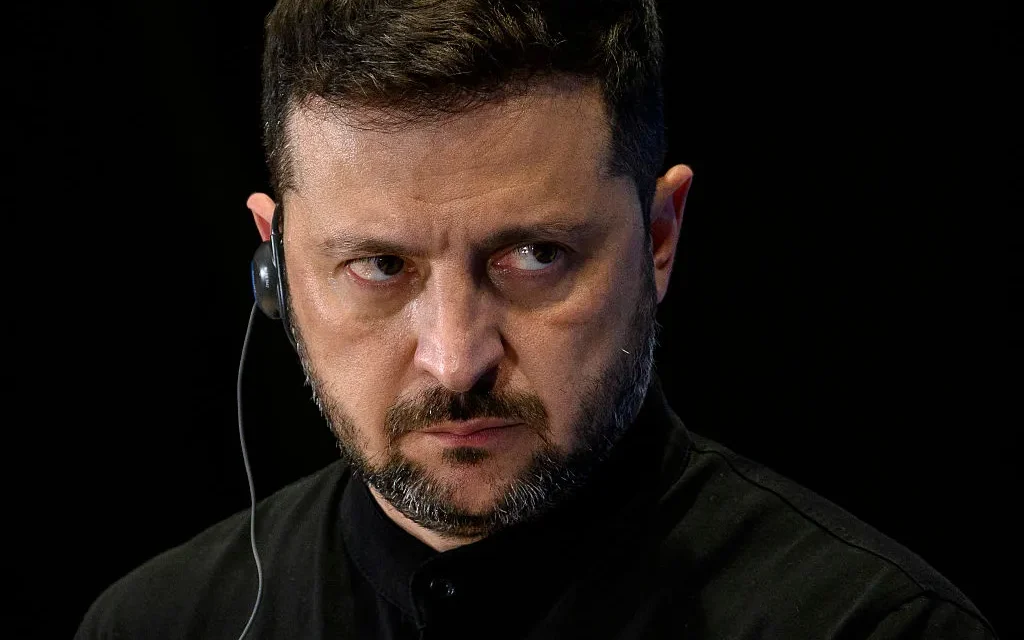
Ukrainian President Volodymyr Zelenskyy received a standing ovation from EU leaders at this week’s Brussels summit, but left without concrete financial commitments or specific numbers on military aid.
Zelenskyy warned at the summit that “Putin wants to destroy us” and that Ukraine must brace for what he described as an extremely difficult winter ahead.
Olena Prokopenko, a senior fellow at the German Marshall Fund of the United States, reinforced that warning, telling reporters that “Ukraine is arguably entering the most difficult winter since [Russia’s] full scale invasion.”
Three issues dominated discussions between Zelenskyy and EU leaders at the summit: deteriorating US-Russia relations, disruptions to the Starlink satellite network, and Ukraine’s growing funding shortfall.
US President Donald Trump has made no secret of his frustration with the Ukrainian leader, telling Newsmax that “I think I find Zelenskyy to be more difficult to deal with than [Russian President Vladimir] Putin.”
Trump struck a deal to purchase Russian diesel on October 12, widely seen as a step back from existing sanctions on Moscow and a significant blow to Kyiv’s position.
Trump also labeled Zelenskyy’s decision to order fresh Ukrainian strikes on Russian oil refineries “a disgrace,” deepening tensions between Washington and Kyiv.
At his press conference in Brussels, Zelenskyy acknowledged that US-built missiles “are being sent to the Middle East, so it is no secret that we are not a priority,” signaling his intent to seek alternatives from European allies.
Ukraine’s reliance on Starlink, the satellite internet service developed by tech billionaire Elon Musk, has become a flashpoint after Zelenskyy described his “deep and unpleasant” surprise at discovering significant service disruptions affecting battlefield communications.
Both Elon Musk and the White House have denied responsibility for the slowdown, while EU foreign policy chief Kaja Kallas acknowledged that “Starlink is really necessary for Ukraine and unfortunately in [the] short term Europe can’t replace this capability.”
Prokopenko explained that this gap is precisely “why Ukraine’s most credible medium-term solution here is to continue relying on the US,” adding that the EU is critical in backing Ukraine’s requests for continued American technology access.
Zelenskyy confirmed at the summit that Starlink speeds had partially improved but were not fully restored, and that Ukraine is cooperating with France and other nations to find partial workarounds.
On the financial front, Zelenskyy urged EU leaders to commit nearly $80 billion for Ukraine in the coming year, telling the gathered leaders “this is a realistic amount and I ask you to find this support” adding that “it will help us hold Russia back.”
Prokopenko outlined the financial pressure facing Kyiv, warning that “the war is becoming objectively more expensive, and the Ukrainian economy is increasingly affected by the Russian strikes, leading to a drastic decline in tax and customs revenues,” meaning funding needs will keep rising.
The EU provided Ukraine with approximately $100 billion in loans last year, making it Ukraine’s largest international backer, but Kyiv’s government says that support is no longer sufficient to cover its needs.
European Council President Antonio Costa closed the summit by stating that Ukraine “remains a priority” and asked the European Commission to develop proposals for additional funding in 2027.
European Commission President Ursula von der Leyen pledged the EU will “continue to lead” while calling on international partners to increase their own contributions to Ukraine’s defense.
Zelenskyy closed his press conference with a pointed and emotional declaration, telling reporters: “We will keep living and fighting with dignity.”
