
Canada and the European Union share a bond that European Commission President Ursula von der Leyen described in striking terms, saying the two “see the world with the same eyes.”
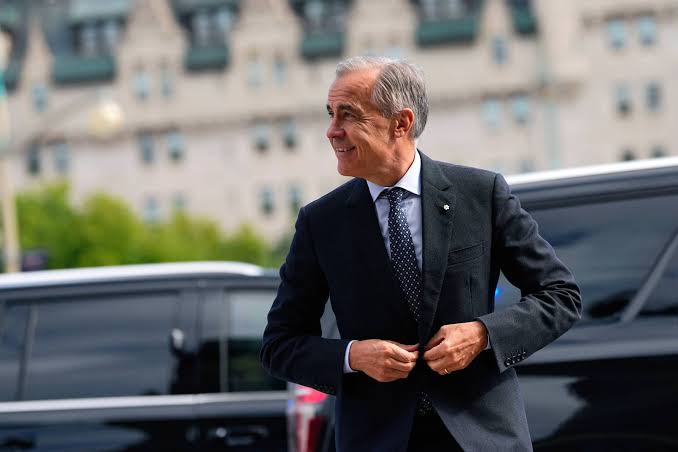
Canadian Prime Minister Mark Carney echoed that sentiment, stating that commitments to “the rule of law, and our unyielding defense of human dignity, individual freedom and democracy share the same deep roots, the same unwavering dedication.”
With both parties seeking leverage against Donald Trump’s tariff pressure, von der Leyen floated the idea of Canada becoming the EU’s first-ever associate member.
The concept of associate membership does not currently exist within EU frameworks, making it difficult to define precisely what rights or obligations such a status would carry.
Germany proposed a similar arrangement for Ukraine earlier in 2026, but President Volodymyr Zelenskyy rejected it outright, insisting Ukraine seeks full membership rather than a secondary designation.
The proposal has drawn attention to the variety of existing arrangements that countries already maintain with the EU, each carrying different levels of access, obligation, and influence.
Norway, Liechtenstein, and Iceland operate under the European Free Trade Association model, granting them access to the EU’s internal market and participation in the Schengen area for free movement of people, goods, and services.
However, these EFTA nations have no formal role in EU decision-making, are outside the customs union, do not use the euro, and are not bound by common EU trade policy or justice laws.
Iceland held a referendum on pursuing full EU membership, but the government’s push failed, leaving the country within the EFTA framework rather than advancing toward full accession.
Switzerland, despite sharing borders with four EU member states, has never joined the bloc, instead operating through more than 120 bilateral agreements built up over the past 50 years covering trade, transport, security, and education.
A new package of Swiss-EU deals was finalized last year, two decades after the previous agreements were last updated, reflecting the ongoing complexity of managing the relationship outside formal membership.
More than 1.5 million EU citizens live and work in Switzerland, while 466,200 Swiss nationals have relocated to EU member states, a flow made possible by Switzerland’s participation in the Schengen area.
Switzerland contributes financially to several EU member states that joined after the 2004 expansion, particularly in eastern Europe, but retains no EU voting rights and adopts only select EU regulations.
The United Kingdom, more than four years after voting to leave the EU in 2016, signed a trade and cooperation agreement that grants limited market access and partial policy alignment, while eliminating free movement of people.
Since the Labour party replaced the Conservatives in government in 2024, discussion of returning to the customs union and aligning with additional EU policy areas has become more frequent, though full re-membership remains unlikely.
For countries in the Western Balkans, including Albania, Bosnia and Herzegovina, Kosovo, Montenegro, North Macedonia, and Serbia, the path forward runs through the EU’s stabilization and association process, introduced to prepare candidates for eventual accession.
The EU has not admitted a new member state since Croatia joined in 2013, and the multi-stage accession process requires agreement from all existing member states before any candidate country can formally join.
The range of existing models illustrates just how varied relationships with the EU can be, and underscores the significant legal and political work that would be required to create a genuinely new associate membership category for Canada.
