
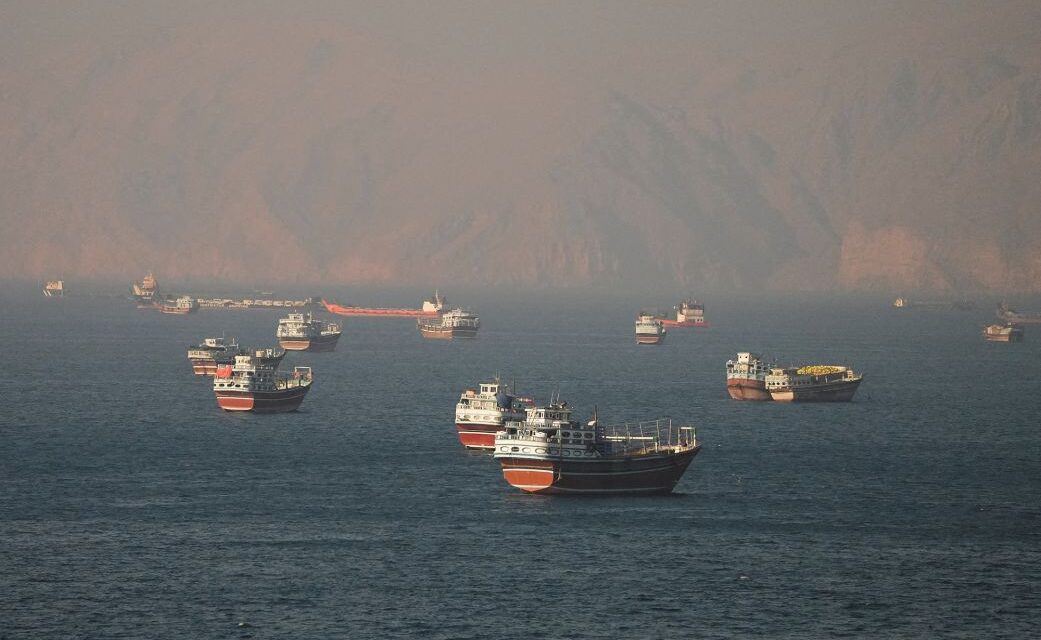
Shipping traffic through the Strait of Hormuz remained largely stable in the week of 17–23 August, even as the world’s most critical oil chokepoint continues to operate under a patchwork of Iranian-imposed routing rules that have persisted since the 2026 Iran war upended freedom of navigation in the waterway.
Kpler recorded 121 crossings through the strait between 17–23 August, up marginally from 118 the previous week.
Commenting on the figures, Dimitris Ampatzidis, Maritime Risk & Compliance Manager at Kpler, told Foreign Policy Journal that “route uncertainty remains the key feature” of the current environment.
The data bears that out: 62 crossings — just over half the weekly total — were classified as Route Undetermined, while 56 vessels transited under the Iranian Unilateral Scheme.
A waterway still operating on Tehran’s terms
The scale of the disruption is a legacy of the conflict that erupted on 28 February, when US and Israeli strikes on Iranian military and nuclear sites — including the killing of Supreme Leader Ali Khamenei — triggered Iran’s closure of the strait to what it termed “enemy-linked” shipping.
In the weeks that followed, the Islamic Revolutionary Guard Corps laid sea mines, seized tankers and issued VHF warnings barring passage, prompting a US-led campaign to reopen the waterway and, from mid-April, a naval blockade of Iranian ports that Washington estimated was costing Tehran roughly $500 million a day.
A ceasefire in April eased the acute military confrontation, but Iran has since consolidated a unilateral position on transit conditions rather than restoring pre-war freedom of navigation. Tehran has floated formal transit tolls of as much as $2 million per vessel, directed ships toward “alternative routes” it says are necessary to avoid sea mines, and continued to vet vessels for links to the US, Israel and their allies.
That is the backdrop against which Kpler’s routing categories — including the large Route Undetermined share — have to be read: a fragmented, IRGC-brokered passage system that has replaced standard maritime protocol.
Oman’s stalled mediation
The routing chaos comes despite repeated efforts by Oman, the traditional intermediary between Washington and Tehran, to pull the two sides back toward a negotiated settlement. Muscat hosted several rounds of indirect US-Iran nuclear talks in the year before the war, and Omani Foreign Minister Badr Albusaidi continued pushing for a diplomatic track even as the February strikes were under way, insisting “the door to diplomacy remains open.”
Indirect talks resumed in Muscat in February, with US envoys Steve Witkoff and Jared Kushner engaging Iranian negotiators through Omani shuttle diplomacy, and both sides described the atmosphere as constructive.
Yet the diplomatic track has repeatedly been overtaken by events on the water — sanctions announcements, tanker seizures and drone strikes on shipping have continued to surface even during active negotiation windows, and Iran’s parliament has pressed ahead with legislation to formalise its toll regime regardless of the talks’ status.
The UN’s International Maritime Organization has warned that any such toll would “set a dangerous precedent” for international straits.
Sanctioned and shadow-fleet activity
Kpler’s figures also show a notable rise in exposure to sanctioned tonnage: sanctioned-vessel crossings rose from nine the previous week to 16, while shadow-fleet activity held broadly stable at 28 crossings. Ampatzidis said the increase in sanctioned crossings was worth flagging against an otherwise stable overall picture, noting the two categories are moving in different directions even as total traffic barely shifts.
The uptick in sanctioned-vessel movements — nearly double the prior week — comes as Washington has continued to layer fresh sanctions on shipping entities and vessels tied to Iranian oil exports even during periods of active negotiation, a dynamic that has repeatedly complicated the diplomatic track.
Shadow-fleet activity, involving tankers that mask their ownership, insurance or flag status to skirt sanctions, has held at an elevated but steady level, consistent with the broader pattern of vessels adapting to the strait’s fractured compliance environment rather than avoiding it altogether.
Combined, the figures suggest a market that has learned to operate through, rather than around, the uncertainty: total crossings holding roughly steady, but with a growing share of that traffic falling into categories that sit outside standard, internationally recognised passage.
