
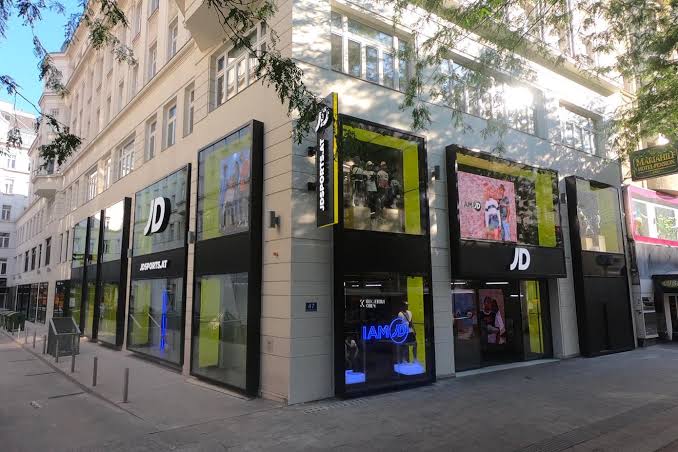
JD Sports Fashion (LSE: JD.) has moved into sharp focus across London markets after a guidance reduction placed promotional pressure at the center of the live retail sector conversation.
The cut arrives at a moment when cost-of-living strain continues to weigh on consumer behavior, even as broader FTSE 100 sentiment has shown signs of improvement across select categories.
The prior London session saw oil ease on diplomatic hopes, bond pressure soften and miners retain support, yet participation across equities remained selective rather than broad-based.
JD Sports Fashion operates through sportswear and footwear retail, a model that determines how quickly shifting consumer sentiment can reach revenue, margins and ultimately cash generation.
The most immediate concern for market followers is that product cycles and cautious consumers can weaken full-price sales, a dynamic that the guidance reduction has now made impossible to ignore.
Inventory levels, margin trends and regional demand patterns represent the clearest indicators that will either confirm or challenge the narrative forming around the company’s near-term operating position.
Governance quality becomes particularly important in this environment, as boards must challenge capital deployment decisions, oversee risk and ensure that market announcements describe uncertainty fairly and promptly.
Management will need to demonstrate that it can explain the causes of cost pressure and promotional intensity without shifting definitions or obscuring assumptions that underpin its revised financial outlook.
From an execution standpoint, the risk that product cycles and pressured consumers weaken full-price sales may surface through weaker margins, customer churn, funding strain or a gradual loss of strategic flexibility.
Households remain price-conscious across the UK consumer landscape, and JD Sports Fashion must show that its offer is compelling enough to retain demand when shoppers are scrutinizing discretionary spending far more carefully.
Revenue momentum carries limited meaning unless the cost base is understood alongside it, as labour, logistics, supplier terms and compliance costs can all move independently from top-line performance.
Margin quality also depends on sales mix, and market followers should assess whether activity within the business is becoming more valuable over time or simply growing in volume without improving returns.
Capital allocation decisions will face scrutiny in this context, with management required to balance organic investment, any potential acquisitions, balance sheet support and the maintenance of operational flexibility.
Competitors retaining pricing power, securing distribution advantages or attracting key talent could further complicate JD Sports Fashion’s ability to defend its market position through the current promotional cycle.
The company’s disclosure in upcoming updates should make clear which assumptions are most sensitive to demand conditions and what mitigations management already has in place to protect cash generation.
Customer outcomes also provide a practical check on investor confidence, as repeat purchasing behavior, order visibility and service quality can reveal pressures that revenue commentary alone may not capture.
London’s broader macro backdrop, including steadier bond markets and retreating energy costs, offers some support, but that market tide cannot substitute for company-specific delivery and transparent communication.
JD Sports Fashion remains an active and closely watched name within the UK’s large-cap retail universe, and the guidance reduction ensures that promotional pressure stays at the front of the sector conversation for the near term.
