
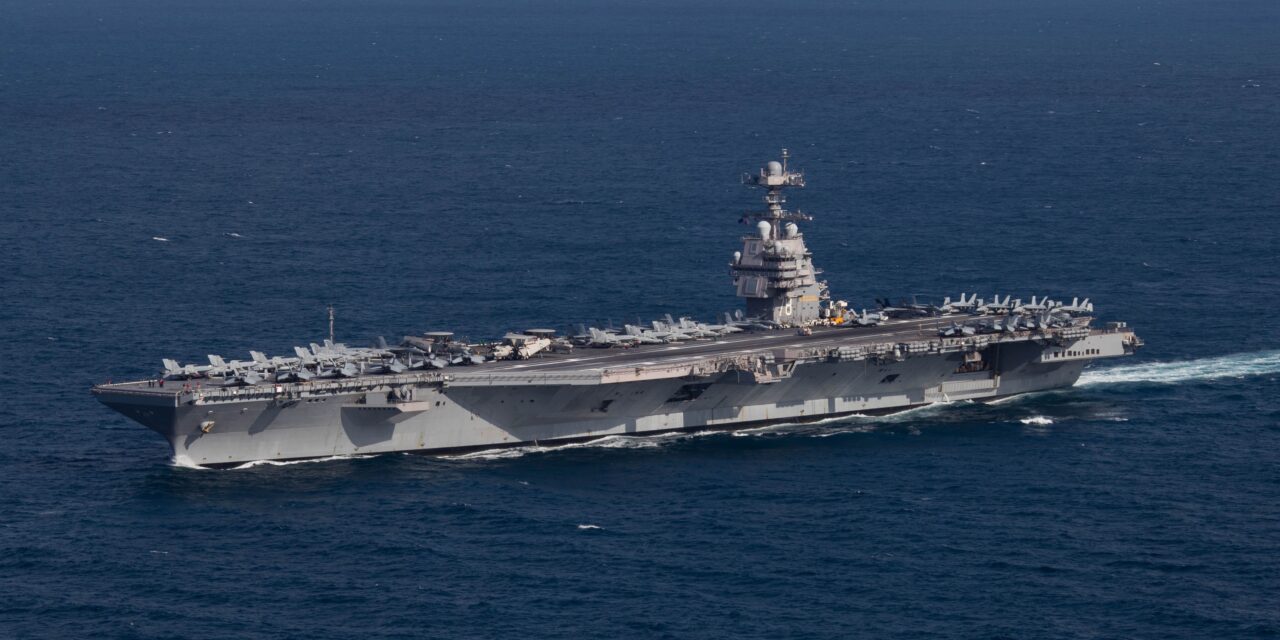
President Donald Trump has directed the U.S. Navy to remove electromagnetic aircraft launch systems from a future carrier and replace them with older steam catapults he has long favored, according to Congress.net.
An executive order issued on August 13, 2026, mandates the change beginning with CVN-81, the future USS Doris Miller, the fourth ship in the Ford-class carrier program.
The order also requires replacing advanced weapons elevators on the affected vessel with hydraulic systems, representing a sweeping reversal of technology choices made over the past two decades.
Within two months, the Defense Secretary and Secretary of the Navy must submit a detailed plan outlining how the system replacements will be carried out on the Doris Miller.
The keel for the USS Doris Miller is slated to be laid by the end of 2026, with the Navy anticipating delivery of the vessel in early 2034.
The first three ships of the Ford class, the USS Gerald R. Ford, USS John F. Kennedy, and USS Enterprise, will retain the electromagnetic launch systems already installed or in advanced stages of construction.
As of March 2026, the USS Gerald R. Ford had completed 36,863 electromagnetic launches, according to Pentagon documents, suggesting the system has performed at significant operational scale.
Bryan Clark, a naval expert with the Hudson Institute, said replacing the electromagnetic launchers with steam catapults would likely cost billions of dollars, raising immediate questions about the financial implications of the redesign.
General Atomics, the company that manufactures the electromagnetic launch system, said in an email to the Associated Press that the decision not to proceed with the system on the USS Doris Miller “warrants careful reconsideration.”
The last American aircraft carrier fitted with steam catapults entered service seventeen years ago, and industry has not built such a system in close to twenty years, raising concerns about production capacity and institutional knowledge.
Trump has questioned electromagnetic launch technology since 2017, arguing without evidence that the system does not work as intended, and the administration has not publicly provided technical data to support the switch.
“Billions of dollars more they spent on electric catapults and they’re not good. They’re not nearly as good, too complex,” Trump said at a defense summit in Pennsylvania last month, reiterating his long-held position.
Seven current and former U.S. officials confirmed to reporters that the Navy is weighing the broader implications of the redesign, which analysts have described as an unprecedented presidential intervention into naval architecture at a granular technical level.
No previous president has mandated changes to warship design at this level of specificity, and the move has drawn scrutiny from defense industry observers and military analysts who question the strategic rationale behind abandoning proven modern technology.
