
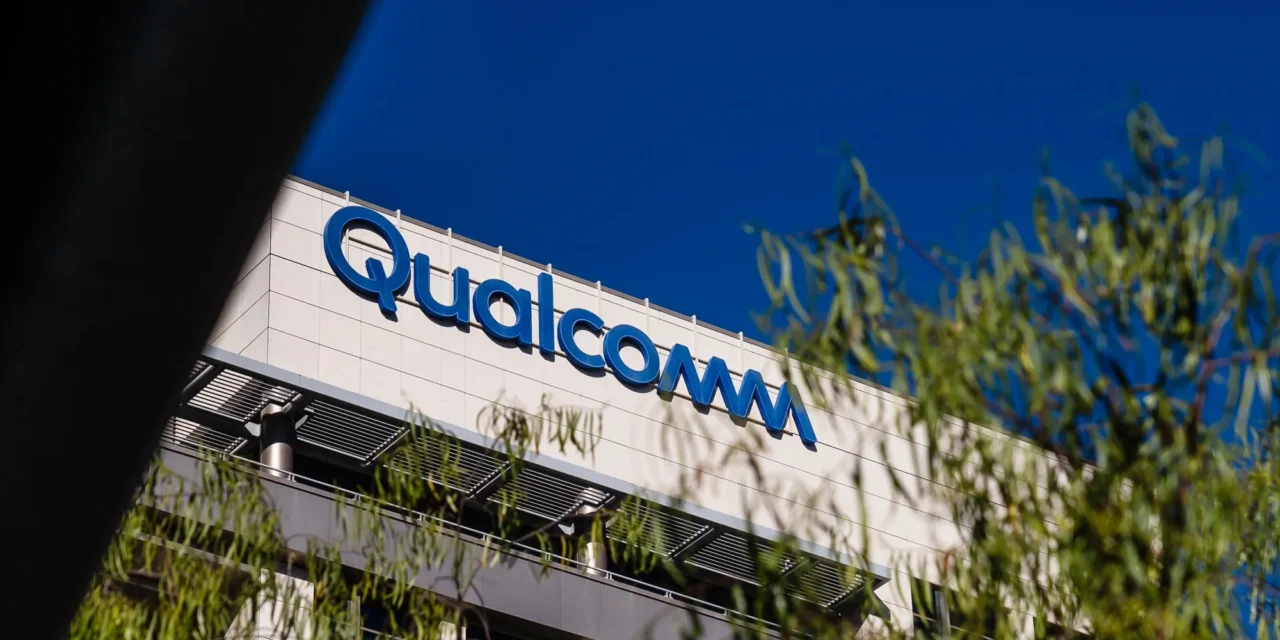
Qualcomm (NASDAQ: QCOM) is actively developing 6G technology with a deliberate focus on building future mobile networks that are AI-native from the ground up.
The company’s 6G research centers on capabilities including distributed compute and wide-area sensing, features designed to support a fundamentally different kind of wireless infrastructure.
These efforts place Qualcomm at the heart of early standard-setting conversations that will shape how next-generation mobile and AI infrastructure is defined globally.
Qualcomm already occupies a central role in mobile connectivity and chip design, and its 6G push adds a meaningful long-term dimension to that existing strategic position.
The stock currently trades at $147.61, a level that sits roughly 25% below the analyst consensus price target of $196.27, suggesting the market has not fully priced in longer-term technology upside.
Despite that gap to analyst targets, the share price has faced significant near-term pressure, falling 18.9% over the past 30 days and 14.7% year to date.
Over a longer horizon, the stock has delivered a return of 29.7% over three years and 12.4% over five years, reflecting its underlying position in mobile semiconductor markets.
For investors tracking the company, the AI-native 6G initiative offers a growth narrative that extends well beyond Qualcomm’s current handset and automotive revenue stories.
Distributed compute and wide-area sensing capabilities could open doors to new categories of devices, applications, and services as 6G standards develop and eventually reach commercialization.
However, analysts currently forecast earnings to decline by an average of 0.6% per year over the next three years, meaning execution on 6G and AI use cases will need to offset that pressure.
Partnerships formed during standard-setting processes, along with trends in research and development spending, will be key indicators of how seriously this 6G strategy is translating into future revenue potential.
Qualcomm’s involvement at the foundational layer of 6G architecture reinforces its relevance in core mobile infrastructure, which carries particular strategic weight if handset demand remains mixed in the near term.
The combination of a discounted valuation relative to analyst targets and a long-term technology development pipeline gives investors a multi-layered framework through which to assess the stock’s trajectory.
