
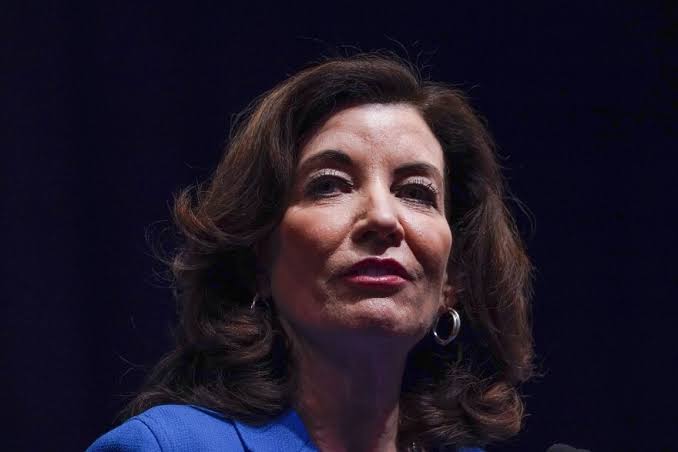
Democratic Governor Kathy Hochul is pushing back against criticism of her decision to walk back New York’s carbon emissions targets, insisting the state remains committed to fighting climate change.
Hochul told Politico that New York cannot hit its near-term emissions goals while simultaneously keeping energy affordable for its residents.
The governor made her remarks during an appearance on Politico’s Energy podcast, where she was pressed on whether she was deprioritizing climate action in favor of a slower, more pragmatic approach.
“If you think we’re doing nothing in New York, I encourage you to look at where we are in relation to other states,” Hochul said during the interview.
She was direct in defending her personal record on the issue, telling the interviewer: “Please do not question my credentials in this space.”
Environmental activists have responded sharply to changes Hochul enacted to New York’s climate law earlier this year, arguing the state “cannot afford to wait” for more meaningful action.
Some critics have gone further, alleging that Hochul did not even attempt to meet the original emissions targets before opting to revise them downward.
The governor pointed to solar deployment, a major new transmission line, and plans to expand nuclear power as central elements of the state’s strategy to reach its 2050 net-zero target.
Hochul framed the challenge as one of balance, stating: “I have to manage the challenge of ensuring that we continue our clean energy objectives and our goals, move them forward, but also to make sure that we’re not putting this on the backs of the ratepayers.”
The controversy places Hochul at the center of a growing tension within the Democratic Party between aggressive climate timelines and the political and economic pressures facing working-class energy consumers.
New York’s 2050 net-zero commitment remains formally intact, but the path to achieving it has become a contested political battlefield between the governor and climate advocates.
The dispute is likely to intensify as other states watch whether New York, long considered a national leader on clean energy policy, continues to revise its near-term ambitions.
