
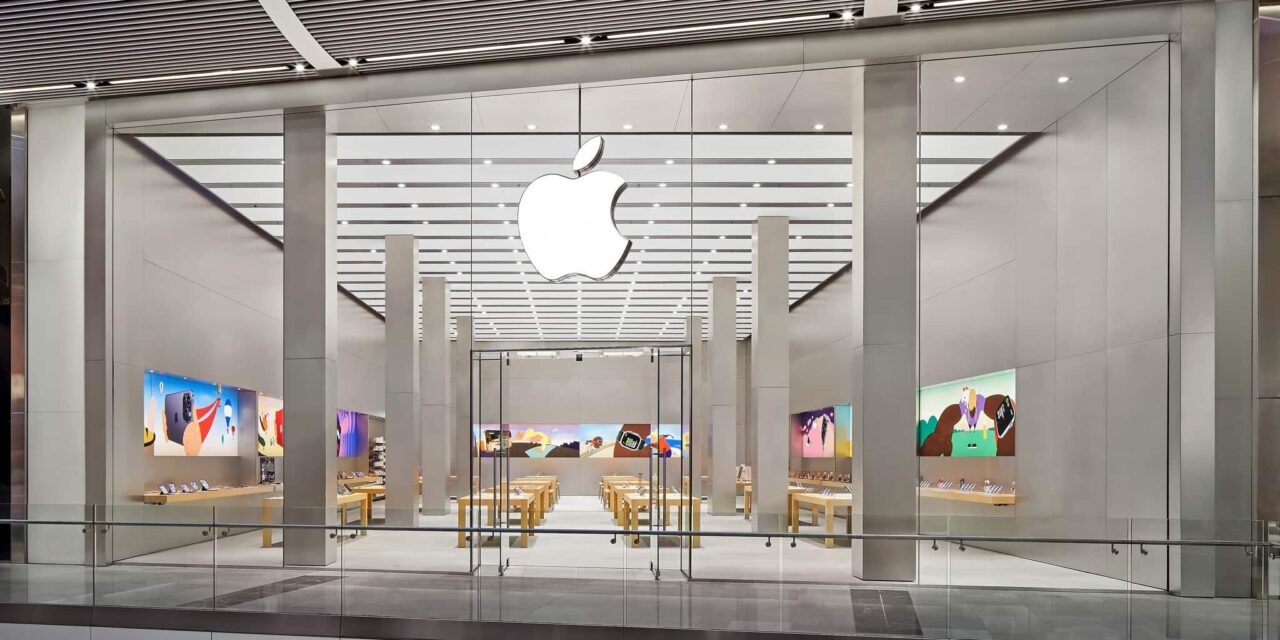
Apple Inc. (NASDAQ: AAPL) has filed a lawsuit against OpenAI, accusing the artificial intelligence company of stealing trade secrets related to its upcoming AI hardware development.
The lawsuit names OpenAI’s hardware chief Tang Tan, a former longtime Apple executive, and former Apple engineer Chang Liu, alleging both used internal access to obtain sensitive product files, designs, and prototypes before joining OpenAI.
Apple further claimed that OpenAI hired hundreds of its former employees and coached some workers on how to leave the company without raising suspicion, enabling continued access to internal information during notice periods.
The legal dispute arrives as both Apple and OpenAI race to develop AI-powered consumer hardware, including smart glasses and other next-generation devices, putting them in direct competition.
Apple’s stock gained 0.8% over the past week, though retail sentiment on Stocktwits remained in bearish territory throughout the period.
Micron Technology (NASDAQ: MU) raised its planned U.S. investment to $250 billion by 2035, targeting a major expansion of domestic chip manufacturing and a stronger national semiconductor supply chain.
The company has broken ground on a new memory chip factory in Clay, New York, with the aim of producing 40% of its DRAM chips domestically, and also announced a $3 billion investment in Texas, including $500 million for silicon wafer supplier GlobalWafers.
Those investments are expected to support long-term supply agreements with Ford and General Motors, both of which require advanced memory chips for vehicles equipped with AI and other computing technologies.
Micron’s stock dipped 0.5% over the week, though retail sentiment around the stock held in bullish territory.
Microsoft (NASDAQ: MSFT) announced plans to cut 4,800 jobs, representing roughly 2.1% of its total workforce, as the company moves to reduce costs and restructure in the face of growing AI-driven disruption.
The Xbox division will absorb the deepest cuts, shedding approximately 3,200 employees, which amounts to around 20% of its staff, as the company faces investor scrutiny over slowing performance across Xbox, Windows, and hardware segments.
Microsoft said it expects to return to growth in 2027, but the layoffs reflect mounting pressure to demonstrate that the company’s significant AI investments can produce stronger financial returns.
Microsoft’s stock edged 0.4% lower over the week, with retail sentiment remaining in bearish territory.
Meta Platforms (NASDAQ: META) removed an AI image-generation feature called Muse Image from Instagram after users and privacy advocates raised concerns about how the tool used photos from public accounts without offering sufficient user controls.
Meta said it pulled the feature after receiving feedback that it did not meet user expectations, though the controversy did little to dent the stock, which surged more than 11% over the course of the week.
China’s decision to allow select AI companies, including Alibaba (NYSE: BABA), to purchase a limited number of Nvidia H200 AI chips has given Alibaba Cloud a meaningful boost in its ability to train large AI models.
The chips, which are primarily restricted to AI model training rather than everyday AI services under Chinese regulations, could help Alibaba reduce the impact of hardware shortages and reinforce its position in the competitive cloud computing market.
Alibaba’s stock climbed more than 14% during the week, with retail sentiment shifting to bullish from an even stronger extremely bullish reading the day prior.
Elsewhere in the technology sector, Tesla continued expanding its Robotaxi operations into additional U.S. markets, while Rocket Lab completed a U.S. Space Force mission called VICTUS HAZE, demonstrating the ability to rapidly build, launch, and operate spacecraft on short notice.
Spire Global launched 10 new satellites via a SpaceX rideshare mission to expand services covering weather data, emissions tracking, and asset monitoring, and Planet Labs launched its Pelican-11 satellite designed to deliver faster and more detailed Earth imagery.
