
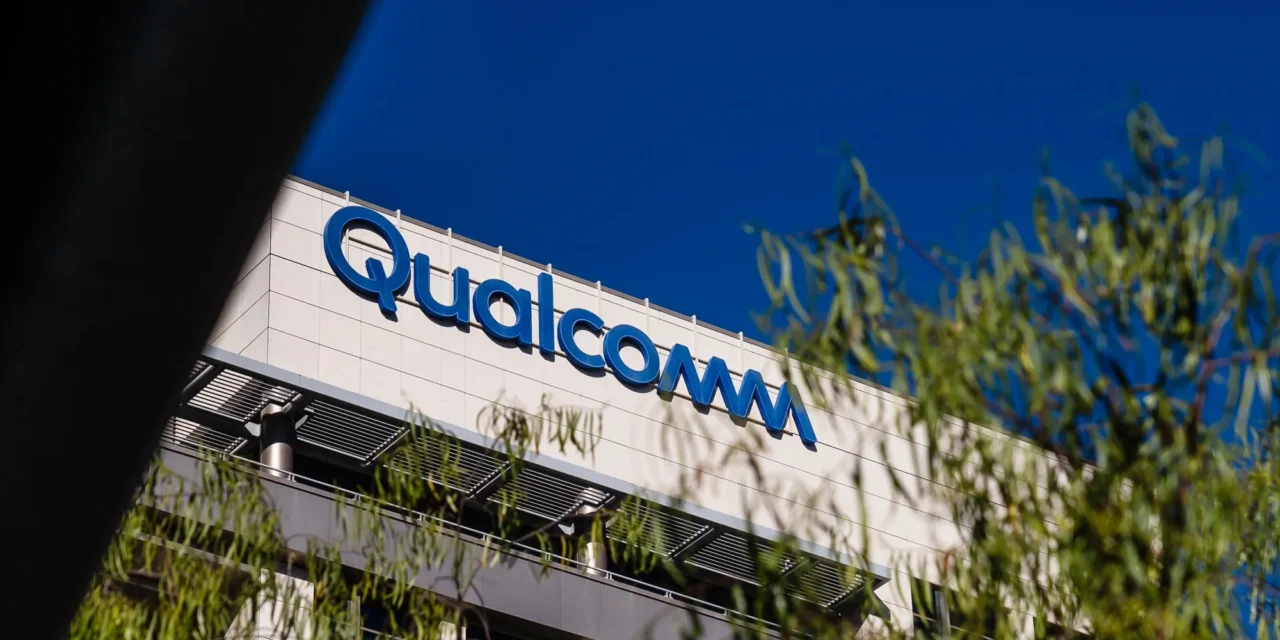
Nuvoton Technology Corporation has announced a collaboration with Qualcomm Technologies, Inc. (NASDAQ: QCOM) to strengthen its system-on-chip business for tethered extended reality glass applications.
The partnership combines Nuvoton’s low-power, XR-optimized SoCs with Qualcomm’s Snapdragon XR platforms to accelerate development and improve overall system performance.
Both companies are targeting industrial and enterprise markets, where demand for lightweight, high-performance XR devices continues to grow across a range of professional use cases.
Tethered XR glasses are increasingly deployed for operational support, remote assistance, and information visualization, making hardware efficiency a critical competitive factor.
Achieving lightweight design, long battery life, and a comfortable user experience has remained a persistent engineering challenge for manufacturers operating in this segment.
The collaboration addresses those challenges through a balanced architecture that brings together high performance, low power consumption, and system flexibility in a single integrated approach.
At the core of the technical integration is the pairing of Qualcomm’s Snapdragon Reality Elite with Nuvoton’s SoC, enabling a scalable tethered optical see-through architecture for next-generation devices.
This configuration allows compute-intensive workloads to remain on a host device while delivering high-quality, low-latency display and sensor data directly to lightweight glasses worn by the user.
The structure is designed to help original equipment manufacturers reduce development effort and accelerate time-to-market for smart glasses and related wearable products.
Ken Su, Vice President of Cloud Security Business Group at Nuvoton Technology Corporation, commented on the significance of the partnership for the company’s broader product roadmap and customer base.
“This collaboration with Qualcomm Technologies represents an important step in expanding the applicability of our SoC solutions for tethered XR Glass and emerging AI-driven XR platforms,” said Su.
Su added, “By working together within the ecosystem, we aim to support our customers in bringing innovative smart glasses and next-generation devices to market more efficiently.”
Sahil Bansal, Senior Director of Product Management at Qualcomm Technologies, also weighed in on what the partnership means for the XR industry’s next phase of development.
“By working with Nuvoton to pair Snapdragon XR platforms with their optimized SoC, we aim to support lightweight optical see-through designs that balance performance, power efficiency and system flexibility,” said Bansal.
Bansal concluded, “This collaboration builds toward the next phase of the XR ecosystem,” signaling that both companies view the arrangement as a long-term strategic commitment rather than a one-time technical exercise.
