
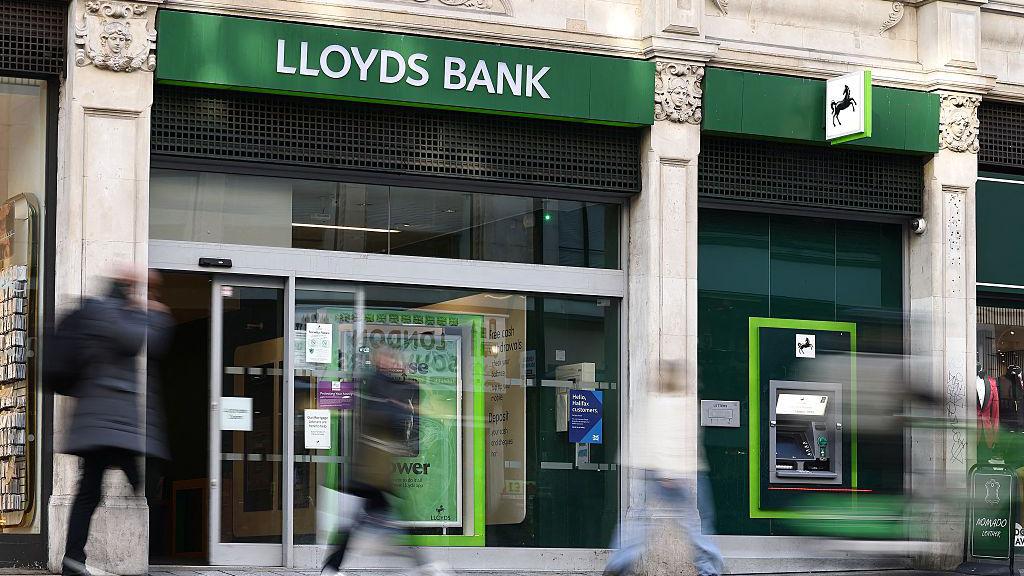
Lloyds Banking Group (LSE: LLOY) has attracted renewed investor attention following recent share price movements, with financial metrics and long-term return data now sharpening the valuation debate.
The bank recorded a 1-day share price return of 1.91% and a 7-day return of 5.40%, offering a short-term boost against a backdrop of mixed medium-term performance.
The 90-day share price return sits at negative 2.87%, pointing to some near-term softness even as momentum over the past week has turned positive.
Over a longer horizon, long-term holders have fared considerably better, with the 1-year total shareholder return reaching 34.57% and the 5-year total shareholder return climbing to 159.74%.
The most widely followed analyst narrative places Lloyds’ fair value at approximately £1.13, compared to its last close of £1.02, framing the stock as trading at a discount of around 10%.
That valuation estimate is built on an 8.29% discount rate, alongside forecasts for higher earnings power and capital returns than the current share price is seen to reflect.
Analysts point to operational leverage from cost discipline, investment in AI and data analytics, and growth in bancassurance, insurance, and fee-generating capital-lite businesses as key drivers expected to support stronger margins and returns.
The narrative anticipates that Lloyds will successfully shift more of its earnings base away from low-growth, commoditized lending toward higher-value business lines, supporting improved net margins and resilient return on equity.
However, a contrasting view on valuation introduces notable caution, with Lloyds trading on a price-to-earnings ratio of 12.8x, above the peer average of 11.3x, the European banks average of 11.5x, and the Simply Wall St fair ratio of 9.8x.
That premium multiple raises the question of whether current pricing already overstates the bank’s prospects, rather than leaving room for further upside as some narratives suggest.
Downside risks to the bullish case include a potential stalling of UK economic growth, a rise in credit losses, or faster-moving fintech competitors squeezing Lloyds’ margins and fee income over time.
The tension between a reported intrinsic discount and an above-average earnings multiple leaves investors weighing competing signals about where the stock’s fair value actually lies.
With sentiment divided, the balance between the upside case built on capital returns and margin expansion and the risks tied to premium pricing and the macro environment remains a central consideration for those assessing the stock.
