
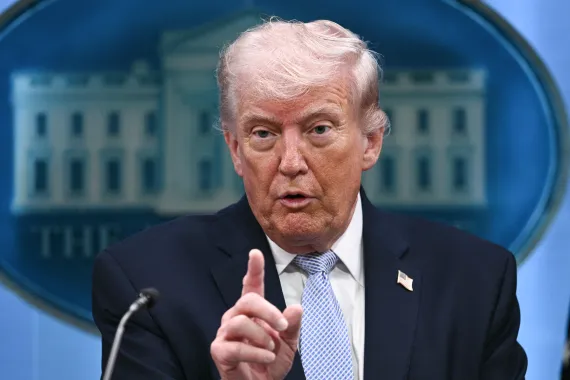
Multiple new polls published this week indicate that a significant and growing majority of Americans disapprove of President Donald Trump’s management of the economy, with cost of living concerns emerging as the dominant issue driving negative sentiment.
A CNN poll conducted by SSRS found that 77% of Americans, including a majority of Republicans, believe Trump’s policies have increased the cost of living in their own community.
The same CNN poll placed Trump’s approval rating on the economy at just 30%, a figure that underlines how sharply economic anxiety has cut across traditional partisan lines since the administration began its second term.
The CNN findings follow an NPR/PBS News/Marist poll from May 6 that found 44% of Americans consider their local cost of living not very affordable, with an additional 12% describing it as not affordable at all.
That Marist poll also found that 61% of Americans nationally disapprove of how Trump is handling the economy, a figure that has edged up from 58% in March, suggesting the negative trend is not stabilising.
Across other major polling aggregators and outlets, Trump’s overall approval ratings also remain under significant pressure, with a range of figures painting a consistent picture of public discontent.
Ballotpedia tracks Trump at 40% approval, while RealClearPolitics shows a similar reading of 40.5%, both figures sitting materially below the levels a first-term president would typically carry at this stage.
The New York Times and Economist/YouGov polls place his approval lower, at 38% and 37% respectively, while CNN/SSRS shows the weakest reading of the major outlets at 35% overall approval.
The gap between the top and bottom of the polling range reflects methodological differences between surveys, but the direction of travel across all outlets is consistently negative on economic questions.
The figures arrive in the context of Trump’s sweeping tariff agenda, ongoing geopolitical tensions linked to the US-Iran conflict, and elevated oil prices, all of which have contributed to inflationary pressure that consumers are increasingly attributing directly to administration policy.
With midterm elections later this year, the sustained weakness in economic approval ratings is expected to become a central strategic challenge for Republican candidates running in competitive districts.
