
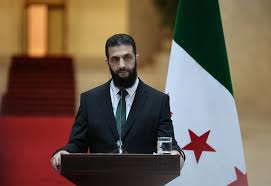
A brief attempt by local authorities in Damascus to ban restaurants and bars from selling alcohol has exposed deep and unresolved tensions at the heart of Syria’s post-Assad transition, raising questions about the direction President Ahmed al-Sharaa intends to take a country that has been devastated by nearly 14 years of civil war.
Al-Sharaa previously served as the leader of Al-Qaeda’s Syria franchise and he has been strongly criticised for allowing thousands of Alawite, Christian and Druze civilians to be killed since he took power in late 2024.
Local authorities in the Syrian capital announced that alcohol sales would be prohibited across most of the city, with a limited exemption that would allow venues in majority-Christian neighbourhoods to continue offering takeaway alcohol service only. The move prompted minor but visible protests in Damascus, with security forces deployed to maintain order. Within days, the authorities walked back the ban, announcing that alcohol could continue to be sold in venues important for tourism, including hotels and certain restaurants.
The reversal was quickly framed by some as evidence that civil society pressure can still check Islamist impulses within the new Syrian government. Others viewed the partial walk-back as insufficient and interpreted the original decision as a revealing indicator of the direction al-Sharaa and his government may be heading.
Syria’s social affairs minister, Hind Kabawat, a Christian and the only woman in al-Sharaa’s cabinet, openly challenged the local ordinance. “Our neighbourhoods are not places for alcohol, but the heart of Damascus,” she wrote on Facebook, adding: “The strength of our nation is in its diversity, and any radical, extremist voice will cause our nation’s weakness.”
Experts have connected the alcohol episode to a broader pattern of social restrictions appearing across Syria under the new government.
Officials in the port city of Latakia banned women from wearing makeup at work in February. Another town outside Damascus prohibited men from working in female clothing stores. Robert Ford, the last US ambassador to Syria before relations broke down in 2011, told reporters that such restrictions reflected pressure from “harder-line Islamists who have a vision, an Islamist vision of how Syrian society should be,” while Syria’s temporary constitution is guided by Islamic law.
Mara Karlin, a former Department of Defense official and Johns Hopkins professor, noted that the alcohol ban was particularly significant because it occurred in Damascus, where al-Sharaa’s direct authority is strongest. “If he is pushing an Islamist Syria, then it calls into question how much he is moving beyond his history,” Karlin said.
Al-Sharaa led the Islamist rebel group Hay’at Tahrir al-Sham to its 2024 victory over Assad and has since embarked on an international charm offensive, visiting foreign capitals, meeting Trump in Riyadh and later at the White House, and receiving a sanctions waiver from the Trump administration to support Syria’s reconstruction. The World Bank has estimated Syria’s reconstruction costs at approximately $216 billion.
