
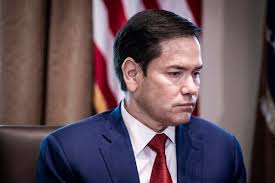
Secretary of State Marco Rubio used a White House press briefing on Tuesday to deliver one of the clearest public rejections of the War Powers Act by any senior administration official in recent memory, declaring the 1973 law “unconstitutional, 100 percent” while simultaneously explaining why the Trump administration complies with parts of it anyway.
“The War Powers Act is unconstitutional, 100 percent,” Rubio told reporters, as quoted by The Hill, adding that his position has been shared by every single presidential administration since the law was enacted. The War Powers Resolution, as it is formally known, requires the sitting president to notify Congress within 48 hours of deploying forces in response to an imminent threat, and mandates that American forces be withdrawn from any conflict within 60 to 90 days unless Congress declares war or authorises the action.
Rubio was clear that the administration’s gestures of compliance with the law’s notification requirements did not constitute an acknowledgment of its constitutionality. “Now we comply with it in terms of, like, notification because we want to preserve good relations with Congress, right? And we do that,” he said. The framing positions compliance as a diplomatic courtesy to Capitol Hill rather than a legal obligation.
The remarks came at a sensitive moment. President Trump ordered the launch of US-Israeli military operations against Iran on February 28 but did not formally notify Congress until March 2. When the conflict reached its 60-day mark without congressional authorisation, Trump was asked whether he would seek approval from lawmakers and replied that it had never been sought before and that the law was “totally unconstitutional.” The administration subsequently argued in a letter to Congress that the War Powers clock had been paused when Trump declared a 14-day ceasefire with Iran on April 7, a ceasefire that has since been extended indefinitely.
Senate Democrats have now made six unsuccessful attempts to pass a war powers resolution halting American military operations against Iran without congressional authorisation. The most recent vote failed 47-50, with Republican Senators Susan Collins of Maine and Rand Paul of Kentucky crossing the aisle to support the Democratic effort.
The broader context includes widespread frustration among lawmakers on both sides about what they describe as insufficient transparency from the White House and Pentagon on the Iran campaign. Legislators have raised concerns about the cost of the conflict, the extent of damage to US bases in the Middle East, and the strategic objectives being pursued through the Strait of Hormuz standoff. Rubio pushed back on that characterisation, citing four separate congressional briefings he had personally attended for senators and House members in 2026 alone.
The constitutional debate over the War Powers Act is unlikely to be resolved through executive branch statements. No president has formally acknowledged the law as binding, and courts have historically declined to adjudicate War Powers disputes as political questions outside their jurisdiction.
