
Palantir Technologies (NYSE: PLTR) is preparing to report its first-quarter 2026 results after US markets close on May 4, arriving at the earnings date as one of the purest public market expressions of the AI software investment thesis, with analyst consensus projecting 74 percent year-on-year revenue growth and ongoing questions about whether a valuation that has been described as extreme even by sympathetic observers can be sustained if the growth narrative encounters any friction.
PLTR shares opened Monday April 28 at approximately $143.09, up 1.06 percent, against an average analyst price target of $194.06 according to TipRanks’s Moderate Buy consensus, implying upside of 35.62 percent from current levels that reflects genuine disagreement across the research community about how to value a company generating explosive revenue growth at a price-to-sales ratio of approximately 82 times.
The numbers going into the print are legitimately impressive at the operational level: Q4 2025 revenue of $1.407 billion represented 70 percent year-on-year growth, US commercial sales grew 137 percent to $507 million, US government revenue rose 66 percent to $570 million, and the company’s full-year 2026 revenue guidance of $7.182 billion to $7.198 billion implies 61 percent annual growth in a category where even mid-teens growth is considered strong.
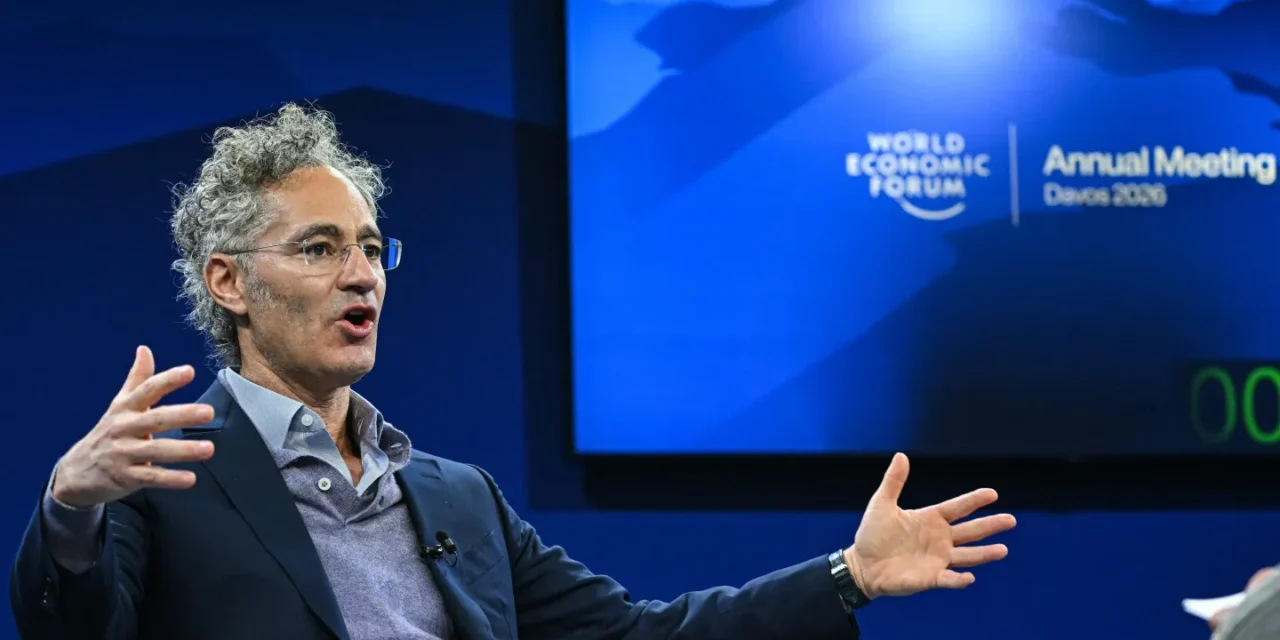
CEO Alex Karp described Palantir’s position at the Q4 earnings call as “an n of 1,” pointing to what he frames as the company’s unique positioning in making large-scale AI capability more accessible and affordable to both enterprise and government customers through the Artificial Intelligence Platform, a characterisation that the bull case accepts and the bear case dismisses as marketing language unsupported by the unit economics at current valuations.
Wall Street consensus for Q1 2026 projects earnings per share of approximately $0.28 to $0.29 against revenue of $1.54 billion, both figures representing the continuation of the beat-and-raise pattern that has been the defining feature of Palantir’s quarterly reporting since the company achieved sustained profitability, with any deviation from that pattern carrying outsized risk given the premium valuation.
Rosenblatt analyst John McPeake is maintaining his Buy rating and $200 price target, representing roughly 40 percent upside from current levels, citing a thesis that Barron’s summarised as straightforward: Palantir’s revenue keeps climbing at a pace rare for established software companies, and its deep government contracts create reliable long-term business that provides a floor beneath the growth narrative even when macro conditions are difficult.
The political risk dimension is becoming more concrete rather than less so as the Iran war extends into its third month. Minneapolis-based campaigners have called on the Swiss National Bank to divest its $1.1 billion Palantir holding over the company’s work with US Immigration and Customs Enforcement, and investor Michael Burry has argued that competition from private AI companies including Anthropic represents a threat to Palantir’s enterprise software narrative that the current valuation does not adequately price.
Co-founder Peter Thiel, CEO Alex Karp, and the company’s government-related contracts have all attracted escalating scrutiny in the current political environment, with critics warning that deep entanglement with immigration enforcement and defence programmes creates business risk that could materialise rapidly if the political landscape shifts significantly, either through a change in administration or through legislative restrictions on the kinds of AI surveillance tools Palantir deploys for federal clients.
Brett Schafer at The Motley Fool put the valuation challenge plainly, noting the stock’s price-to-sales ratio has reached 82 and calling Palantir “overvalued today,” while simultaneously acknowledging the genuine strength of its commercial momentum and the durability of its multi-year federal contracts, framing it as a situation where the quality of the business and the price of the stock are two separate and currently irreconcilable facts.
The May 4 report will be watched closely for three specific signals beyond the headline numbers: management’s commentary on the pace of US commercial customer additions, any update on international revenue growth which has been the softer part of the business relative to domestic performance, and guidance language for Q2 and the full year that either confirms or modifies the extraordinary growth trajectory that the current stock price requires the company to sustain without interruption.
