
Tesla (NASDAQ: TSLA) shares initially surged nearly 4 percent in after-hours trading following a Q1 2026 earnings beat before reversing sharply lower when the company’s earnings call revealed that capital expenditure guidance for the full year had been raised to over $25 billion, a figure approximately $5 billion above the prior guidance issued just three months earlier and nearly three times the $8.5 billion Tesla spent in 2025.
CFO Vaibhav Taneja delivered the spending update directly on the call, saying: “Our current expectation for 2026 is over $25 billion of CapEx. We’re further increasing our investment in AI-related initiatives, including the AI infrastructure to support robotaxi and the launch of Optimus.”
CEO Elon Musk contextualised the scale of the commitment by framing it within a broader sector-wide arms race, noting that Amazon has projected $200 billion in capex for AI, chips and robotics in 2026 while Google plans to spend between $175 billion and $185 billion, positioning Tesla’s $25 billion as a proportionate bet by a company whose long-term revenue story depends on AI and autonomous systems rather than automotive alone.
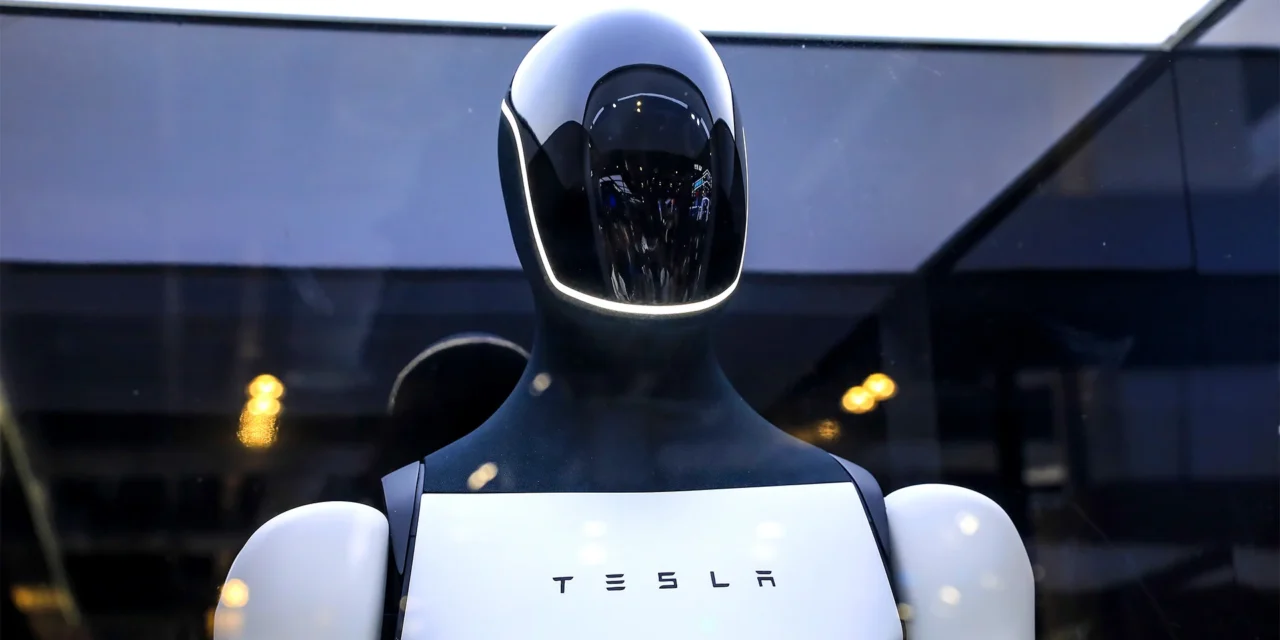
The company confirmed that preparations for its first large-scale Optimus factory will begin in Q2, with the first-generation production line planned to manufacture one million robots per year, a target that remains aspirational but signals the seriousness with which management is treating the humanoid robotics programme as a future primary revenue driver.
When asked about demonstrating the next version of Optimus, Musk declined to commit to a near-term reveal, explaining: “Competitors literally do a frame-by-frame analysis and copy everything we’re doing,” and saying he would rather unveil the upgraded humanoid closer to the start of production, which he projected for “somewhere around the late July, August time frame.”
The Fremont, California factory is being retooled for scaled Optimus production as Tesla winds down manufacturing of the Model S and Model X, a transition that reflects the company’s conviction that autonomous robotics will eventually generate more revenue than its entire existing electric vehicle business.
Taneja warned investors directly that Tesla anticipates “negative free cash flow for the rest of the year” as it scales infrastructure and production capacity, a disclosure that tempered the initial post-earnings enthusiasm and contributed to the stock’s reversal from its after-hours gains, with TSLA closing around $373.72 on Thursday.
The semiconductor research fab in Austin is already moving forward, with Taneja confirming the company has “already started placing orders” for equipment alongside solar manufacturing hardware, indicating that Terafab and Tesla’s broader chip ambitions are progressing on a parallel track to the Intel 14A partnership announced on the same evening during the earnings call.
Tesla’s Q1 numbers themselves were solid: revenue of $22.39 billion represented 16 percent year-on-year growth, EPS of $0.41 beat the $0.36 consensus, and full self-driving subscriptions reached 1.28 million active users, providing genuine evidence of progress on the transition toward a software and services revenue model that Musk has been promising for several years.
The market’s reaction, taking the initial gain and returning it after the capex disclosure, reflects a genuine tension in how investors are valuing Tesla: the near-term financial profile is being deliberately sacrificed for a long-term transformation whose ultimate scale is speculative, and Thursday’s session made clear that not all shareholders are comfortable with that trade-off regardless of how compelling Musk’s vision sounds on an earnings call.
