
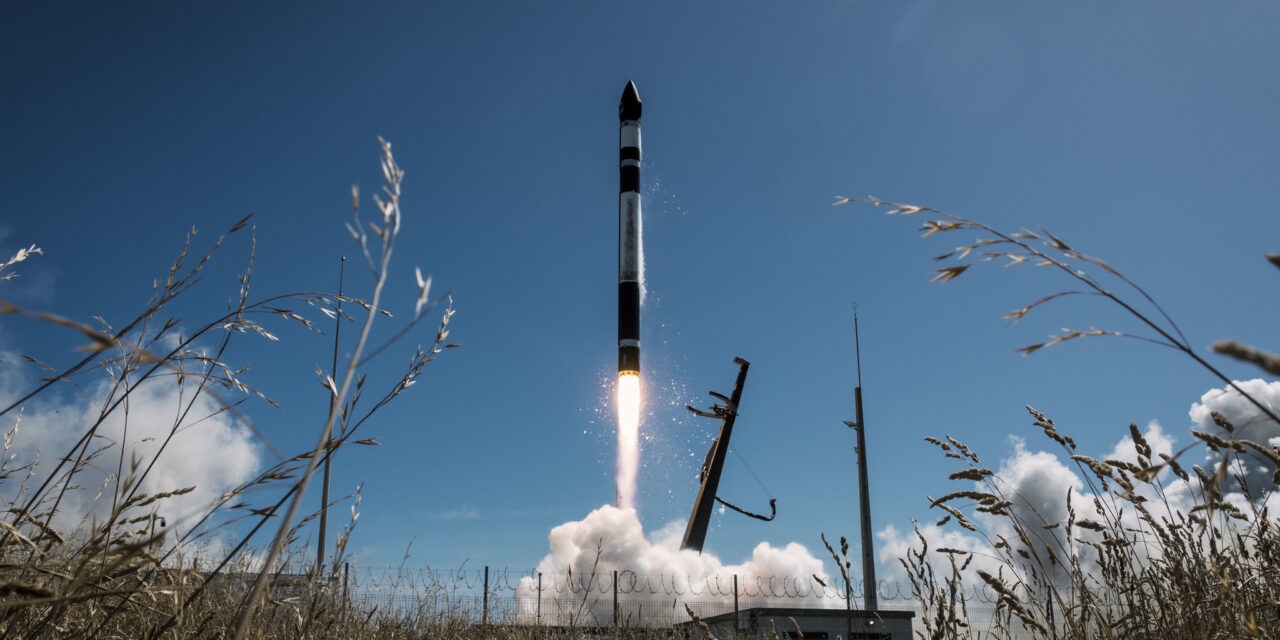
Rocket Lab Corporation (NASDAQ: RKLB) shares declined approximately 6 percent in Thursday’s session, closing around $86.64 after a period of extraordinary outperformance that has seen the stock gain more than 370 percent over the past twelve months, making the pullback best understood as routine profit-taking by investors locking in gains from one of the Nasdaq’s standout names rather than a response to any negative fundamental development.
The session’s decline followed a period in which RKLB had risen 31.56 percent over the prior month alone, a compressed rally that outpaced even the broader aerospace sector by a wide margin and raised the stock to levels where short-term momentum traders naturally begin to reduce exposure.
Rocket Lab’s 52-week range of $18.55 to $99.58 tells the story of a company that has undergone a fundamental rerating as investors have moved from scepticism about its ability to compete with SpaceX toward recognition that the company has carved out a genuinely defensible position as the second most active orbital launch provider in the United States.
The company’s backlog has grown to exceed $1.85 billion, representing a 73 percent year-on-year increase that anchors multi-year revenue visibility into 2028 and provides the kind of contracted revenue floor that makes near-term earnings misses less consequential for the long-term investment thesis.
Rocket Lab’s Q1 2026 earnings are due May 7, with analysts projecting a loss of $0.04 per share representing year-on-year improvement of 66.67 percent, alongside revenue of approximately $191.41 million that would represent 56.16 percent year-on-year growth as the company’s dual launch and space systems segments both scale simultaneously.
The Neutron medium-to-heavy-lift rocket remains the central catalyst for the stock’s long-term bull case, with Stifel analyst Erik Rasmussen reiterating a $105 price target as recently as April 20 citing confidence in a second-half 2026 debut, a timeline that would allow the vehicle to begin competing for larger payloads currently monopolised by SpaceX’s Falcon 9.
A Neutron test-fire setback in January, when a Stage 1 fuel tank ruptured during a hydrostatic pressure test, caused a period of negative sentiment earlier in the year, but subsequent positive progress on the programme has rebuilt confidence among the analyst community, with 21 analysts now covering the stock with a median price target of $90 and a high-end target of $120.
Among the 21 analysts with active coverage, the distribution of price targets from $68 to $120 implies roughly 35 percent potential upside in a best-case Neutron execution scenario against 24 percent downside in a delay scenario, an asymmetric payoff that most sell-side shops argue still skews favourably given the backlog floor.
The SpaceX IPO, widely anticipated for mid-2026, is expected to drive further attention to the commercial space sector and could serve as a significant catalyst for Rocket Lab’s stock as retail and institutional investors seek publicly traded exposure to the space economy’s growth trajectory.
Thursday’s 6 percent decline, while notable in absolute terms, represents a small fraction of the enormous gains RKLB has generated over the past year and leaves the stock well within the consolidation range that technical analysts would expect following any run of the magnitude seen since April 2025.
