
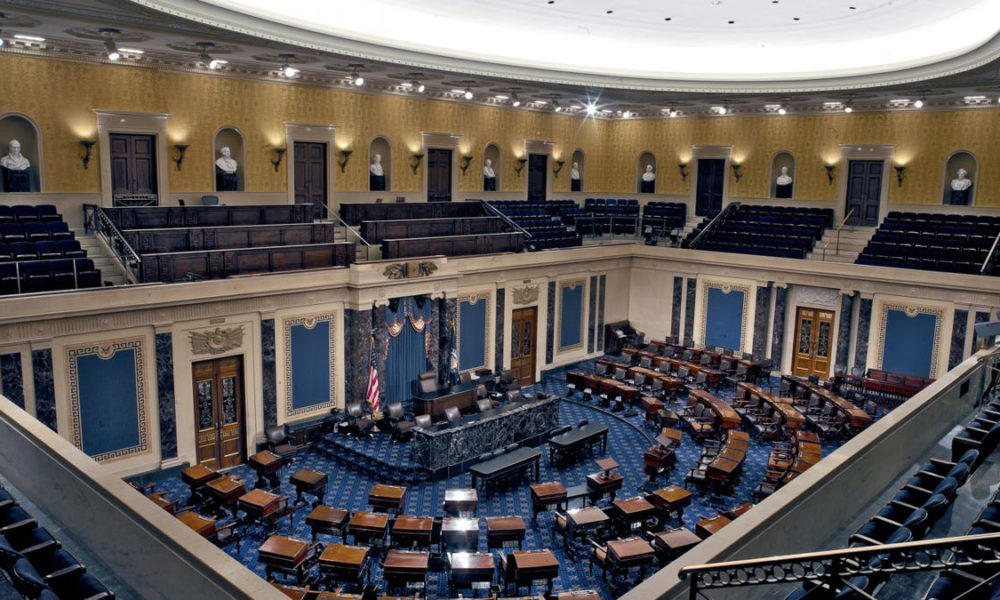
The United States is in the middle of the most protracted government shutdown in its history, and as of this week the partial closure of the Department of Homeland Security has surpassed 67 days with no end clearly in sight, despite a flurry of legislative maneuvering in Washington that has produced competing bills, missed deadlines, a two-week congressional recess and now a last-resort budget reconciliation push that may itself collapse under the weight of Republican infighting.
The shutdown did not begin in a vacuum, and understanding it requires going back to December 2025, when the Trump administration launched Operation Metro Surge — a mass immigration enforcement dragnet that deployed thousands of federal agents across the Minneapolis–Saint Paul metropolitan area as part of the administration’s flagship deportation agenda. The operation quickly became controversial, with local officials, civil liberties groups and community members raising concerns about warrantless arrests, aggressive crowd-control tactics and the conduct of agents who had limited training in policing urban environments. What followed would transform a regional immigration dispute into a national constitutional crisis.
On January 7, 2026, an ICE agent shot and killed Renee Good, a 37-year-old mother of three, while she was sitting in her car in Minneapolis. The killing sparked widespread protests across the Twin Cities that drew thousands into the streets despite bitterly cold weather.
Seventeen days later, on January 24, federal CBP agents shot and killed Alex Pretti, a 37-year-old intensive care nurse at the Minneapolis VA hospital, during a confrontation on Nicollet Avenue while he was filming agents and stepped in to assist a woman who had been pushed to the ground. Multiple videos reviewed by Reuters, the BBC, the Wall Street Journal, the Associated Press, the New York Times, the Washington Post and Bellingcat showed a federal agent removing Pretti’s firearm from its holster before agents opened fire. The DHS’s own preliminary report to Congress confirmed that two officers fired their weapons but did not corroborate the administration’s initial claim that Pretti had been brandishing a gun.
The administration’s initial response to Pretti’s killing was aggressive and, in significant parts, inaccurate. DHS Secretary Kristi Noem called his actions “domestic terrorism.” CBP Commander Gregory Bovino said at a press conference that “the victims are the Border Patrol agents.”
Deputy White House chief of staff Stephen Miller posted on social media calling Pretti an “assassin” who “tried to murder federal agents” — a characterisation that the available video footage directly contradicted. Within days, Miller had quietly walked back elements of the narrative, saying the White House was “evaluating why the CBP team may not have been following” proper protocol. Pretti’s parents called the administration’s public statements “sickening lies.” Minneapolis Mayor Jacob Frey demanded to know “how many more residents, how many more Americans need to die or get badly hurt for this operation to end.” A Justice Department civil rights investigation was opened.
The political consequences arrived almost immediately. Senate Democrats, who had been part of bipartisan negotiations on a broad government funding package, announced they would no longer support the DHS funding bill unless it included accountability reforms for ICE and CBP — specifically measures such as better identification requirements for federal officers and expanded use of judicial warrants. Trump had initially agreed to Democrats’ request to separate DHS funding from the broader spending measure to allow time for negotiations on those reforms. But those bipartisan negotiations went nowhere, and when the broader funding bill cleared the Senate before January 31, the House did not vote on it until February 3 — triggering a four-day partial shutdown that ended when the House finally passed it.
The second and far more consequential shutdown began on February 14, when DHS funding lapsed entirely without any agreement having been reached on ICE and CBP reform. Democrats in the Senate held the line, refusing to fund those specific agencies without the accountability provisions they had demanded. Senate Majority Leader Chuck Schumer framed the position publicly:
“After the killings of Renee Good and Alex Pretti, Senate Democrats were clear. No blank check for a lawless ICE and Border Patrol.” Republicans and the White House characterised the Democratic position as hostage-taking, arguing that withholding funding from immigration enforcement agencies while those agencies were still legally obligated to operate — without guaranteed paychecks for their staff — was reckless governance.
The mechanics of what followed made the shutdown progressively more difficult to resolve. In late March, the Senate unanimously passed a bill that would fund all of DHS except ICE and Border Patrol, with the plan that the two remaining agencies would be funded separately through a budget reconciliation process requiring only a simple 51-vote majority rather than the 60 votes needed to overcome a filibuster. House Republicans rejected that approach, instead passing a stopgap measure to extend all DHS funding through May 22 — but that measure then failed in the Senate for lack of votes. Congress then departed for a two-week recess, leaving the issue entirely unresolved, while TSA airport security agents went without paychecks for weeks at a time.
Trump used executive orders to attempt to pay some DHS employees in the interim, but the legal durability of those payments remained uncertain, and Senate Minority Whip Markwayne Mullin warned that DHS would run out of emergency funds to pay staff in early May.
The reconciliation push that began this week represents the current state of play. On April 21, the Senate voted 52-46 along party lines to begin the budget process, and the Senate Budget Committee simultaneously released a roughly $70 billion resolution that would fund ICE and Border Patrol for three full years — through the remainder of Trump’s term — with no Democratic votes and no requirement to include the accountability reforms Democrats had demanded. Senate Budget Committee Chairman Lindsey Graham described it in unambiguous terms: “Republicans are doing something that must be done quickly, and that our Democrat colleagues are trying to prevent us from doing. That something is simple: fully fund Border Patrol and ICE at a time of great threat to the United States.” Senate Appropriations ranking member Patty Murray offered the Democratic rebuttal:
“After the killings of Renee Good and Alex Pretti, people across the country demanded ICE be reined in. But instead of working with Democrats to enact real reform, Republicans rejected the most basic accountability measures, and now they’re rushing to give ICE billions of dollars more.”
What happens next is not straightforward. Budget reconciliation is a multi-step process that requires identical budget resolutions to pass both chambers before any actual spending bill can be brought to the floor. House Republicans are not unified on the approach — hardliners in the Freedom Caucus, led by figures like Representative Chip Roy of Texas, have argued that isolating ICE and Border Patrol into a separate vehicle is worse than a comprehensive solution and want the bill to include additional Republican priorities including defence funding, capital gains tax changes and elements of the SAVE America Act voter proof-of-citizenship bill.
Republican leaders in both chambers have said they want to keep the reconciliation package narrow and fast, but managing the competing demands of their thin House majority while maintaining Senate discipline is a genuine challenge heading into a midterm election year in which the political environment is shifting toward Democrats.
The DHS shutdown, still officially ongoing at 67 days and counting, has had concrete real-world consequences throughout. TSA security lines grew significantly longer at major airports during the worst of the funding gap, affecting millions of travellers. Global Entry was suspended for new applications.
FEMA and the Cybersecurity and Infrastructure Security Agency have operated under constrained budgets. DHS employees have faced pay uncertainty for months. And ICE and Border Patrol — the agencies at the centre of the dispute — have continued operating throughout, insulated from the immediate funding gap by separate pool funding that had been secured through last year’s One Big Beautiful Bill Act, meaning the Democratic leverage was always less direct than the optics of “blocking ICE funding” suggested. Senate Majority Leader Thune put it plainly last week:
“All of the things that the Democrats made this about, which was supposed to be reforms to the way that ICE and CBP operate. They got none of that. Zero. And now we’re going to fund those agencies for three years into the future.”
