
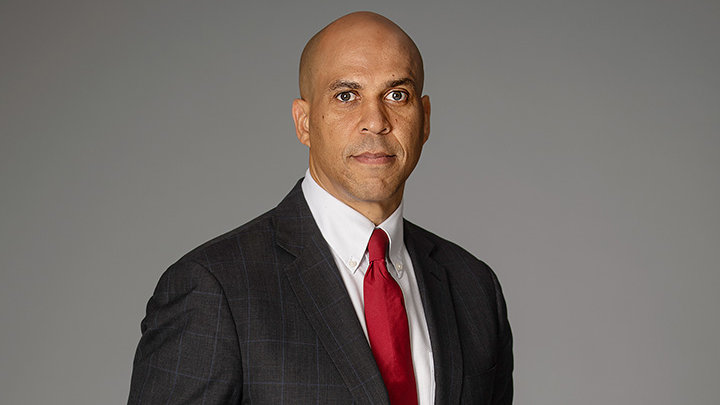
Senator Cory Booker of New Jersey emerged this week as one of the most active presences in both the war powers debate and a separate battle over a $111 billion media merger that he argues poses an existential threat to journalistic independence, staging a spotlight forum on the Paramount-Skydance acquisition of Warner Bros. Discovery on Wednesday even after the company’s CEO declined to appear and Republican colleagues boycotted entirely.
On the Iran war front, Booker has been one of six founding senators in what became known internally as the “Senate Six” war powers coalition, which has forced four consecutive floor votes demanding congressional authorisation for the conflict.
His April 15 statement was pointed and direct: “With no congressional approval or strategy for success, Trump has led America into a reckless, dangerous quagmire in Iran that continues to spiral out of control. I am using every tool available to me to stop this war, and do not support more weapons to continue the combat, whether it is to our own government or to one of our closest allies.” He went further than most Democrats in withholding support for weapons transfers to Israel, a position that separates him from more moderate members of the caucus.
On The Rachel Maddow Show last month, Booker described Trump’s Iran strategy with characteristic bluntness, saying it represented “the most monumental strategic stupidity exhibited by any president in our lifetime.” He was particularly critical of the energy cost dimension.
“He is at one time begging people to come help with the mess that he created, causing the worst oil shock we have seen in our lifetime, begging people to help and then when they are not racing to help him, after he has already unleashed chaotic tariffs on them, after he has already insulted them before, demeaned and degraded them, didn’t go America first but America alone.” The statement captured the central Democratic argument on Iran better than most: that the conflict’s costs fall on ordinary Americans through gas prices, inflation and energy bills.
The Paramount hearing on Wednesday was a different kind of fight, and an underreported one. As ranking member of the Senate Judiciary Subcommittee on Antitrust, Competition Policy and Consumer Rights, Booker convened a two-and-a-half-hour spotlight forum examining whether Paramount-Skydance’s $111 billion acquisition of Warner Bros. Discovery would create an anticompetitive concentration of media power affecting consumers, creative workers and independent journalism. The deal, if approved, would place CBS, CBS News, Paramount Pictures, Paramount+, BET and Nickelodeon under the same corporate roof as HBO, Warner Bros. film and television studios, DC, CNN, TBS, TNT and Discovery.
Actor Mark Ruffalo testified via videoconference, part of an open letter effort that now carries the signatures of more than 3,000 Hollywood professionals including Bryan Cranston, Jane Fonda and Joaquin Phoenix. Ruffalo did not hold back. “We do not have to watch ‘Citizen Kane’ or read ‘1984’ to understand that the concentrated oligarchic control this merger represents is a threat to free press, an informed populace and democracy itself,” he said. He added: “Don’t trust empty promises from billionaires driven by greed and corrosive ideology.”
Paramount CEO David Ellison, who had been invited to testify, did not attend, citing the death of a family member. Booker made clear the absence was not the end of the matter. “We didn’t have to do this hearing at this date and time,” he told reporters.
“We should be having a bipartisan hearing with Mr. Ellison. He should come to Congress. If he’s so confident in his merger, he should come and defend it in a hearing like the Netflix CEO did.” Crucially, Booker noted that no Republican colleagues attended, despite invitations having been extended to the entire Senate Judiciary Committee. The contrast with the formal hearing Republicans had called when Netflix was pursuing the same Warner Bros. deal was pointed. Republican subcommittee chairman Mike Lee had held an official hearing on the Netflix bid but declined to do so for the Paramount offer.
Senate Majority Leader Chuck Schumer attended the Wednesday forum and sharpened the political accusation directly. “Donald Trump said he wanted to be ‘involved in deciding the outcome,'” Schumer said. “That’s outrageous in itself. And then everyone should be asking, were there any backroom promises made?”
The merger also drew national security questions, including concerns about sovereign wealth funds from Saudi Arabia, Qatar and Abu Dhabi taking combined stakes of close to $24 billion in the transaction, with Saudi Arabia’s Public Investment Fund alone investing approximately $10 billion. Booker has written to Ellison asking whether any communications occurred regarding a personal benefit to Trump in connection with the deal. Paramount has not responded to that line of inquiry.
