
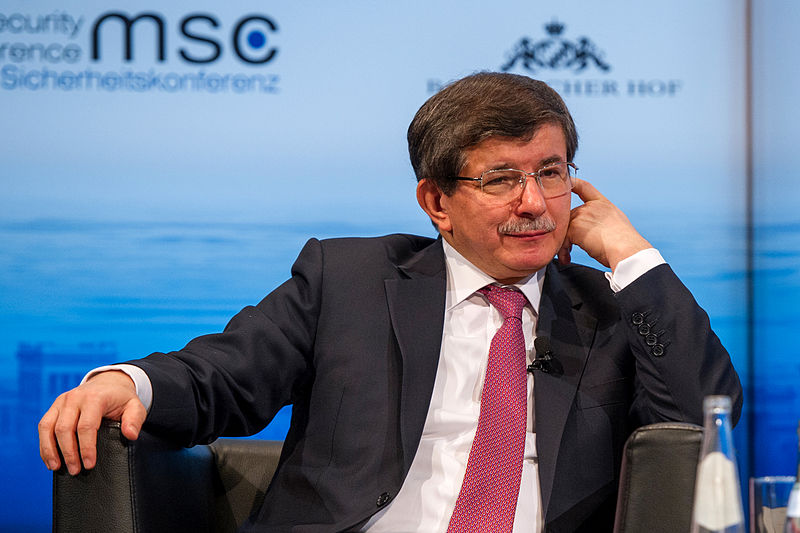
The touchstone of Davutoğlu’s approach to foreign policy is the effort to blend principle and pragmatism in relation to shifting policy contexts, doing what is right ethically while at the same time exploring every opportunity to promote Turkish national interests, including enhancing its international reputation as a responsible and strategic player. This blend of goals was well-illustrated by the seemingly frantic Davutoğlu diplomacy in many settings, including the Balkans, Crimea, Armenia, Myanmar, and Latin America, seeking wherever possible to resolve regional conflicts while lending support to humanitarian goals, and in the process establishing Turkey’s claims to be both a constructive international actor and a valuable partner for trade and investment.
The most impressive example of such an approach was undoubtedly the major initiative starting in mid-2011 to help out a crisis-ridden Somalia when the rest of the world abandoned the country as a ‘failed state.’ Erdoğan and his wife, together with Davutoğlu, visited Mogadishu at time when it was viewed as dangerously insecure and then put together a serious financial aid package to highlight the continuing Turkish commitment. From this bold and imaginative gesture of solidarity came a major opening to Africa for Turkey, which produced an immediate rise in Turkish prestige that brought with it major opportunities throughout the continent.
In reflecting on the Erdoğan/Davutoğlu approach to foreign policy, this Somalia initiative helps explain, as well, how and why Turkey after an absence of 50 years was elected to term membership for 2009-2010 in the UN Security Council with strong African backing. Turkey is again investing an enormous effort to being elected to the Security Council for a 2015-2016 term. It also explains why Istanbul has become a favorite site for major international meetings, often displacing the earlier tendency to choose Western European cities for such gatherings. Both of these involvements at the global level are expressive of Turkey’s ambition to be a global political actor, as well as a strong state and regional influence.
Despite an extraordinary record of achievements, the Davutoğlu foreign policy experience also has its share of blemishes, even taking into account the difficulties that all governments faced in adapting to the abrupt sequence of unexpected changes in the Middle East during the last several years. Perhaps because his plate was so full with an array of diverse undertakings, Davutoğlu didn’t sufficiently focus on the daunting complexities of the aftermath of the Arab Spring, leading him to make on behalf of Turkey several costly miscalculations.
Undoubtedly the most serious of these blunders concerned Syria, not the underlying impulses, but the lack of nuance. In my view, Turkey’s mistakes can be understood in two phases: first, the excessive enthusiasm attached to the initial effort to dissolve the tensions that had dominated Turkish-Syrian relations for many years, affirming the Assad regime well beyond what was necessary for the normalization of relations thereby creating unrealistic expectations; and secondly, not only repudiating the government in Damascus that had been so recently befriended, but giving all measure of aid and comfort to an ill-defined insurgency without any seeming appreciation of the internal balance of forces in Syria. Ankara acted as if the Assad regime would soon collapse if pushed even slightly by the uprising. Turkey seemed continuously surprised by the resilience of the Assad regime and by the internal, regional, and international support it was receiving. Turkish policy was wrong for several reasons, and embroiled Turkey in a prolonged civil conflict with no end in sight, as well as damaged its image as a prudent and calming diplomatic influence throughout the region.
A similar line of criticism can be applied to Davutoğlu’s overall response to the Arab Spring and its aftermath. While it was consistent with the principled side of the foreign policy approach he was pioneering to welcome the events of 2011 in Tunisia and Egypt as transformative, it was premature to pronounce these developments as irreversible, and to anticipate their continuous deepening and regional spread. It soon became evident that Davutoğlu did not adequately appreciate the political will or capabilities of counter-revolutionary forces in the region, and did not seem to take account of the impact of an anti-democratic preoccupation that pervaded the dynastic politics of the well-endowed monarchies in the region. The role of Saudi Arabia and the UAE, for instance, in using their petroleum wealth and political leverage to promote a military takeover and bloody crackdown of the Muslim Brotherhood in Egypt altered the political balance in several countries, and took an unquestionable precedence over even the sectarian impulses of these political actors in their opposition to Shiite Iran. Shocking in this regard is the tacit strategic compact of these Arab governments with Israel that even went so far as to endorse the 50 day criminal onslaught directed at Hamas in the West Bank and Gaza that commenced on July 8th.
More difficult to analyze, but at least somewhat questionable, was the degree to which Turkey, despite trying to pursue its own distinctive brand of diplomacy in this Davutoğlu era also seemed to be going along with some dubious policies of the United States. In this regard, I would mention a limited collaboration with the failed military interventions in Afghanistan, Libya, and of course, Syria. It is also debatable as to whether Turkey should have consented to NATO’s deployment of defensive missile systems on its territory, which Moscow understandably viewed as provocative. What seems called for in the future is greater selectivity in maintaining Turkey’s strong alignments with the United States and NATO.
All in all, Ahmet Davutoğlu has had a remarkable run as Foreign Minister, and as Turkey’s new Prime Minister, is almost certain to embellish further his many notable contributions to the success of post-Kemalist Turkey. His thoughtfulness about policymaking combined with his personal integrity and decency combined with the highest levels of professional competence make him a rarity among politicians. I have long been impressed by Davutoğlu’s clear understanding of how Turkey’s effectiveness internationally is an outcome of the confidence generated by domestic success. This requires achieving political stability, economic development, protecting human rights and the environment, as well as creating and the further strengthening of the procedures and substance of an inclusive democracy that is fair and beneficial for all citizens regardless of their ethnic and religious identities. With such leaders committed to this progressive worldview, Turkey can look forward to a bright future. Turkey is poised to play a crucial role as a force for peace and justice in the roiled waters of the Middle East, in surrounding regions and sub-regions, and even in the world.

